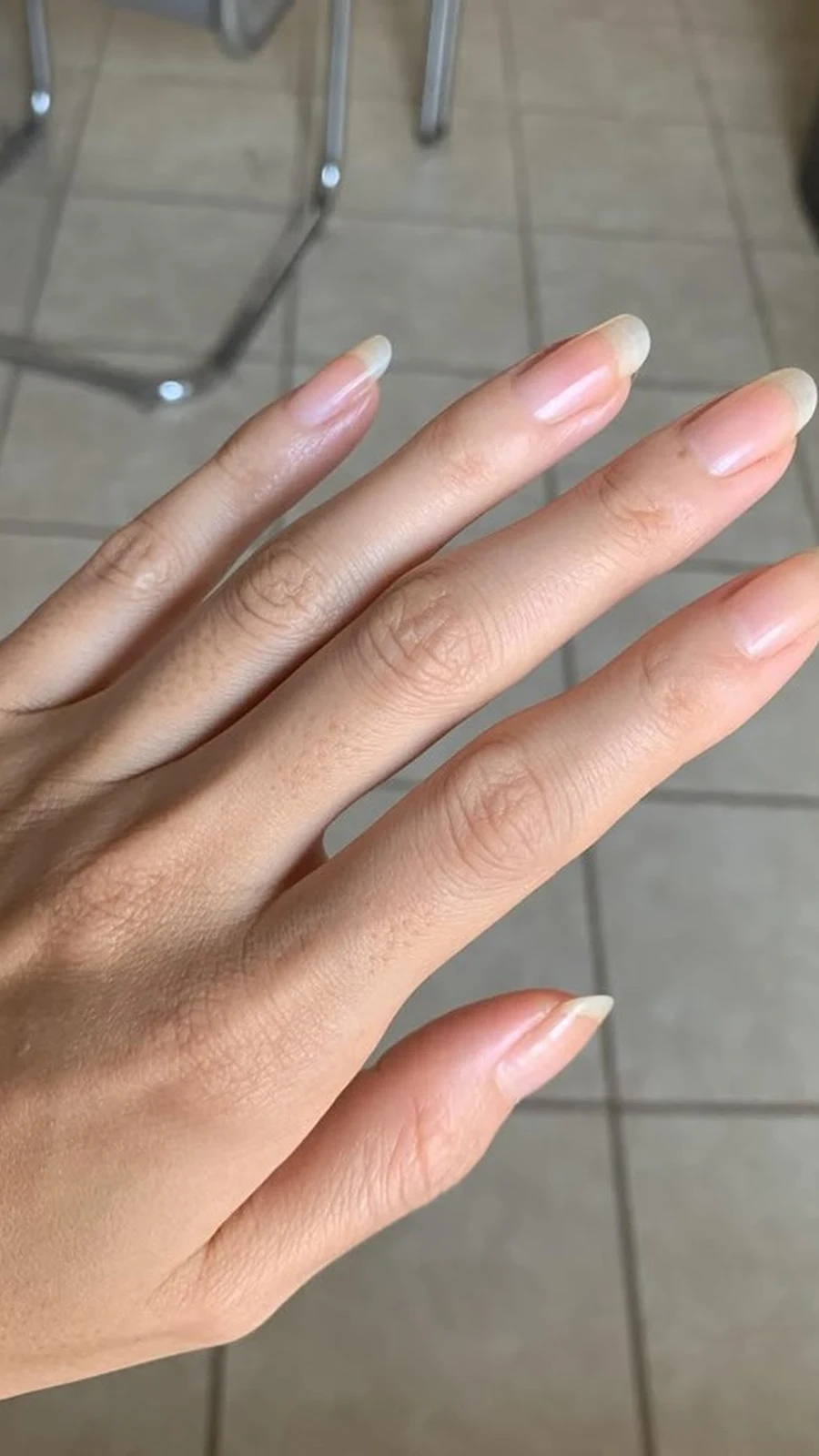
Your nails keep a diary. Not the kind you write in — the kind your body writes for you, one thin layer at a time. A fingernail takes about six months to grow from base to tip, which means the nail on your index finger right now is a record of the last half-year: the illness you had in spring, the injury you forgot in summer, the winter your hands spent in hot water and harsh soap. Most of the time that diary is boring, and boring is good. But sometimes a new line appears, a colour shifts, a shape changes, and you catch yourself staring at your own hand wondering whether it means something.
Usually, it means something small. A white spot is almost always a bump you never noticed. Vertical ridges are usually just birthdays accumulating. But some changes are worth a second look, and a few are worth a doctor’s appointment — not because you should panic, but because nails are one of the few places where the body shows its workings on the outside, and knowing how to read them is a genuinely useful skill. This guide walks through the changes people actually notice, in the order they usually notice them: lines, spots, colours, shapes, and the things that hurt. For each one you will find what it looks like, what it can mean, what you can safely do at home, and when to stop guessing and ask a professional. Nothing here replaces medical advice — your nails can suggest things, but they cannot diagnose anything on their own.
How to Read Your Nails: The Five-Second Check
Before any specific change makes sense, it helps to know what you are looking at. A nail is a small assembly of parts. The hard visible surface is the nail plate, made of keratin, the same protein as hair. Underneath sits the nail bed, pink because it is full of tiny blood vessels. At the base, hidden under the skin, is the matrix, the factory where new nail cells are made. The little pale half-moon at the base is the lunula, the visible tip of that factory. And the thin skin sealing the base is the cuticle, which keeps germs out of the matrix.
Fingernails grow about three millimetres a month, toenails about one. That slow pace is the key to reading them: a dent halfway down the nail happened weeks ago, when that part of the nail was still inside the matrix. A change in all ten fingernails at once points to something happening in the whole body. A change in one nail only usually points to that one finger — an injury, an infection, a habit like picking. Once a month, hold your hands out in good daylight, palms down: colour pink, surface mostly smooth, shape lying fairly flat with a gentle curve at the tip, skin around the nail calm and not red or swollen. That is your baseline. Anything that changes from it is worth noticing.
Additional Information: Photograph both hands once a month in daylight, with the date on it. If a line or spot worries you later, you can see exactly when it appeared and whether it is growing out with the nail — which most harmless marks do — or staying put, which is more interesting.
Vertical Ridges: The Lines Almost Everyone Has
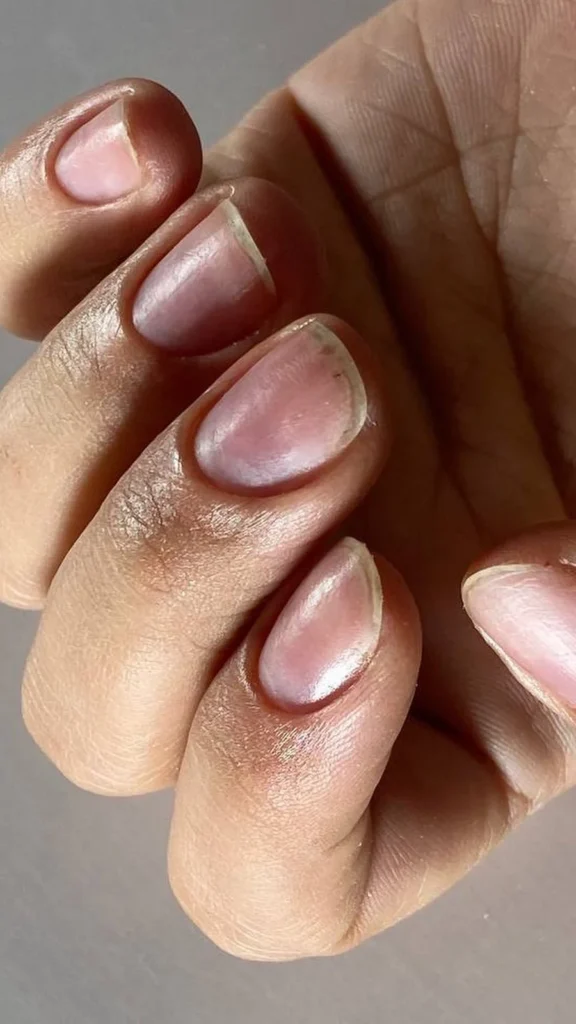
Run a fingertip across your nails. If you feel faint lines running from the cuticle to the tip, like the grain in a piece of wood, you have the most common fingernail abnormality there is — and it is almost always nothing at all. Vertical ridges, or longitudinal ridges, appear gradually with age as the matrix produces nail a little less evenly, the same way skin gets fine lines. By middle age most people have them, usually most visible on the thumbs and index fingers, which do the most work.
The ridges themselves are not a problem. They become worth noticing only when they change: a single nail that suddenly develops a deep ridge, a ridge that splits the nail, or ridges that appear alongside other changes like brittleness or colour change. A deep single ridge can follow an injury to the matrix, or a habit like pushing the cuticle back too hard. Keep the nails moisturised — a dry nail plate shows ridges more — and do not file the surface to smooth them away, which thins the plate and weakens it. A ridge-filling base coat can make them less visible under polish. But if a ridge is deep, appears suddenly on one nail, or the nail splits along it, show it to a doctor or dermatologist.
Additional Information: Do not confuse vertical ridges with a dark vertical line, covered in the dark streaks section further down. Ridges are texture you can feel; a dark line is colour you can see. Lengthwise texture lines are usually age. Lengthwise colour lines need attention sooner.
Beau’s Lines: The Horizontal Dents That Mark a Pause
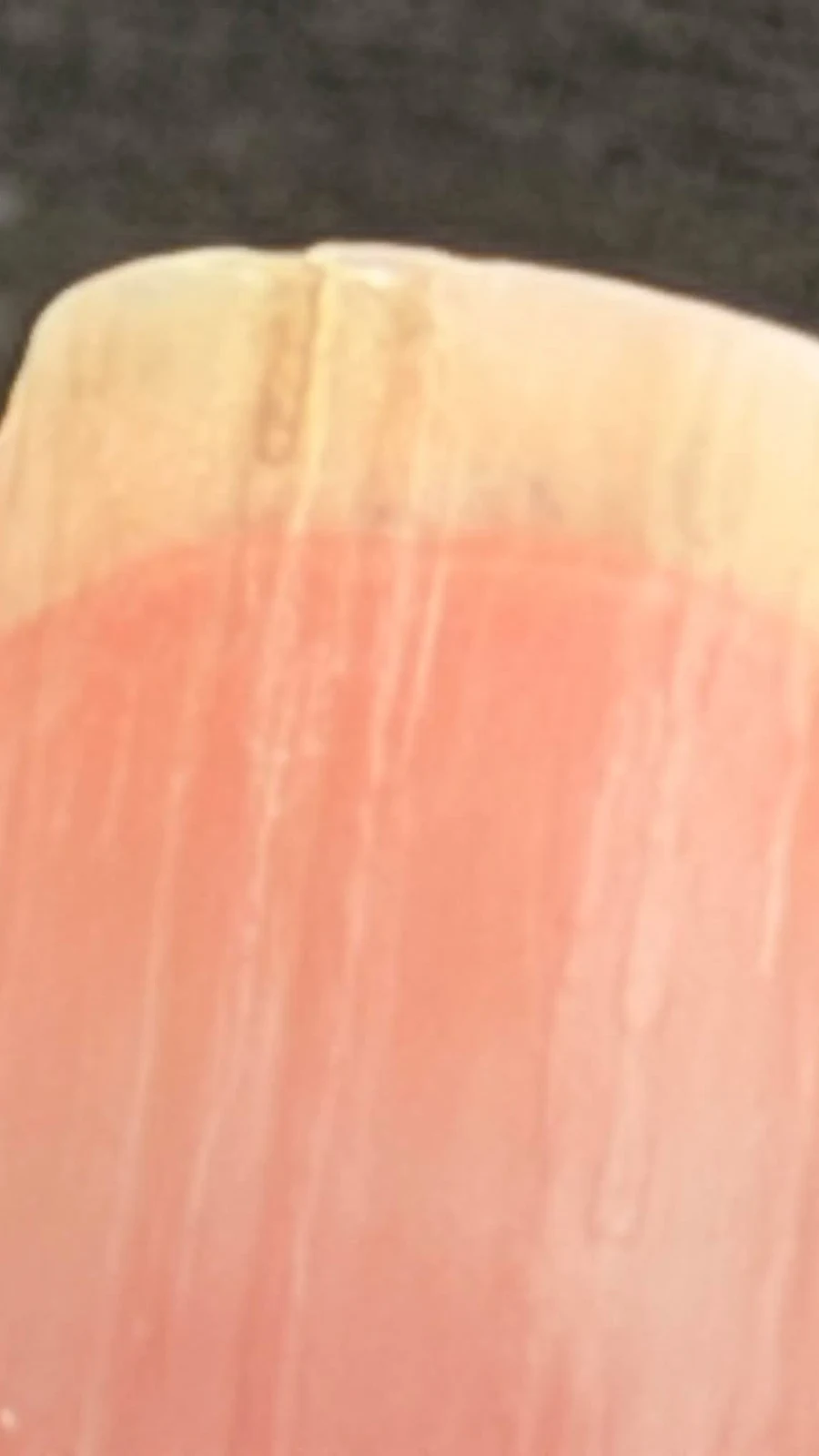
If vertical ridges are the grain of the wood, Beau’s lines are a dent across it — a groove running side to side, across the width of the nail, on one nail or several at once. They have a simple explanation: something interrupted the matrix, and for a week or two it stopped making nail properly. When growth resumed, the dent was left behind like a bookmark, and it slowly travels forward as the nail grows out.
That interruption can be many things: a high fever, a serious illness, a period of severe stress, certain medications including some chemotherapy drugs, or a direct injury like a slammed door. The timing is often readable — nails grow about three millimetres a month, so a Beau’s line halfway down the nail probably dates to an event about three months ago. People often match it to an illness they had and forgot about, which is strangely reassuring. The body kept the receipt.
One or two Beau’s lines that grow out and disappear are usually nothing to chase. But lines on all twenty nails at once, lines that keep reappearing, very deep grooves, or lines that show up alongside other symptoms like hair shedding are worth a conversation with a doctor. There is also a related habit worth knowing: some people develop a single deep groove across one thumbnail from picking or rubbing at that cuticle, sometimes without realising. If you have one thumbnail with a permanent central groove, watch your hands for a day — stopping the habit lets the nail grow out smooth.
Additional Information: If you cannot think of any illness or injury that explains your Beau’s lines, that is itself a reason to ask a doctor — not to worry, just to ask. The lines will grow out in a few months either way, but the question of what paused the matrix is worth answering.
White Spots: The Most Misunderstood Mark on a Nail
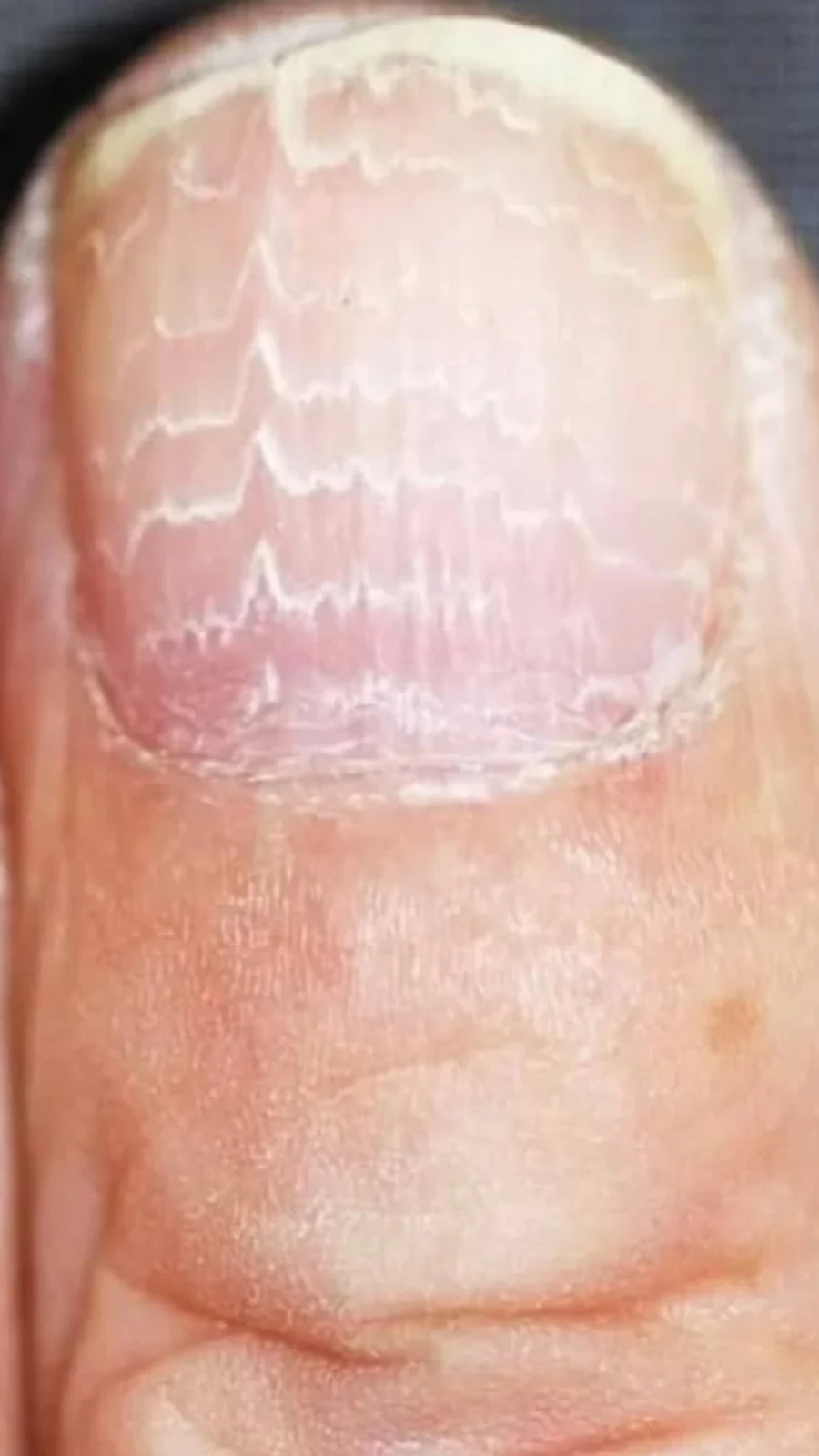
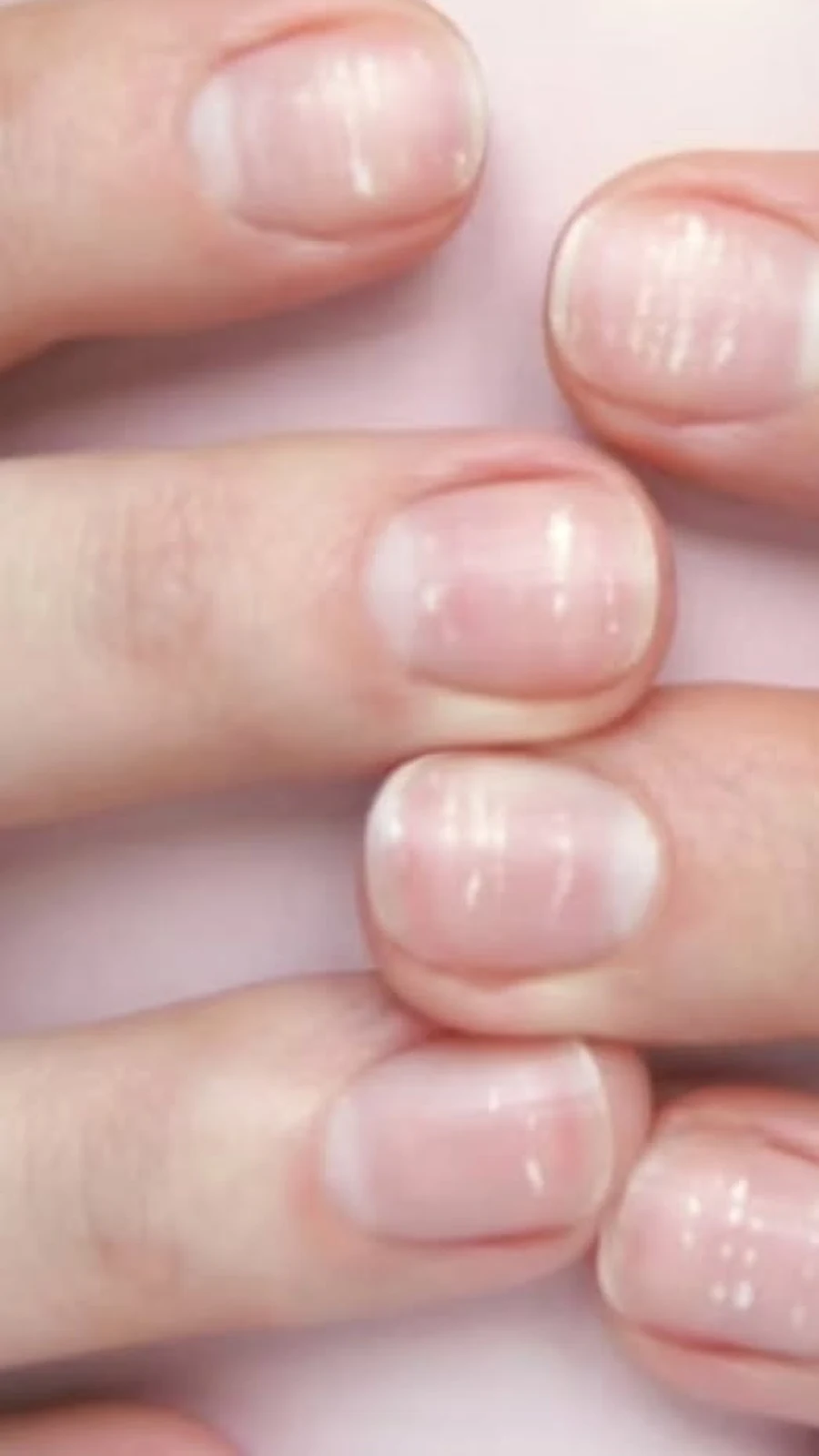
White spots on the nails are the change people worry about most and need to worry about least. The little white dots and flecks — doctors call them leukonychia — are so common that most people get them several times a year without noticing. They are usually the footprint of a small injury to the matrix: you bumped the base of your finger weeks before the spot appeared. The matrix made a patch of nail with tiny air pockets instead of solid keratin, and the air looks white. Then the spot rides forward with the nail and gets trimmed away.
There are other patterns that mean more, and they are worth knowing so you can tell them apart. White spots on many nails at once, or white bands running across several nails, can follow a more general upset — an illness or a medication. And nails that turn mostly or entirely white are a different pattern again, covered in the pale nails section below. The key question is always the same: is it one spot on one nail, moving outward as the nail grows? If yes, it is almost certainly a bump you forgot.
There is a persistent myth that white spots mean a calcium deficiency. They do not, or at least not in the way people mean it. True calcium problems show up in blood tests and in other parts of the body long before they show up as nail spots, and a normal diet provides plenty. So no, you do not need supplements for a white spot. You need patience, and to stop picking at the cuticle of that finger, which is often how the little injury happened in the first place.
Additional Information: Watch the spot for a month. A harmless white spot moves toward the tip as the nail grows, about three millimetres a month. If a white area does not move at all, or spreads, or the whole nail turns white, that behaves differently and deserves a professional look. Movement is the most useful clue your nails give you.
Yellow Nails: When the Colour Turns
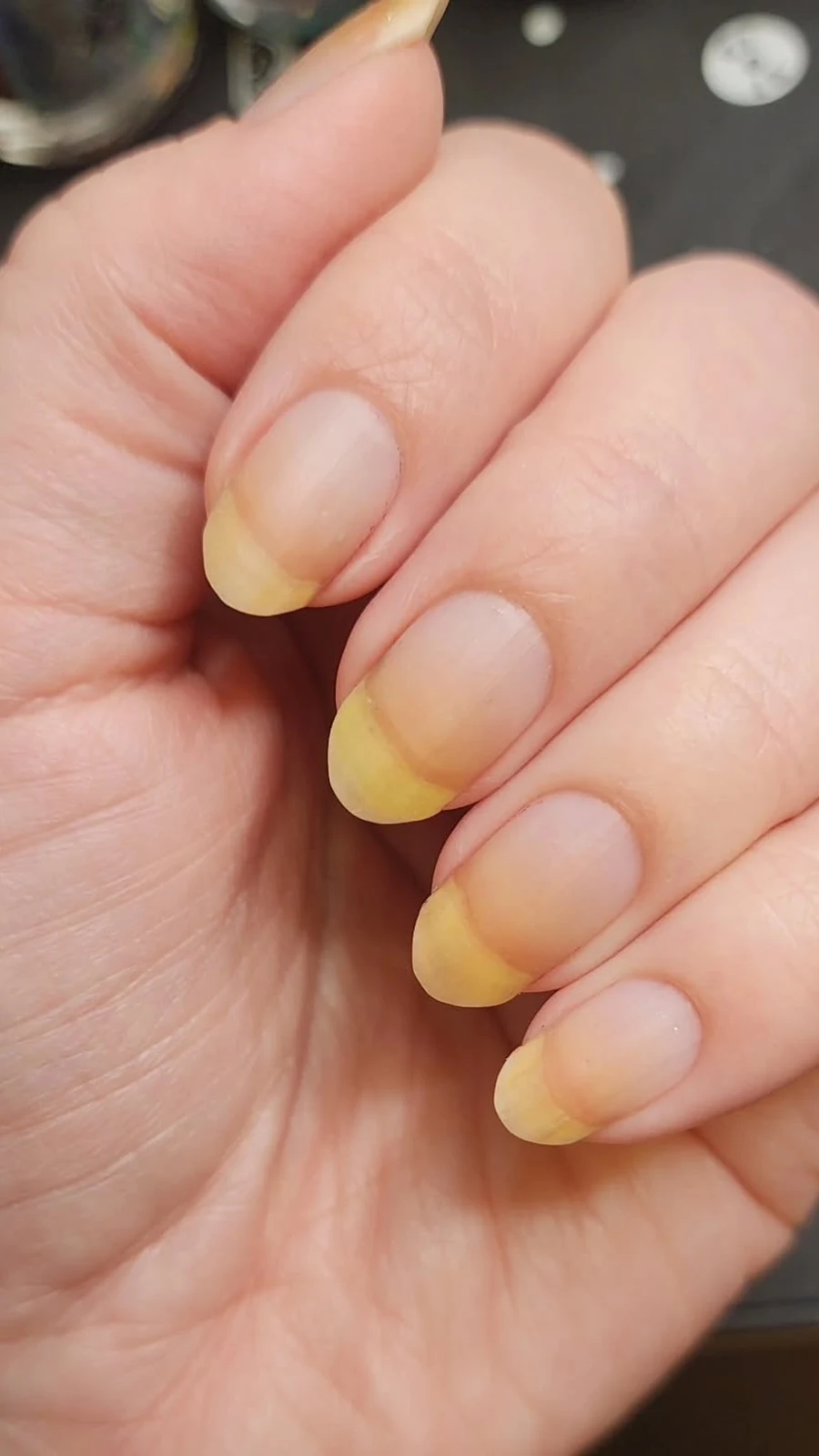
Yellow is the colour change people notice first, usually when they take off a dark polish and find the nail underneath has gone mustard. In most cases the explanation is sitting in the polish bottle. Dark reds, deep oranges and dark blues can stain the nail plate, especially when worn without a base coat, and the stain can linger for weeks because it is in the keratin, not on it. Smoking is the other everyday cause — nicotine and tar stain the fingers that hold the cigarette, and the nails on those fingers yellow first.
But yellow nails have a second story, and it is worth knowing the difference. A nail that turns yellow, thickens, and grows very slowly can be a fungal infection, covered in its own section below. And in rare cases, yellow nails that grow slowly and curve, along with breathing problems or swollen legs, form part of something called yellow nail syndrome — uncommon, but a real condition a doctor should assess. The everyday clues that point toward the harmless end are simple: the yellow is on the nails that wore dark polish, or on the smoking fingers, the nail is not thick or crumbly, and it grows out and fades over a few months.
If polish is the culprit, the fix is prevention rather than cure: always use a base coat under dark colours, give nails a bare week between dark manicures, and know that lemon juice soaks are folk remedies with limited effect — the stain is inside the nail and mostly needs to grow out. A gentle buff can lighten the very surface, but buffing thins the nail, so do it rarely and lightly. And if a yellow nail is also thick, crumbly, or lifting, skip the home remedies and read the fungus section, because that is a different problem with a different fix.
Additional Information: Yellow staining from polish is usually worse on toenails than fingernails, because toenail polish stays on for weeks. If you wear dark polish on your toes all summer, expect some yellowing in autumn. It fades as the nail grows, which for toenails takes up to a year — slow, but normal.
Blue or Dusky Nails: A Colour Worth Noticing Quickly
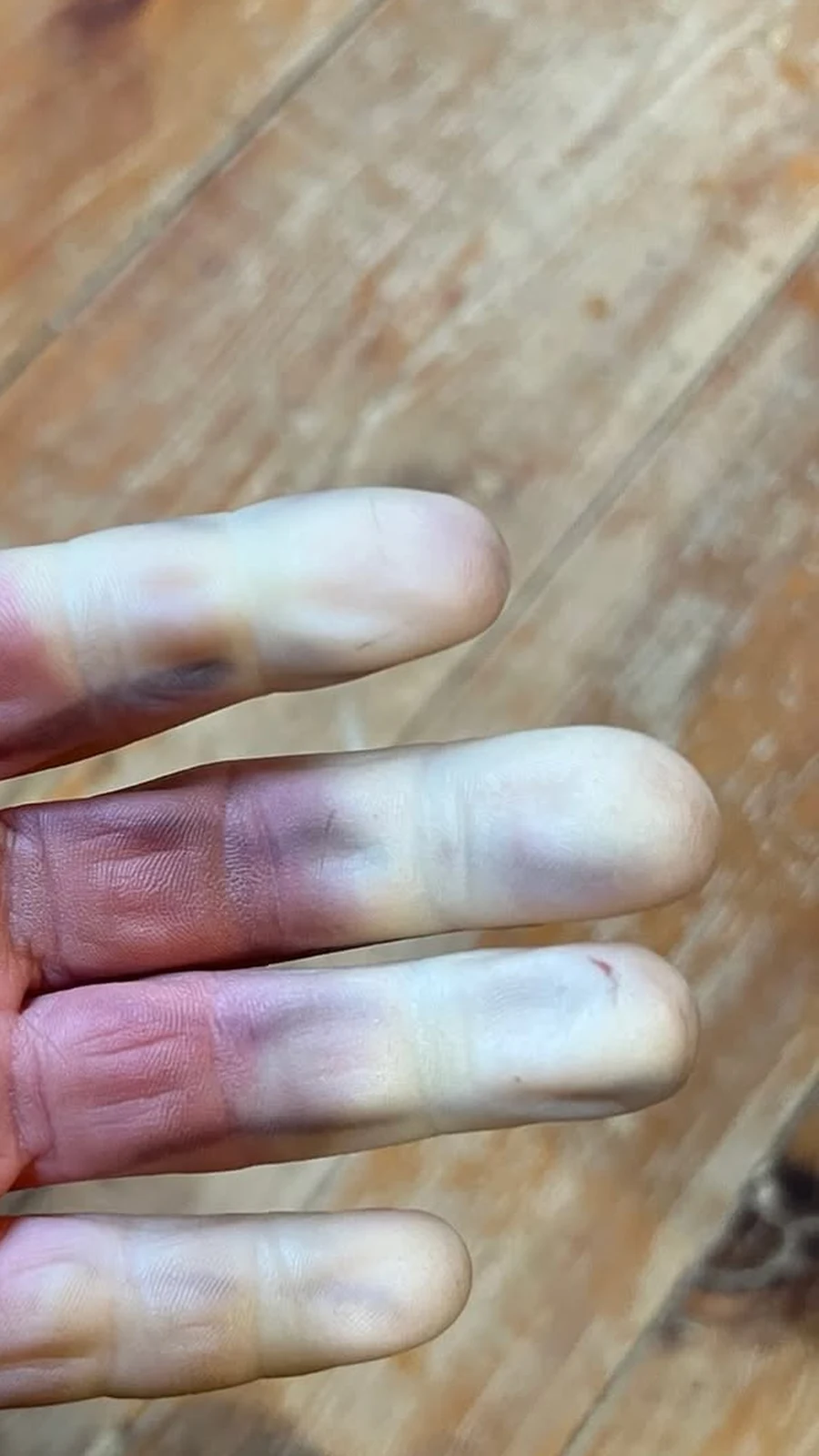
Blue nails are different from the other colour changes in this guide, because they are the one to act on fastest. A nail bed that looks blue or dusky usually means the blood underneath is carrying less oxygen than usual — doctors call it cyanosis. Cold hands can do it temporarily: when you are cold, blood vessels narrow, and the nail beds go bluish until you warm up. That version is harmless and reverses in minutes.
The version that needs attention is blue nails that do not warm up, or blue nails that appear together with breathlessness, chest pain, or unusual tiredness. In that case the cause may be in the lungs or the heart, and it is not a wait-and-see situation — it is a same-day medical conversation, and an urgent one if breathing is difficult. This is the one section in this guide where the advice is blunt, because the stakes are different. Do not try to research your way around blue nails that stay blue.
There is also a quieter version worth a mention. Some medications can tint nails blue-grey, and some people have Raynaud’s, where fingers go white, then blue, then red in response to cold or stress as blood flow changes. Raynaud’s is common and often mild, but still worth mentioning to a doctor. But the rule stands: blue that appears suddenly, blue that stays, or blue with breathlessness — get checked promptly.
Additional Information: Check the colour in warm, natural light, and compare your nail beds with your lips. Lips that are also blue, along with breathlessness, is a sign to seek urgent care. Cold blue fingers that pink up within a few minutes of warming are usually just cold.
Pale or White Nails: When the Pink Fades
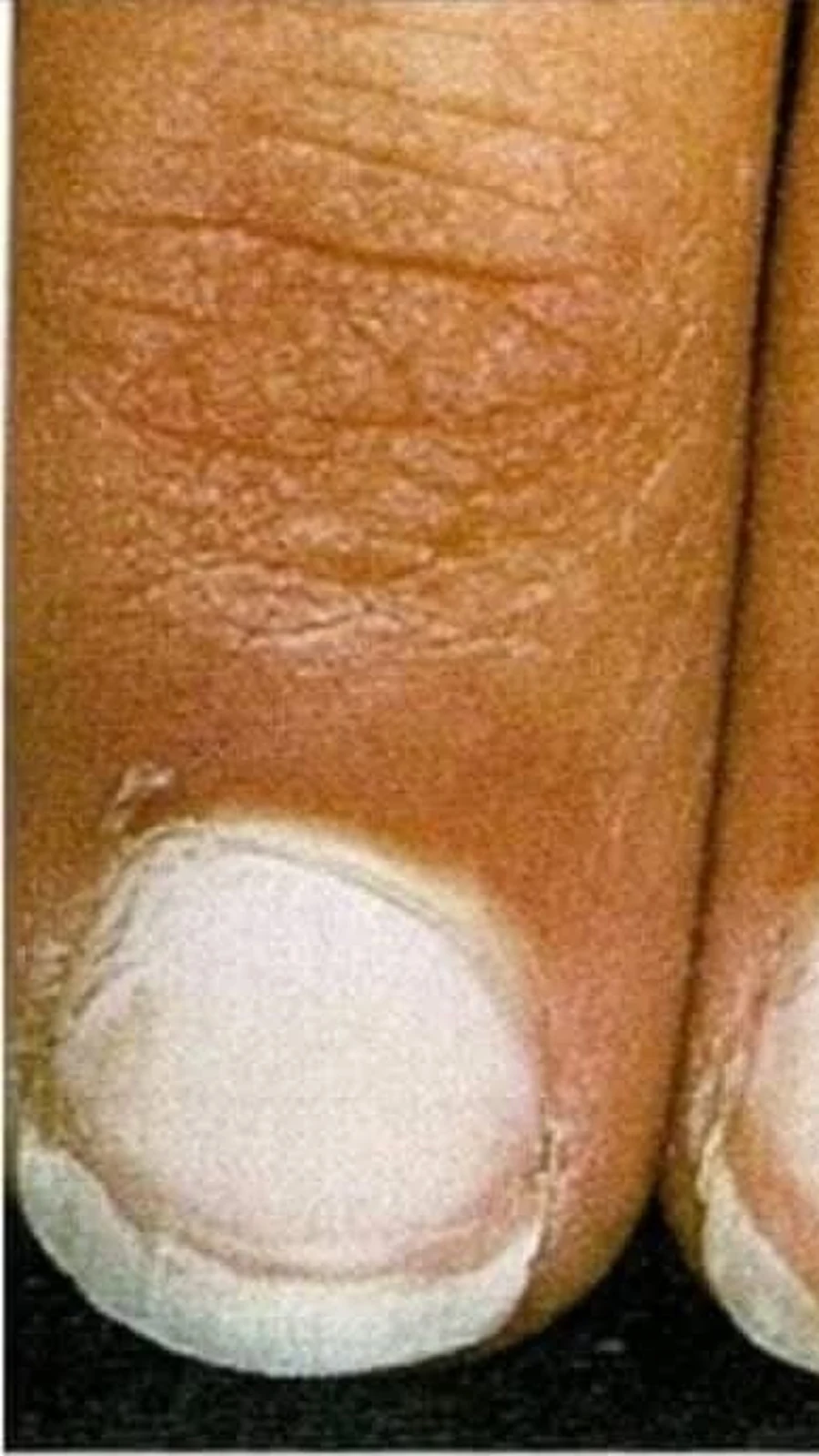
A healthy nail bed is pink because blood flows just under the translucent nail plate. When the pink fades and the nail looks pale or washed out, the usual question is whether less blood is reaching the fingers, or less haemoglobin is in the blood — in plain words, anaemia. Pale nails on their own do not diagnose anaemia, and plenty of people have naturally paler nail beds than others. But nails that have clearly become paler than they used to be, especially along with tiredness or feeling cold and short of breath, are worth a simple blood test.
There is a specific pattern with its own name: Terry’s nails. The nail turns mostly white, with only a narrow pink or brown band left at the tip, and the little half-moon disappears. It is usually seen in older adults and is associated with liver disease, heart failure, or diabetes. It is not a diagnosis by itself, and it appears gradually, but a nail that has turned mostly white with a dark tip band is a good reason to ask a doctor to look, especially if it is new and on most of your nails.
The practical point is comparison. You cannot judge your nails against a photo on the internet — skin tones and lighting change everything. You can judge them against your own hands a few months ago, which is another reason the monthly photo habit in this guide is worth starting. A gradual fade is easy to miss day to day and obvious in a photograph.
Additional Information: Press a nail bed gently and watch it blanch white, then pink up again. Healthy nails pink up within about two seconds. Slow refill, along with paleness, is another small clue worth mentioning to a clinician — not a diagnosis, just a useful observation to report.
Nail Pitting: Tiny Dents With a Bigger Story
Pitting is one of the subtler changes, and it is easy to miss until you catch the light right. The surface of the nail is dotted with tiny dents, like the surface of a thimble, or like someone pressed the nail with the tip of a pin in a dozen places. A few pits on one nail might follow an injury. Pits on several nails, especially together with other changes, are a different story.
Pitting is most closely associated with psoriasis, the skin condition that speeds up skin cell production. In psoriasis the nail matrix gets inflamed, and the nail it produces comes out pitted. It is also seen in alopecia areata, the autoimmune condition that causes patchy hair loss, and in eczema. In all three cases the nail is not the disease — it is a visible clue to something happening in the immune system. That is why dermatologists look at nails when they assess psoriasis: the pits help them understand how active the condition is.
If you notice pitting, the first thing to check is your skin and scalp. Psoriasis often shows as red, scaly patches on elbows, knees, or scalp, and many people have had it for years without connecting it to their nails. Pitting that appears with scaly patches, or with hair loss in patches, is worth showing to a dermatologist. There is no home treatment that fills pits in — they grow out as the nail grows — but the underlying condition can be treated, and treating it often improves the nails over time.
Additional Information: Do not try to file pits smooth. Filing thins the nail plate over the pits and can make the nail weaker and more likely to split. If the pits bother you cosmetically, a ridge-filling base coat under polish hides them better than filing ever will, and it protects the nail at the same time.
Spoon Nails: When Nails Curve Up Like Little Spoons
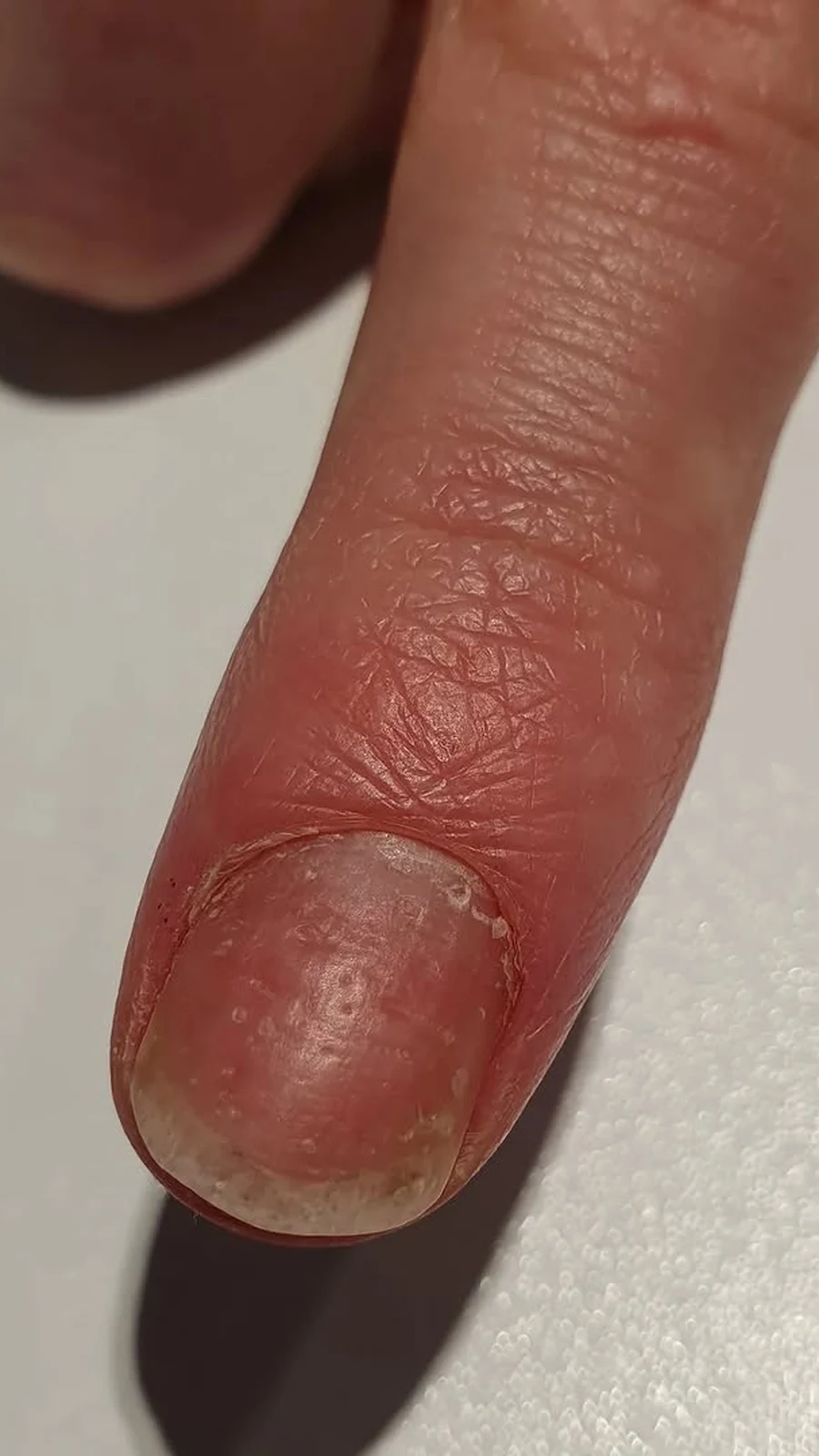
Most nails curve gently downward at the tip, following the shape of the fingertip. Spoon nails do the opposite: the nail dips in the middle and the edges lift, so the nail can hold a drop of water like a tiny spoon. Doctors call it koilonychia, and it usually develops slowly, so people often do not notice until someone else points it out, or until they catch the nail on something and realise the shape has changed.
The most common association is iron deficiency — the body does not have enough iron to make healthy red blood cells, and the nails are one of the places that shows it. It is also seen with thyroid problems, and it can follow injury to the nail or years of working with the hands in water or chemicals. In babies and small children, spoon-shaped nails are often normal and grow out on their own, which is a useful reminder that context matters: a change that is worrying in an adult can be ordinary in a child.
If your nails are spooning, the useful next step is a blood test, not a supplement. Iron supplements help only if iron is actually low, and taking them without knowing can cause problems of its own. A doctor can check iron levels and thyroid function with simple blood tests, and if the cause is iron deficiency, the nails usually improve over months as the levels come back up. In the meantime, keep the nails short and protected, because a spoon-shaped nail catches on things and splits more easily than a normal one.
Additional Information: There is a simple test people use at home, though it is not a diagnosis: place a drop of water on the nail. On a normal nail it runs off. On a spoon nail it sits in the dip. It is a handy way to show a doctor what you mean, but the blood test is what actually answers the question.
Clubbing: When Fingertips Slowly Change Shape
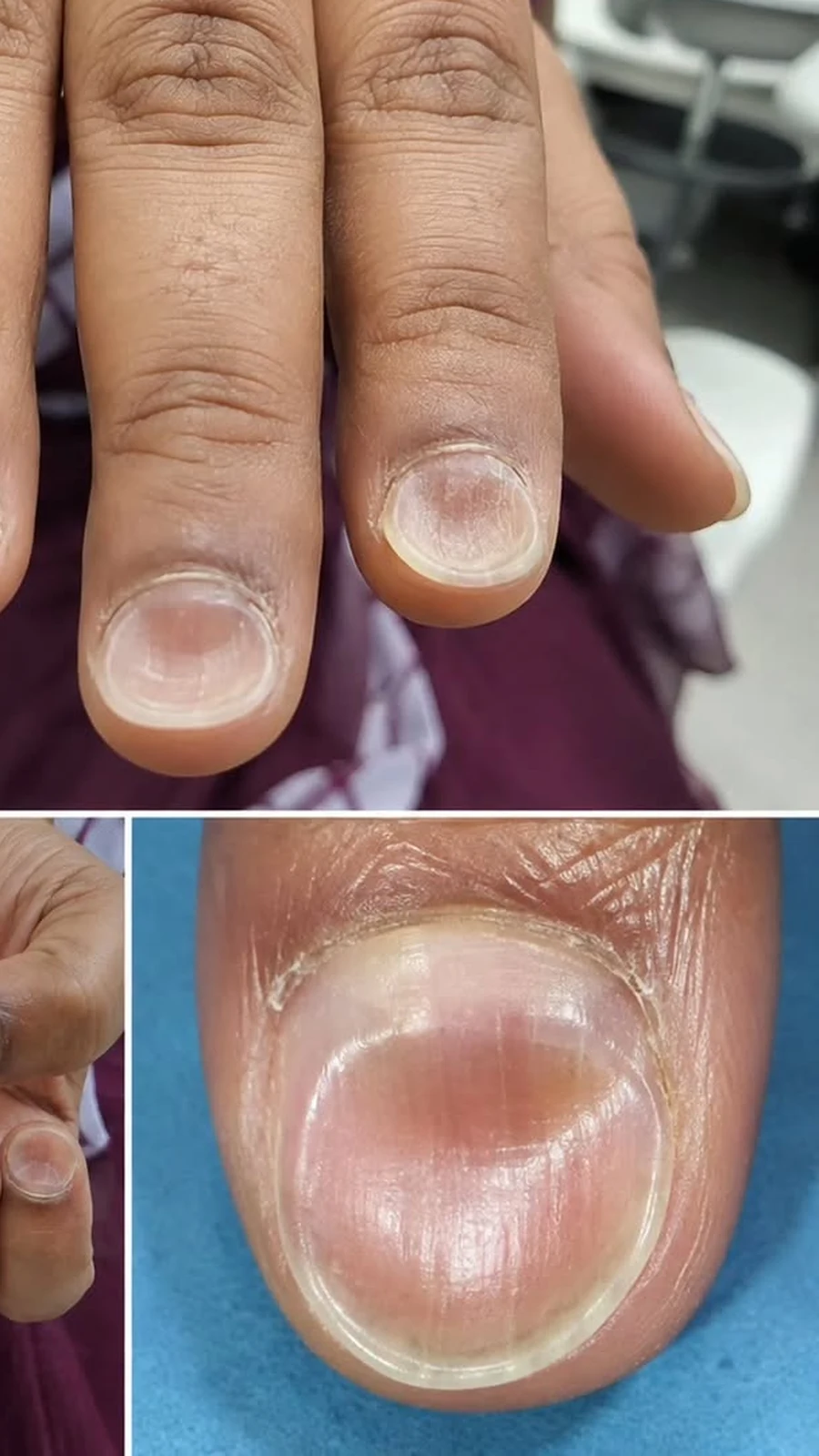
Clubbing is the change that is hardest to notice in yourself, because it happens so slowly. The fingertips gradually widen and round, the nail curves more steeply over the end of the finger, and the angle where the nail meets the skin flattens out. In advanced cases the fingertip looks like the end of a drumstick, and the nail looks wrapped around the finger. It usually affects all ten fingers, and it develops over months or years.
It is associated with conditions that reduce oxygen in the blood over a long time — most often lung diseases, but also some heart conditions, digestive conditions, and liver disease. The mechanism is not fully understood, but the pattern is well known to doctors, and it is one of the signs they look for in a physical examination, precisely because patients rarely notice it themselves.
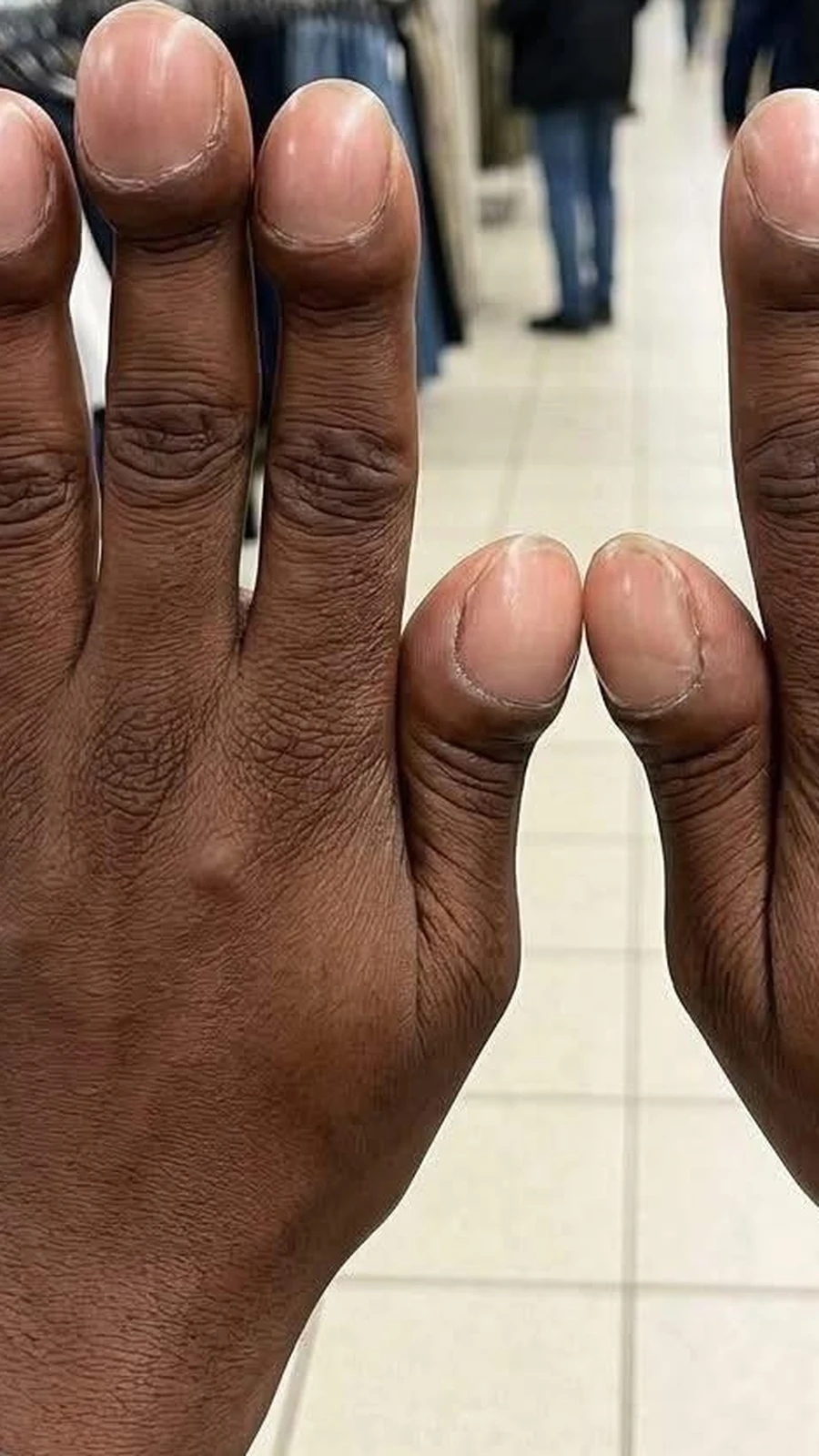
There is a simple test you can do at home, called the Schamroth window test. Hold the nails of the same finger on both hands together, back to back, so the two nails touch. In a normal finger you will see a small diamond-shaped gap of light between the two nails, just above where they meet. In a clubbed finger that gap disappears, because the angle at the base of the nail has flattened. It is a screening trick, not a diagnosis — but if the diamond window is gone on most of your fingers, that is worth a doctor’s appointment, and worth mentioning the test by name.
Additional Information: Clubbing can also run in families without any disease behind it, and it can be present from birth. What matters is change: fingers that have always looked that way are less concerning than fingers that have gradually changed shape over a year or two. Compare the shape of your fingertips in a photo from a few years ago with how they look now.
Dark Streaks: The One Mark to Never Ignore
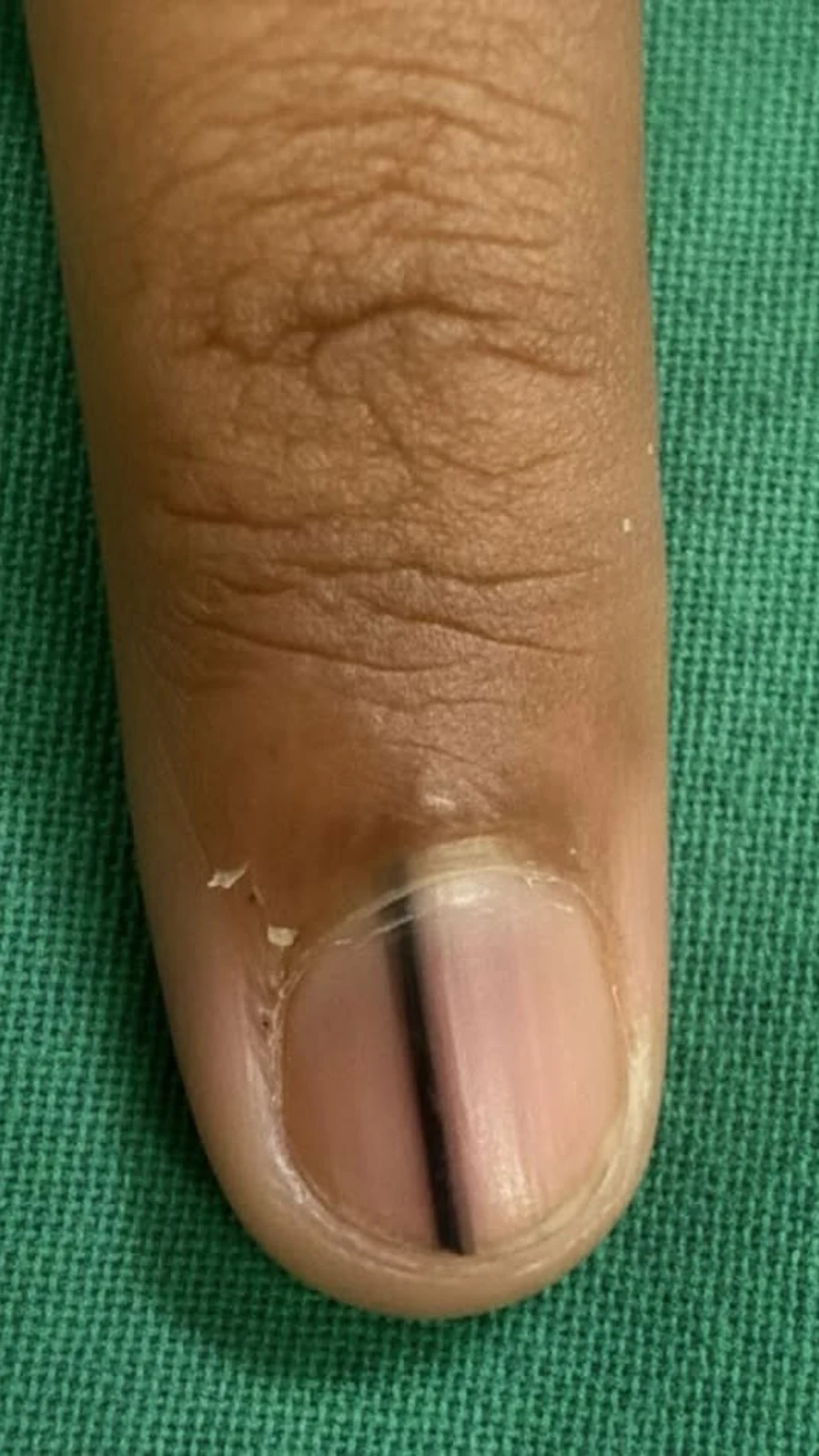
Of everything in this guide, this is the section to remember. A dark brown or black streak running lengthwise down a nail — from the cuticle to the tip, like a thin stripe of dark polish that will not come off — is called melanonychia. It happens when the pigment-making cells in the matrix start producing extra melanin, and it stains the nail as it grows. Sometimes the cause is harmless: darker skin tones often have benign pigmented streaks, and a single streak can follow an injury. But sometimes the cause is melanoma, the most serious form of skin cancer, growing in the nail matrix.
There is one sign doctors take especially seriously: pigment that spreads from the nail onto the surrounding skin, particularly the cuticle or the fingertip — called Hutchinson’s sign. A streak that is very dark, very wide, uneven in colour, or changing over time is also more concerning. And a dark streak that appears on one nail in an adult, especially the thumb or big toe, deserves to be looked at promptly by a dermatologist, ideally within days rather than months.
This is not a section to reassure you out of. Most dark streaks are not cancer. But the stakes are high enough, and the check is simple enough — a dermatologist can look at the nail with a magnifier, and if needed take a small sample — that there is no good reason to watch and wait. If you have a dark streak on a nail, book the appointment, and do not try to file it off, cover it with polish and forget it, or convince yourself it is a bruise. A bruise under a nail moves outward as the nail grows. A dark streak from the matrix does not move — it stays in the same line, growing longer from the base.
Additional Information: Take a photo of the streak today, with a coin or a ruler beside it for scale, and note the date. If it changes — wider, darker, spreading onto the skin — you will have a dated record to show the dermatologist, and dated photographs are genuinely useful in these appointments.
Nails Lifting Away From the Bed
A nail that starts to lift away from the fingertip, leaving a gap under the free edge, has a name — onycholysis — and a surprisingly long list of possible causes. The lifted part usually looks white or yellowish, because air has got under the nail where the nail bed used to be attached, and the nail may feel loose or catch on things. It often starts at the tip and creeps backward toward the cuticle.
The most common triggers are everyday ones: trauma to the nail, picking or cleaning under the nail too aggressively, long exposure to water, or harsh chemicals. But it is also a classic sign of psoriasis of the nail, and it is seen with thyroid problems and some medications. The pattern gives clues: lifting on one nail after an injury points to trauma; lifting on several nails, especially with pitting or skin patches, points more toward psoriasis.
The important rule with a lifting nail is to keep it clean, dry, and short. The gap underneath is a warm, damp pocket where bacteria and fungus thrive, and the biggest risk is that a simple lifting nail becomes an infected one. Do not try to glue it back down, do not clean underneath it with sharp tools, and do not cover it with a false nail to hide it. Trim the lifted part back gently so it does not catch, keep it dry, wear gloves for wet work, and let it reattach as the nail grows — which it usually does, slowly, over months. If the lifting spreads, the skin underneath is red or sore, or the nail is also thick and discoloured, see a doctor or dermatologist.
Additional Information: The longer the free edge, the more leverage everyday bumps have on the nail, and the easier it is for the nail to start separating. If your nails lift repeatedly, shorter nails for a few months while they recover is a practical fix, not a punishment.
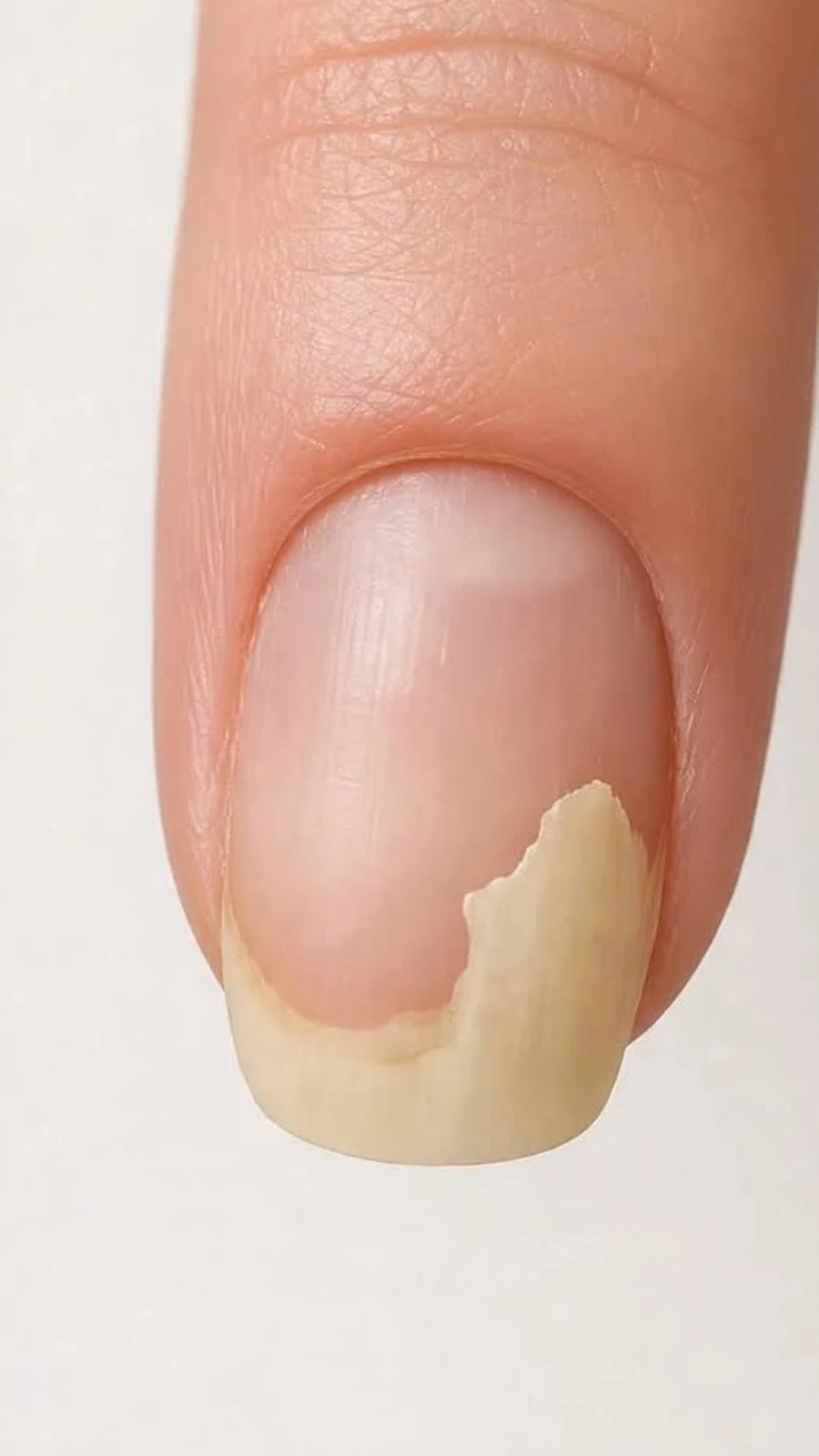
Thick, Crumbly, Discoloured Nails: Fungus
Nail fungus is the most common nail infection in the world, and one of the most recognisable once you know the pattern. It usually starts at the tip or the side of a toenail — fingernails are affected less often — as a small yellow or white spot. Then the nail thickens, turns yellow or brown, becomes crumbly at the edge, and may lift from the bed. It does not usually hurt at first, which is why people ignore it for months, and it spreads slowly from one nail to its neighbours.
Fungus loves warm, damp, dark places, which is why it thrives in shoes, in communal showers and pools, and in nails that stay damp. It is more common with age, with diabetes, with a weakened immune system, and in people whose feet sweat a lot or who wear tight shoes. It is not a sign of poor hygiene — athletes and swimmers get it often — but it is contagious, so it can pass between family members through shared towels, floors, or nail tools.
Home treatments for nail fungus have a poor record, and this is worth saying plainly: creams and oils bought without a prescription rarely cure it, because they cannot reach the fungus living under the nail plate. The treatments that work are prescription antifungal tablets, or prescription lacquers used consistently for months, and the choice between them depends on how many nails are affected and on your general health. A pharmacist can advise on the over-the-counter options, but if several nails are affected, or the nail is very thick, or you have diabetes, see a doctor rather than spending months on a remedy that is unlikely to work. And do not share nail clippers or files while you have it.
Additional Information: Fungal nails grow slowly, so treatment takes months, not weeks — the medicine has to stay in the nail while a whole new healthy nail grows out, which for a toenail can take a year. That is normal, and stopping early is the most common reason treatment seems to fail. Take a dated photo at the start so you can see progress that is too slow to notice day to day.
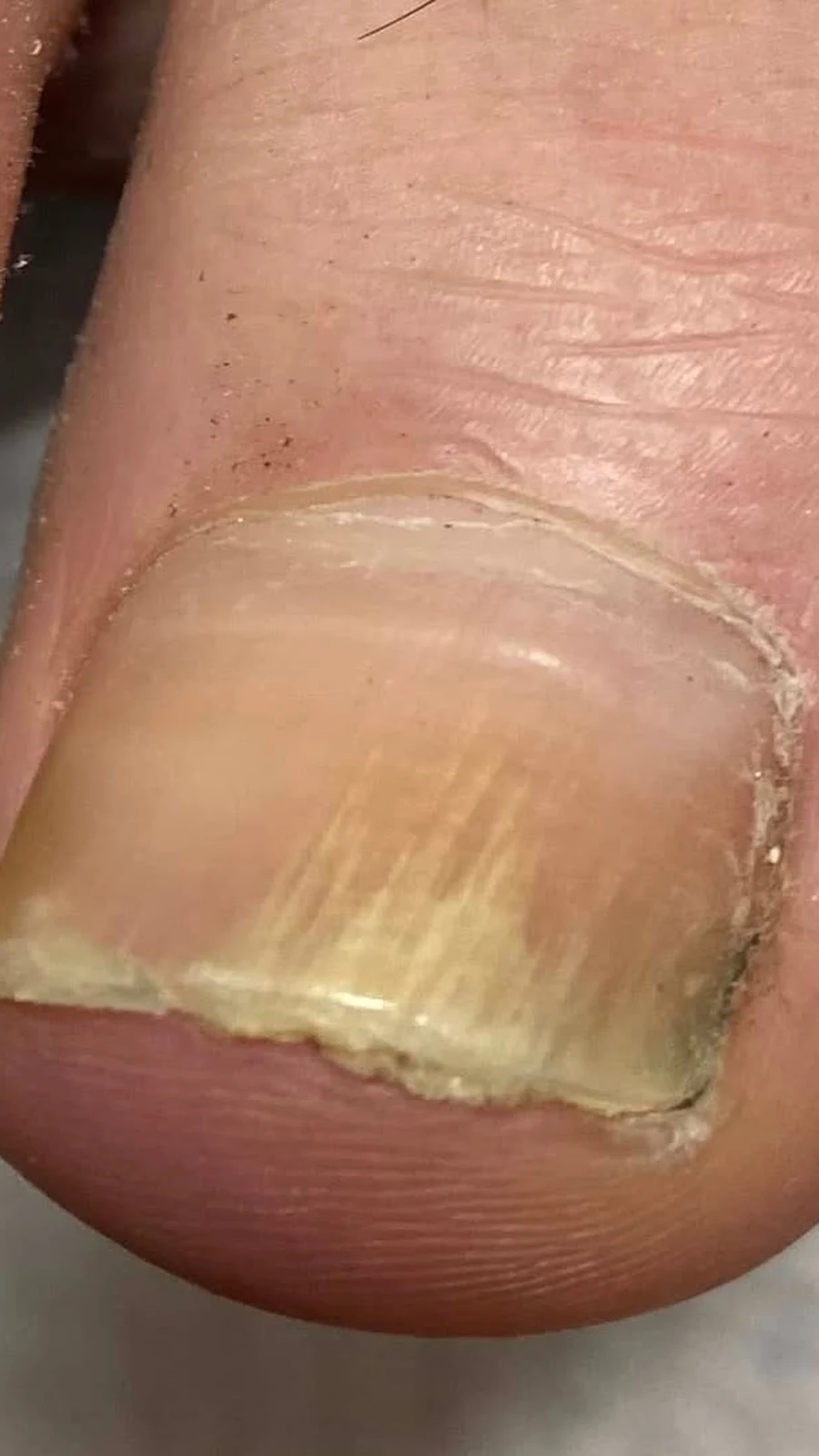
Brittle, Splitting and Peeling Nails
Brittle nails are the complaint almost everyone has had at some point: the nail splits in layers at the tip, peels like an onion, or snaps sideways instead of bending. It is the most common nail problem of all, and most of the time the cause is not inside the body at all — it is outside. Nails swell when they are wet and shrink as they dry, and repeated wetting and drying weakens the layers of keratin until they separate. Add harsh soap, cleaning products, acetone remover, and cold dry air, and you have the perfect recipe for peeling nails.
The fix is mostly about water and protection. Wear gloves for washing up and cleaning, moisturise the nails and cuticles daily with a plain oil or cream, and avoid peeling polish off — pulling polish off lifts layers of nail with it. Keep the nails at a practical length, because very long nails split more. And be gentle with the file: file in one direction, not back and forth like a saw, which frays the tip.
There are internal causes too, worth ruling out if the brittleness is new, severe, or comes with other changes. Iron deficiency can make nails brittle as well as spoon-shaped. Thyroid problems can affect nail strength. So if you have tried the gloves-and-moisturiser routine for two months and nothing has changed, or if the brittleness arrived at the same time as tiredness or hair changes, a blood test is a sensible next step. But for most people, most of the time, brittle nails are a weather report about their hands, not a warning about their health.
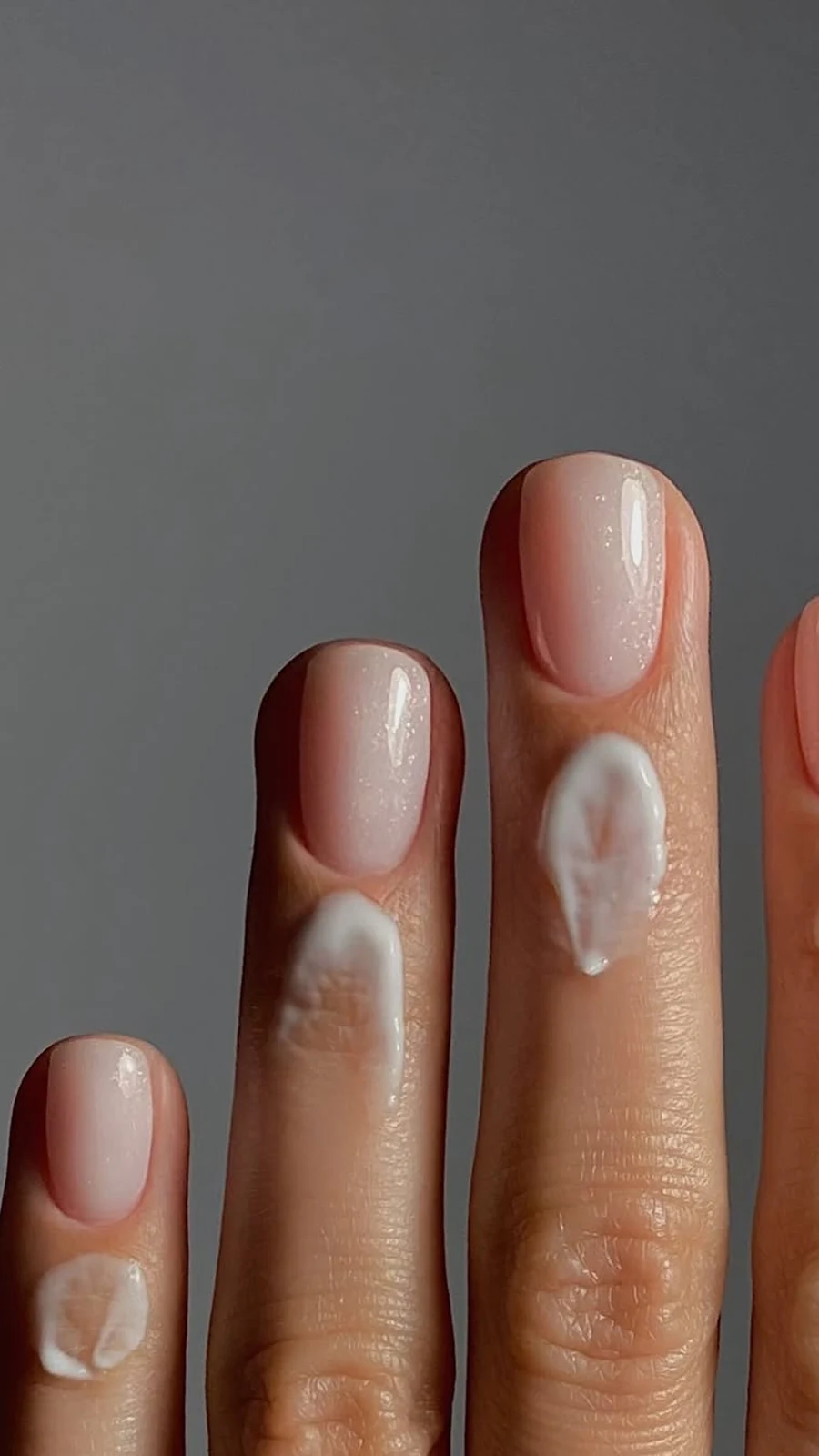
Additional Information: The single most effective habit for brittle nails is also the simplest: moisturise the cuticle and the nail plate itself, not just the hands. A drop of jojoba oil or plain petroleum jelly rubbed into each nail at bedtime does more in a month than most nail strengtheners, which sit on top of the nail and wash off.
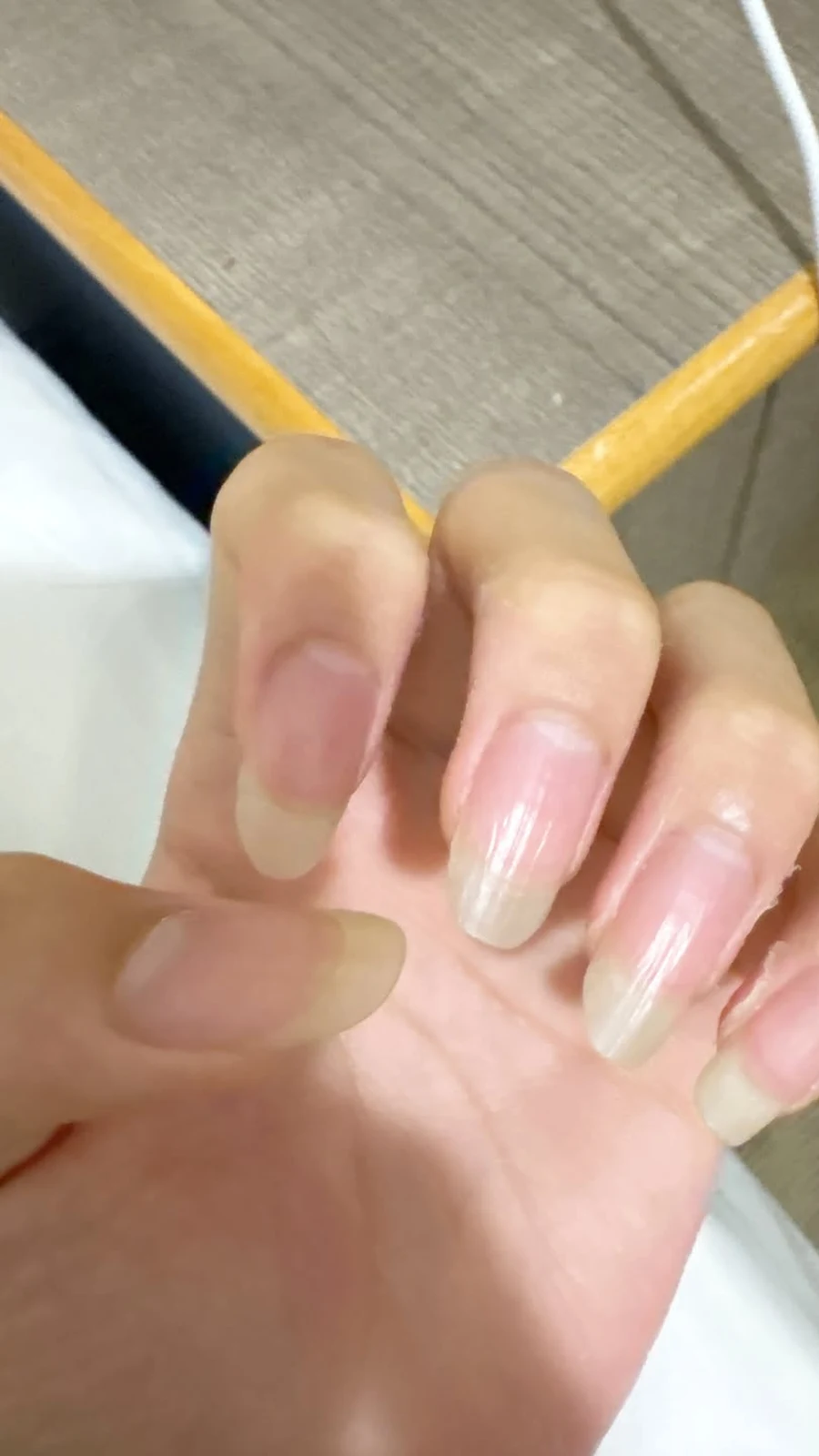
Redness, Swelling and Pain Around the Nail
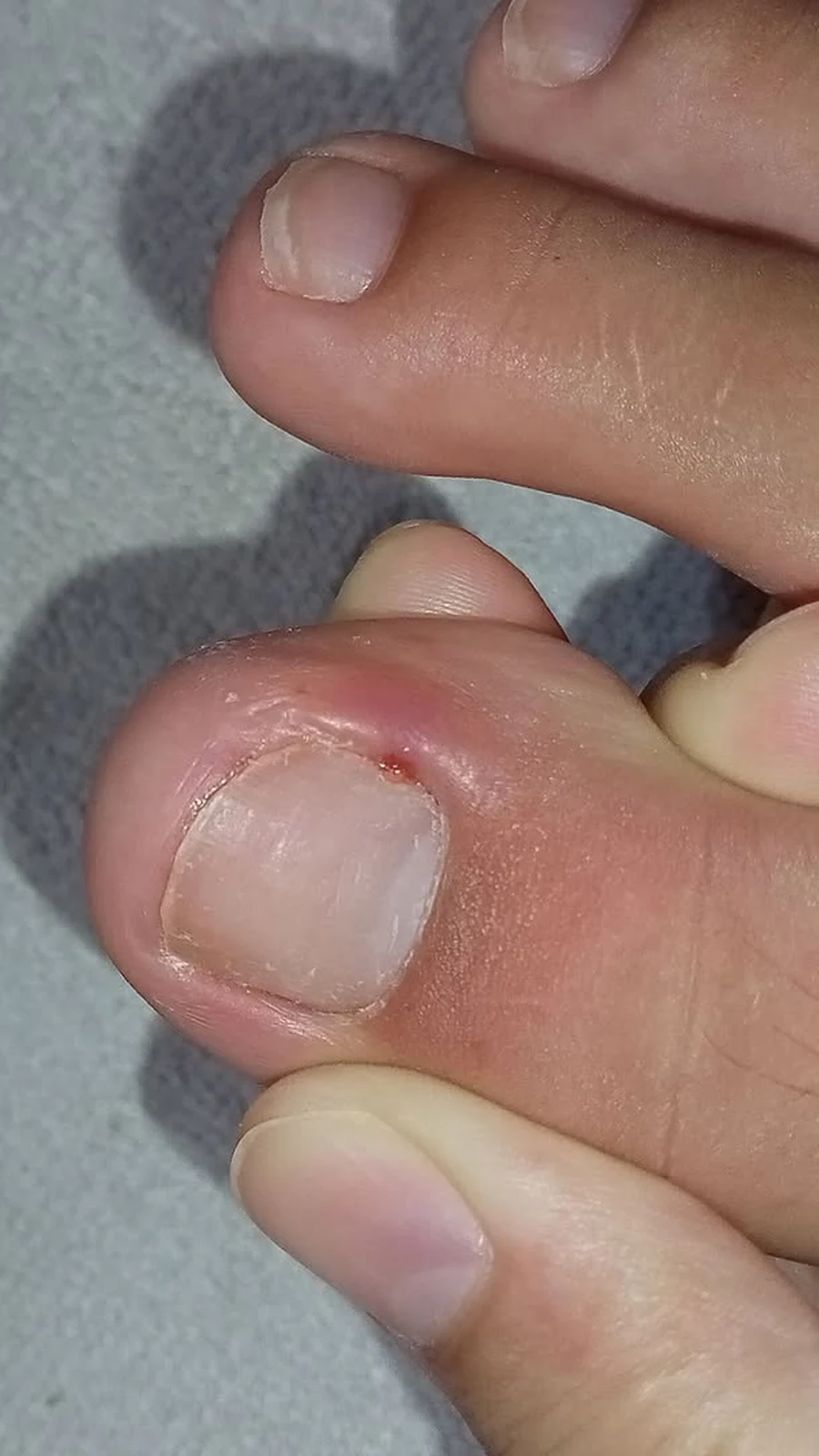
Pain changes the category. Everything so far has been about how a nail looks. Pain, redness, swelling and warmth around a nail mean the skin around it is irritated or infected, and that is a different kind of problem with a shorter fuse. The usual name is paronychia — inflammation of the skin fold around the nail — and it comes in two forms that look similar but behave differently.
Acute paronychia arrives fast, over a day or two: the skin beside the nail becomes red, swollen, warm and tender, and there may be a small pocket of pus. It usually follows a break in the skin — a hangnail pulled off, a cuticle cut too deep, a bite — and bacteria get in through the break. Warm soaks several times a day and keeping the hand clean and dry will settle many mild cases. But if the redness spreads, the pain increases, a red streak runs up the finger, or you develop a fever, that is no longer a home-care situation — it needs a clinician, and quickly, because infections in fingers can spread fast.
Chronic paronychia is the slow version: the skin around the nail stays mildly red and puffy for weeks, the cuticle disappears, and the nail may develop ridges because the matrix is irritated. It is usually not an infection at all but an irritation — hands that are wet all day, cleaning products, or constant hand-washing for work. The fix is protection: gloves, moisturiser, and keeping the cuticle intact rather than cutting it, because the cuticle is the seal that keeps irritants out of the nail fold. If it does not improve with protection, a doctor can check whether a fungal infection is involved.
Additional Information: Never squeeze a painful, swollen area around a nail to try to drain it yourself. Squeezing pushes infection deeper into the finger, and the fingertip has very little room for swelling. Warm soaks and a clinician are safer than your own fingers.
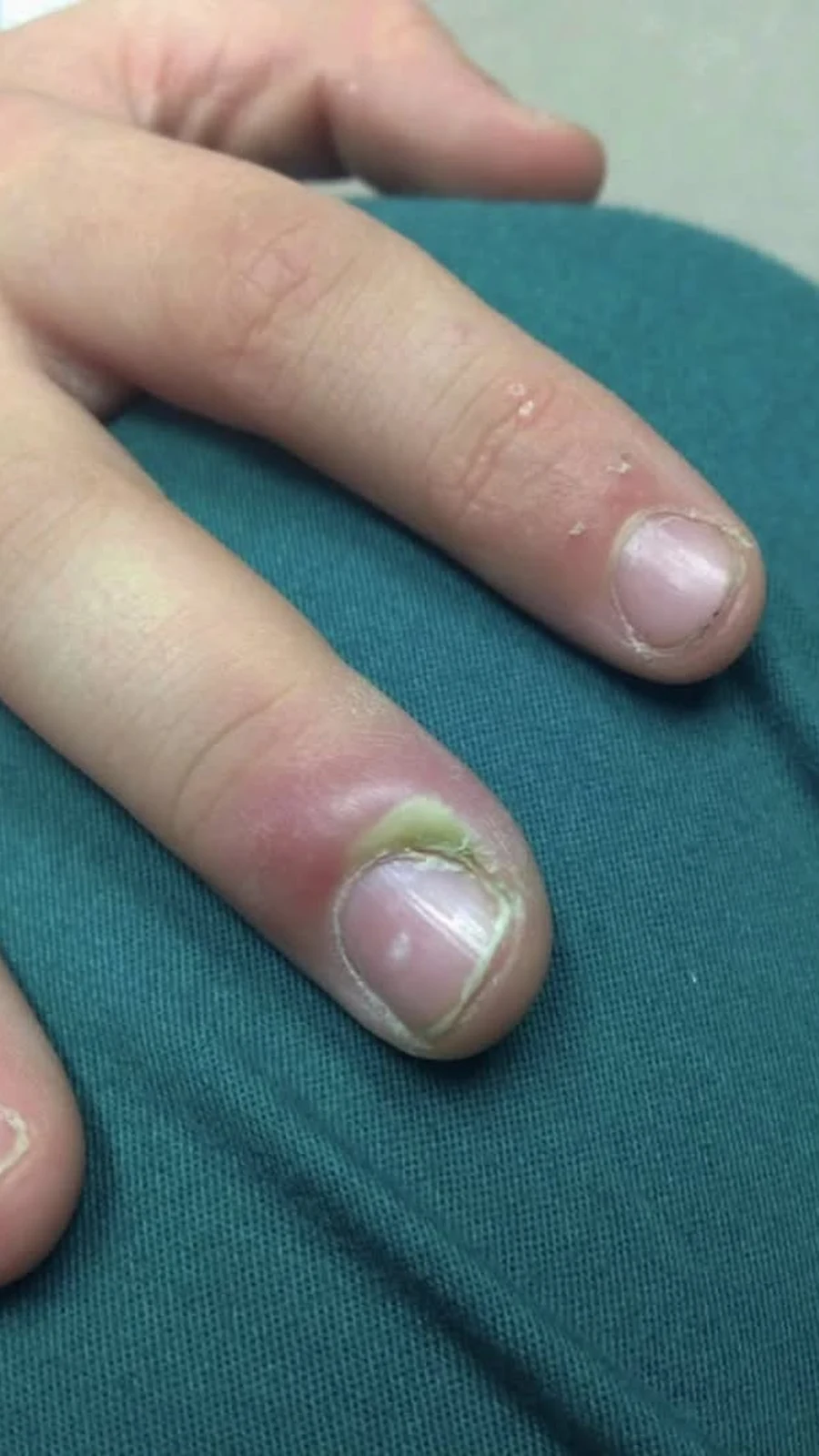
Ingrown Nails: When the Edge Turns Inward
An ingrown nail is a mechanical problem more than a disease: the edge or corner of the nail grows into the soft skin beside it instead of past it. It hurts, it reddens, and if the skin breaks, it can become infected. It is far more common on toenails — the big toe especially — because toenails are thicker, grow more slowly, and spend the day squeezed into shoes. Fingernails can grow in too, but they rarely do.
The usual cause is the cut. Nails cut too short, or with the corners rounded down, leave the skin fold with nothing holding it back; it closes over the place where the corner used to be, and the growing nail runs into it. Tight shoes accelerate the problem, and some people have naturally curved nails that make them more prone. The prevention is straightforward and is covered in detail in our full guide to trimming: cut straight across, leave the corners alone, leave a little length, and wear shoes that do not squeeze the toes.
For a mild ingrown nail — tender but not yet infected — warm soaks, keeping the area clean and dry, wearing open or roomy shoes, and not trying to dig the corner out yourself will often settle it. Digging is the mistake that turns a small problem into an infected one. If the toe is very painful, red and swollen, leaking fluid, or you have diabetes or poor circulation, do not manage it at home at all: see a doctor or a podiatrist, because infections in feet with poor circulation can become serious quickly, and a professional can remove the offending edge safely.
Additional Information: A simple habit prevents most ingrown toenails: cut your toenails after a shower or a soak, when they are softer, and cut them straight across so the corners are visible and level with the skin. The “V” cut in the middle of the nail, sometimes recommended online, does not work — it weakens the nail and the edges still grow in.
When to See a Doctor: Red Flags, Plainly Listed
Most nail changes are harmless, and this guide has said so repeatedly. But a guide that only reassures is not doing its job. Some changes should be seen by a clinician, and the list is short enough to remember:
- A dark brown or black streak running lengthwise down a nail, especially if it is new, wide, or spreading onto the skin around the nail.
- A nail that lifts, bleeds, or changes shape and does not improve as it grows out over a few months.
- Redness, swelling, or pain around a nail that spreads, produces pus, or comes with fever or a red streak up the finger.
- Blue nail beds that do not pink up when you warm your hands, especially with breathlessness or chest pain — seek care urgently.
- Changes affecting many nails at once, especially if they appeared suddenly and came with other symptoms like tiredness, hair loss, or skin changes.
- A nail that stops growing, a nail that falls off without an obvious injury, or a wound under a nail that does not heal.
- Any nail change in a person with diabetes, poor circulation, or a weakened immune system.
When you go, bring the useful evidence: dated photographs showing when the change appeared, a note of any illness, injury, or new medication around that time, and a list of the changes you have noticed across all your nails. Doctors work from patterns, and you are the only person who has seen the pattern develop.
Additional Information: Choose the right clinician for the problem. A dermatologist is the right choice for most nail changes — nails are skin appendages, and dermatologists examine them every day. A podiatrist is right for toenail problems, especially ingrown nails. Your regular doctor is right when the change seems connected to your general health, and they can order blood tests and refer you onward.

A Simple Nail Diary: How to Track Changes Over Time
Nails change slowly, and human memory is bad at slow change. A nail diary fixes that, and it takes about two minutes a month. It is the most useful habit in this entire guide, because it turns vague worry — “has that line always been there?” — into a dated answer.
Once a month, on the same day, take a photograph of both hands, palms down, in daylight, nails bare. Take a second photo of any nail that worries you, close up, with a coin beside it for scale. Save both photos in an album with the date. Then write one line: anything new, anything that has grown out, any illness or injury since last month. That is the whole diary.
What you are looking for over time is movement and pattern. A mark that travels toward the tip and disappears is growing out — almost always harmless. A mark that stays in the same place, spreads, or appears on more nails is not growing out, and deserves a closer look. A change that lines up with an illness three months ago is usually explained by that illness. And a slow change in shape — fingertips rounding, nails curving — is invisible month to month but obvious across a year of photographs. Bring the album to a doctor’s appointment and you will have a better consultation than most people get, because you will be showing the pattern instead of trying to remember it.
Additional Information: If you wear polish most of the time, build a bare-nail day into the diary: one day a month with no polish, so you can actually see the nails you are photographing. Polish hides exactly the changes a diary is meant to catch, and a day without it is also good for the nails themselves.
Everyday Habits That Keep Nails Healthy
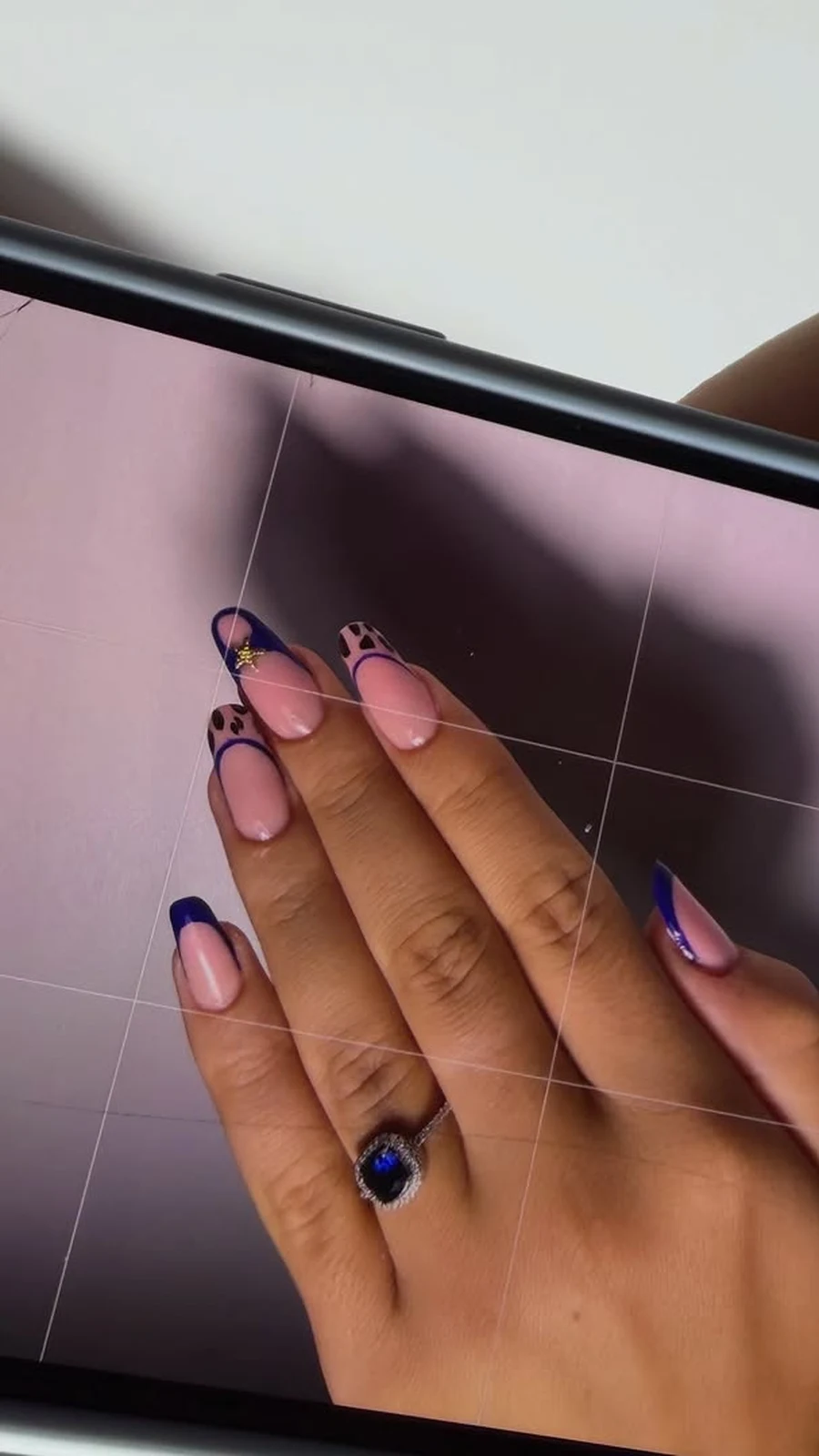
Healthy nails are mostly a matter of boring, consistent habits, and none of them are expensive. Keep your nails clean and dry, because fungus and bacteria both love dampness. Moisturise the nails and the cuticles, not just the skin around them, especially in cold weather. Wear gloves for washing up, cleaning, and gardening — water and chemicals are the biggest everyday threat to nail strength. Trim your nails regularly, straight across for toenails and with a gentle curve for fingernails, and file in one direction rather than sawing back and forth.
Do not use your nails as tools. Prying, scraping, and opening cans with your nails chips the free edge and lifts the nail from the bed. Do not bite or pick at your nails or cuticles, because the little injuries this causes show up weeks later as white spots, ridges, and grooves — and because broken skin around a nail is an open door for infection. Do not cut your cuticles: push them back gently if you must, but the cuticle is a seal, and cutting it removes the protection it provides. Give your nails a break from polish now and then, always use a base coat under dark colours, and eat normally and variedly — nails are made of protein, and a diet low in protein or iron will eventually show in them.
Additional Information: The habit that protects nails most is the one people resist most: gloves. Hands in hot soapy water swell and dry out repeatedly through the day, and that swelling and shrinking is what splits nails in layers. A pair of rubber gloves for washing up costs almost nothing and does more for brittle nails than any supplement or strengthener.
FAQ
Are white spots on nails a sign of a calcium deficiency?
Almost never. Small white spots are usually tiny injuries to the nail matrix from weeks earlier — a bump or pressure you never noticed. They grow out with the nail. True calcium problems show up in blood tests and in other parts of the body, not as a single white spot on one nail, and a normal varied diet provides enough calcium.
What causes ridges on fingernails?
Vertical ridges running from the cuticle to the tip are usually just age — the matrix produces nail a little less evenly over time, and most people develop them. Horizontal ridges, called Beau’s lines, are different: they mark a pause in nail growth, often after an illness, a high fever, or an injury, and they grow out over a few months.
When should I worry about a dark line on my nail?
A dark brown or black streak running lengthwise down a nail should be looked at by a dermatologist promptly, especially if it is new, wide, uneven in colour, or spreading onto the skin around the nail. Most streaks are harmless, but the check is simple and the stakes are high, so do not watch and wait.
Can nail changes really show health problems?
They can suggest them, but they cannot diagnose them. Nails can reflect things like iron deficiency, thyroid problems, psoriasis, or low oxygen, because the matrix is sensitive to what is happening in the body. A nail change is a reason to ask a question and get a test — it is not an answer by itself.
How long does it take for a damaged nail to grow out?
Fingernails grow about three millimetres a month, so a mark halfway down the nail takes around three months to reach the tip, and a full nail takes about six months to replace itself. Toenails are slower — about a millimetre a month, and a full year to regrow. That is why nail treatments and nail recovery always take months.
Should I stop wearing nail polish if my nails change?
A break from polish helps in two ways: it lets you see the nail properly, and it removes the chemicals and the staining that can confuse the picture. A week or two bare is enough to assess a change. If the change is a colour or a surface mark, polish can also hide it, which is the last thing you want when you are trying to track it.
Conclusion
Your nails are not a medical test, and this guide is not a diagnosis — it is a way of paying attention. Most of what you will ever notice on your nails is harmless: a white spot from a bump you forgot, ridges that arrived with your birthdays, yellow from a dark polish, brittleness from too much water and too little moisturiser. Those things grow out, fade, or improve with simple habits, and knowing that saves a lot of unnecessary worry.
But paying attention also means knowing the exceptions. A dark streak that does not move. Blue nails that do not pink up. Clubbing that crept in over a year. Redness that spreads. Those are the moments to stop reading articles and start a conversation with a doctor, with dated photographs in hand and a clear description of what changed and when. That is not overreacting — it is exactly what your nails are for, if you know how to read them.
Start with the simplest habit in this guide: once a month, bare nails, daylight, one photograph. It costs two minutes and it gives you something no article can — your own baseline. Everything else in this guide is just knowing what to compare it against.
This article is general information only and is not medical advice. It cannot diagnose or treat any condition. If you are worried about a change in your nails, or if a change does not improve as the nail grows out, please speak to a doctor or a dermatologist.


Leave a Reply