The Two Minutes That Decide Whether Your Toenail Hurts Next Month
Nobody thinks about how they cut their toenails until one of them starts hurting. Then suddenly it is the only thing you can think about — every step, every shoe, every blanket brushing against the toe in bed. An ingrown toenail is a small problem with an outsized talent for ruining your week, and here is the part most people never hear: in most cases, it did not start in your shoe. It started in your bathroom, on the last day you trimmed your nails, in about ninety seconds, with a pair of clippers you have owned for years.
That sounds like bad news. It is actually the opposite. If the cause is something you do with your own hands, the fix is something you can do with your own hands too — and it costs nothing, takes two minutes, and works. No special products, no appointments, no new routine to learn. Just a different way of cutting, a different idea of what “short enough” means, and a couple of habits you will wish someone had told you years ago.
This guide is the whole routine, start to finish: what an ingrown nail actually is, why the way you cut is usually the trigger, and twelve steps that take you from washing your hands to a finished, pain-free trim. There are no products to buy and no jargon to memorise. There is one rule that matters more than all the others put together, and it is the one almost everyone gets wrong. You will know it when you reach step four.
What an Ingrown Nail Actually Is
Before the routine, it helps to know what you are preventing, because the mechanics explain everything that follows. A nail grows out of the nail matrix, the little factory hidden under the skin at the base of the nail. It slides forward along the nail bed, guided by the skin folds on either side — the lateral nail folds — which are supposed to stay politely out of the way. An ingrown nail happens when the edge or corner of the nail stops sliding forward and starts pressing into that soft skin instead.
At first it is just tenderness: a faint ache when you press the side of the toe, a little redness you barely notice. Then the skin gets irritated, swells slightly, and the swelling pushes the skin further into the nail’s path, which makes the nail dig in more. It is a slow, self-reinforcing loop, and once it starts, it does not fix itself. Left alone, the skin can break, and broken skin around a toenail is an open door for infection — which is how a trimming habit turns into antibiotics, or a trip to the podiatrist, or in rare cases something much worse.
Toenails are the usual victims, and the big toe takes the brunt of it, because it is the widest nail, it bears the most pressure from shoes, and it grows the slowest, which gives a bad cut months to cause trouble. Fingernails can grow in too, but they rarely do: they are thinner, they grow faster, and they are not squeezed into shoes all day. So most of this guide is written with toenails in mind, and where fingernails are different, the guide says so.
There is one more thing worth knowing before you pick up the clippers. Some people are simply more prone to ingrown nails: curved nails that curl down at the edges, thick nails, nails that grow fast, feet that sweat a lot, shoes that are too tight. You cannot change the shape of your nails. But here is the encouraging part — even with curved or thick nails, correct trimming keeps the nail’s edge above the skin instead of under it, and that alone prevents most ingrown nails. Technique is the thing you control, and technique is what this guide is about.
Why the Cut Matters More Than the Shoe
People blame their shoes for ingrown toenails, and shoes do play a part: a tight toe box squeezes the skin against the nail edge and accelerates a problem that is already forming. But shoes are rarely the original cause. Ask a podiatrist what they see most often and the answer is remarkably consistent: nails cut too short, corners cut round, edges dug out with the tip of a file or a pair of scissors. The cut creates the problem; the shoe just hurries it along.
Think about what a rounded corner actually does. A toenail’s job is to grow forward, straight out of the toe. When you round the corners down, you shorten the sides of the nail, and the skin fold — which has nothing holding it back anymore — closes in over the place where the corner used to be. Then the nail grows forward into that skin instead of past it. It is the most common trimming mistake in the world, and almost everyone does it, because a rounded corner looks neater and feels smoother. It looks better on the day. It hurts three weeks later.
Cutting too short does something similar from a different direction. The nail’s free edge is supposed to sit just past the fingertip or the end of the toe, acting as a small shield over the soft skin underneath. Cut it flush with the skin, and there is nothing to stop the surrounding skin from folding over the nail’s edge as it grows. The nail then has to push through skin to get out, and it cannot. It grows sideways instead, into the fold.
None of this is your fault for not knowing. Nobody teaches nail trimming. You learn it by watching a parent do it quickly, or by copying whatever feels tidy. But now that you know the mechanics, the fix is almost embarrassingly simple: cut straight across, leave the corners where they are, and leave a little length on. Everything else in this guide is detail around those three ideas.
The Trim, Step by Step
Twelve steps, in order, from clean hands to finished nails. The whole thing takes about ten minutes the first time and about five once you know it. Read it once through before you start, and keep the clippers in your hand, not in a drawer across the room — half the mistakes in this guide happen because someone got up to find a tool mid-trim and rushed the rest.
1. Wash and Dry Your Hands and Feet First
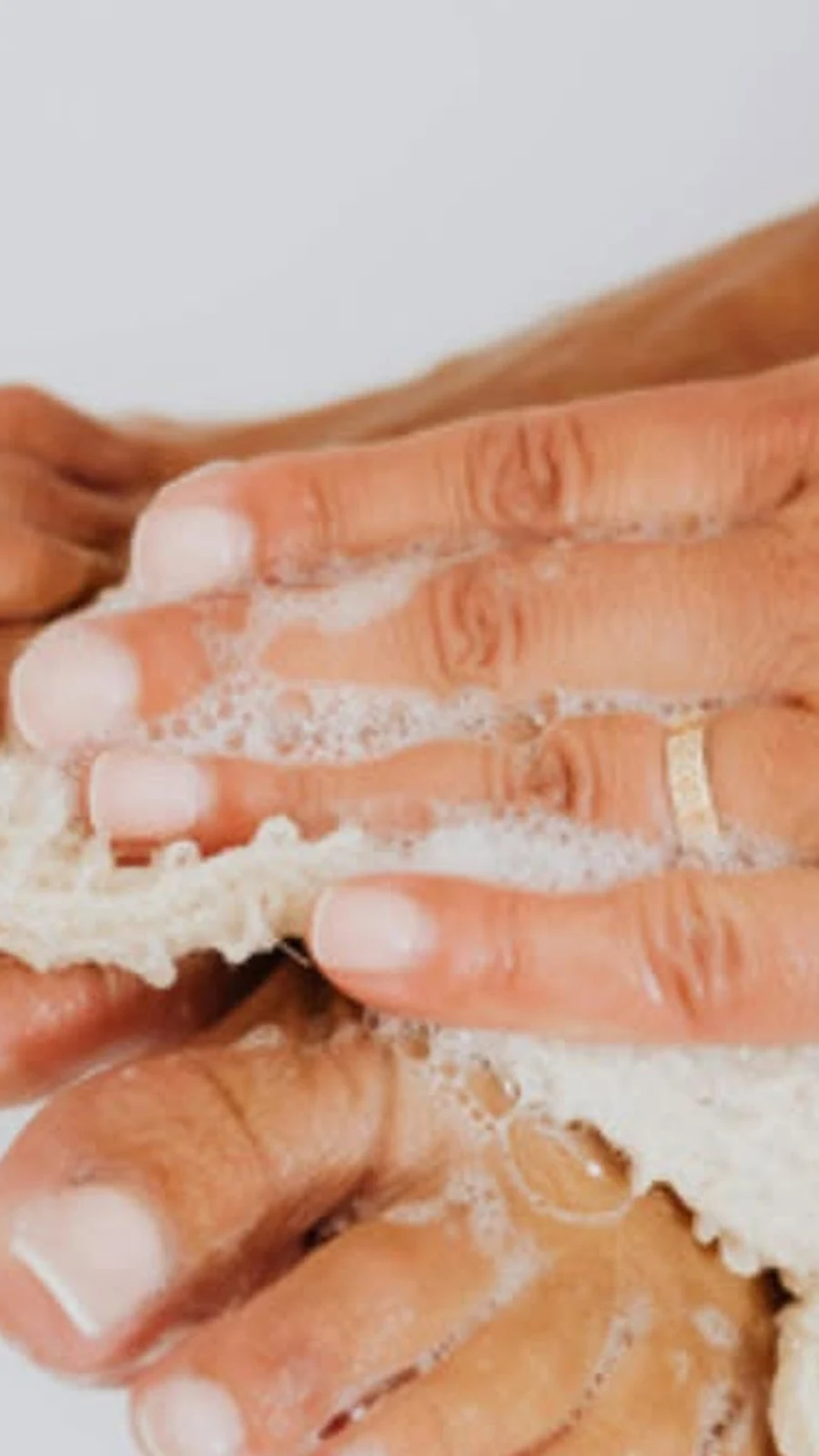
Start with soap and warm water, hands and feet both, and dry them properly afterwards. It sounds like fussiness, but it is the cheapest infection insurance there is. Trimming makes tiny, invisible nicks in the skin around the nail — you will never feel them — and clean skin means those nicks meet clean hands instead of the day’s dirt and bacteria. It matters most for toenails, which spend the day inside warm, damp shoes, which is exactly the environment bacteria like best.
Drying matters as much as washing. A wet nail is a soft nail, and a soft nail tears instead of cutting cleanly. Towel off thoroughly, especially between the toes, and give your feet a minute of air before you start. If you have just come out of the shower, you are already halfway through step two.
Additional Information: This is also the moment to look at your feet properly, which most people almost never do. Check each toe for redness along the nail edge, swelling, or a spot that is tender to the touch. If a nail is already red and sore, do not trim it today — skip to the section on warning signs near the end of this guide instead. A quick look now saves you from cutting into an ingrown nail that has already started, which is one of the worst things you can do to it.
2. Soften the Nails With a Warm Soak
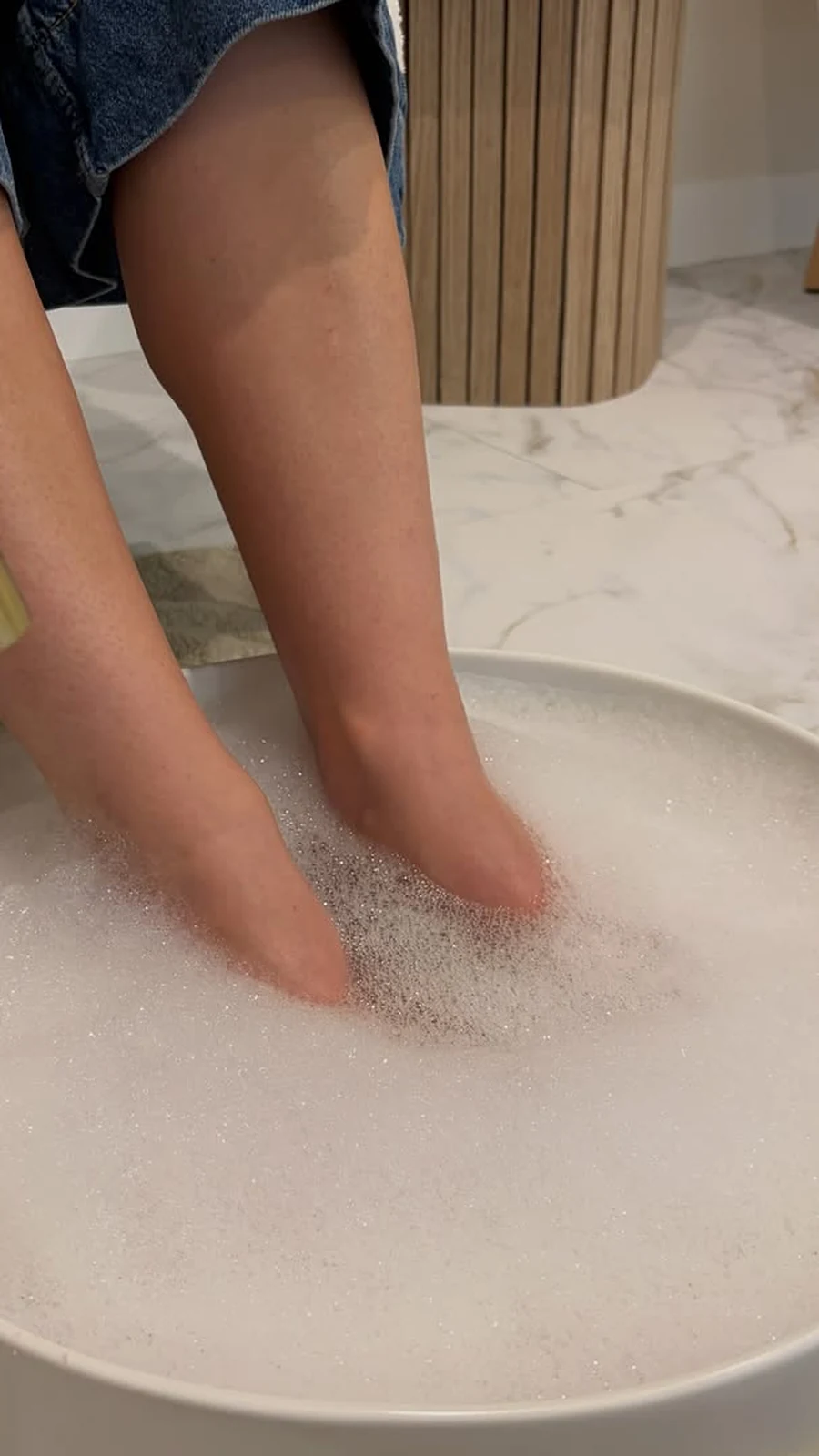
If your nails are hard, thick, or brittle, do not cut them dry. Soak your feet (or hands) in warm water for five to ten minutes first. Warm water makes the nail plate more flexible, so the clippers cut cleanly instead of cracking or splitting the nail — and a cracked nail is a nail with a jagged edge, and a jagged edge is a snag waiting to catch on skin and fabric. A few drops of mild soap or a little oil in the water is plenty; this is not a spa treatment, it is preparation.
There is a practical bonus too: softened cuticles are easier to deal with afterwards, and softened nails are far easier to file. If you have ever had a toenail shatter under the clippers into three pieces, you know exactly why this step exists. Ten minutes of soaking is the difference between a clean cut and a mess.
Additional Information: Keep the water warm, not hot — hot water swells the nail and dries it out, which is the opposite of what you want. If you are short on time, trimming after a shower or bath gives you the same softening for free, which is why so many people find their nails easiest to cut after washing. Do not soak if you have an open cut or sore around a nail, and never soak a nail that is already red and swollen: that one needs a professional, not a basin.
3. Choose the Right Clippers
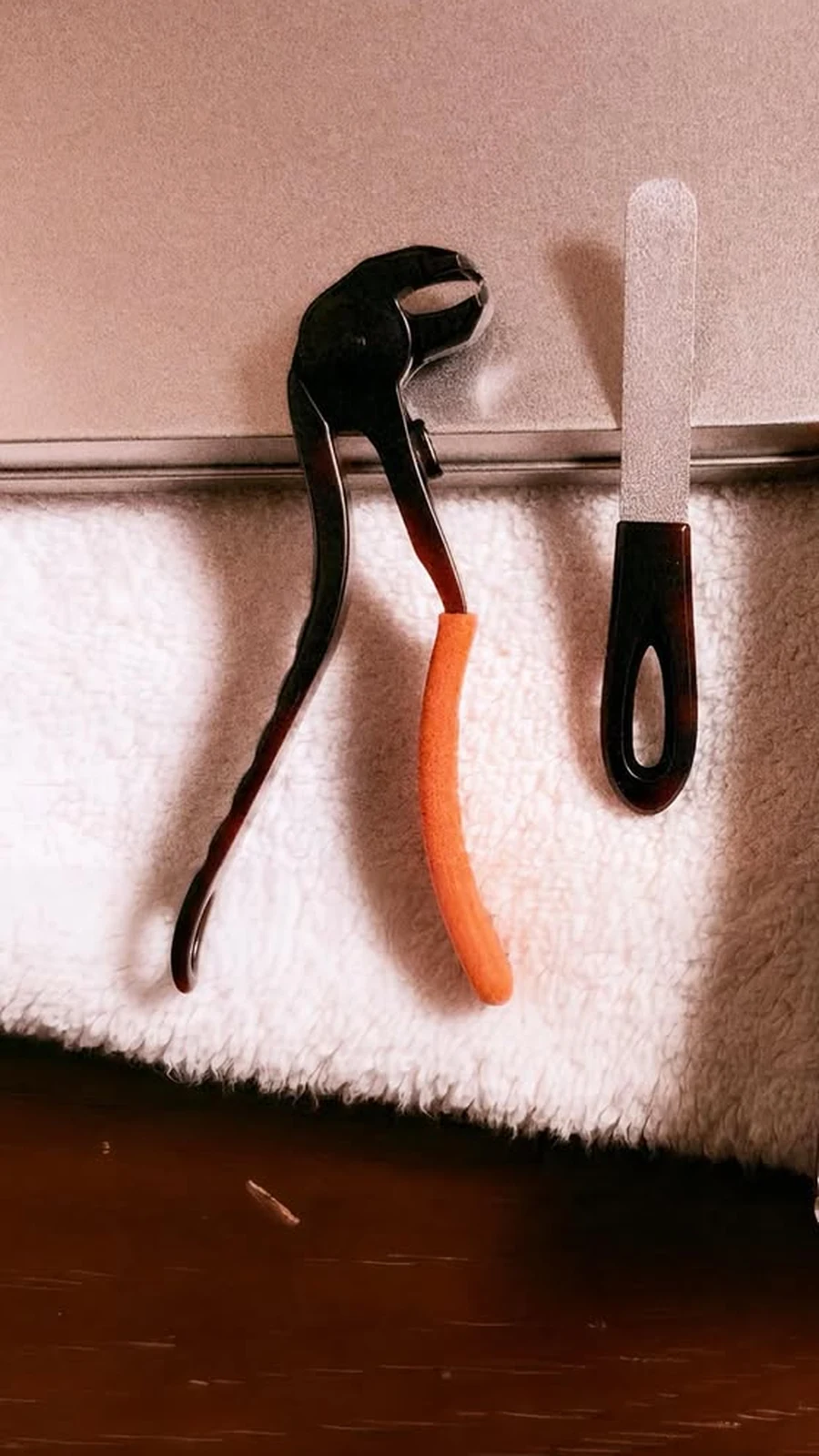
The tool matters more than people think, and most bathroom drawers contain the wrong one. Fingernail clippers are small, curved, and designed for thin nails. Toenail clippers are bigger, straighter across the blade, and built to cut through a thicker nail in one clean bite. Using fingernail clippers on a big toenail is like cutting cardboard with embroidery scissors: you have to squeeze hard, the cut comes out ragged, and you end up nibbling the nail in little pieces, which is exactly how uneven edges happen.
Look for a pair of toenail clippers with a straight edge rather than a strongly curved one — the straight edge naturally encourages the straight-across cut this whole guide is built on. Manicure scissors are a fine alternative if they are sharp and you are comfortable with them, but they demand more control. Whatever you use, it must be sharp: a dull blade crushes the nail instead of cutting it, and a crushed edge splits and frays. If your clippers pull or chew instead of slicing, replace them.
Additional Information: Keep your tools clean, because a dirty clipper is a small bacterial delivery system. Wipe the blades with rubbing alcohol or hot soapy water before and after each use, and dry them fully so they do not rust. If you share a household, do not share clippers — nail tools are personal items, and sharing them is one of the easiest ways to pass a fungal infection between people. A small pouch or case keeps them sharp and keeps you from fishing for them in a drawer full of cotton buds and hair ties.
4. Cut Straight Across — The One Rule That Matters Most
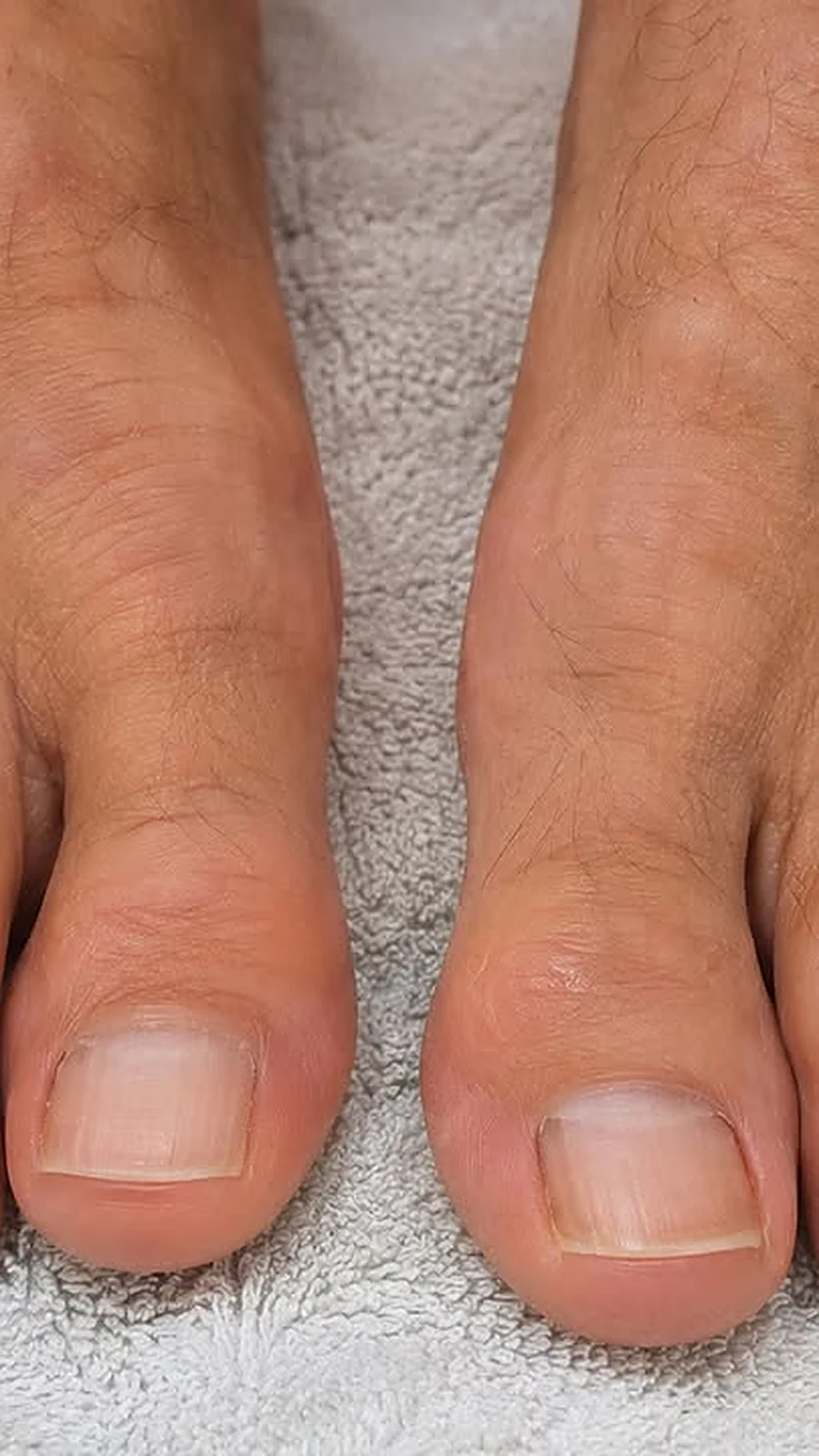
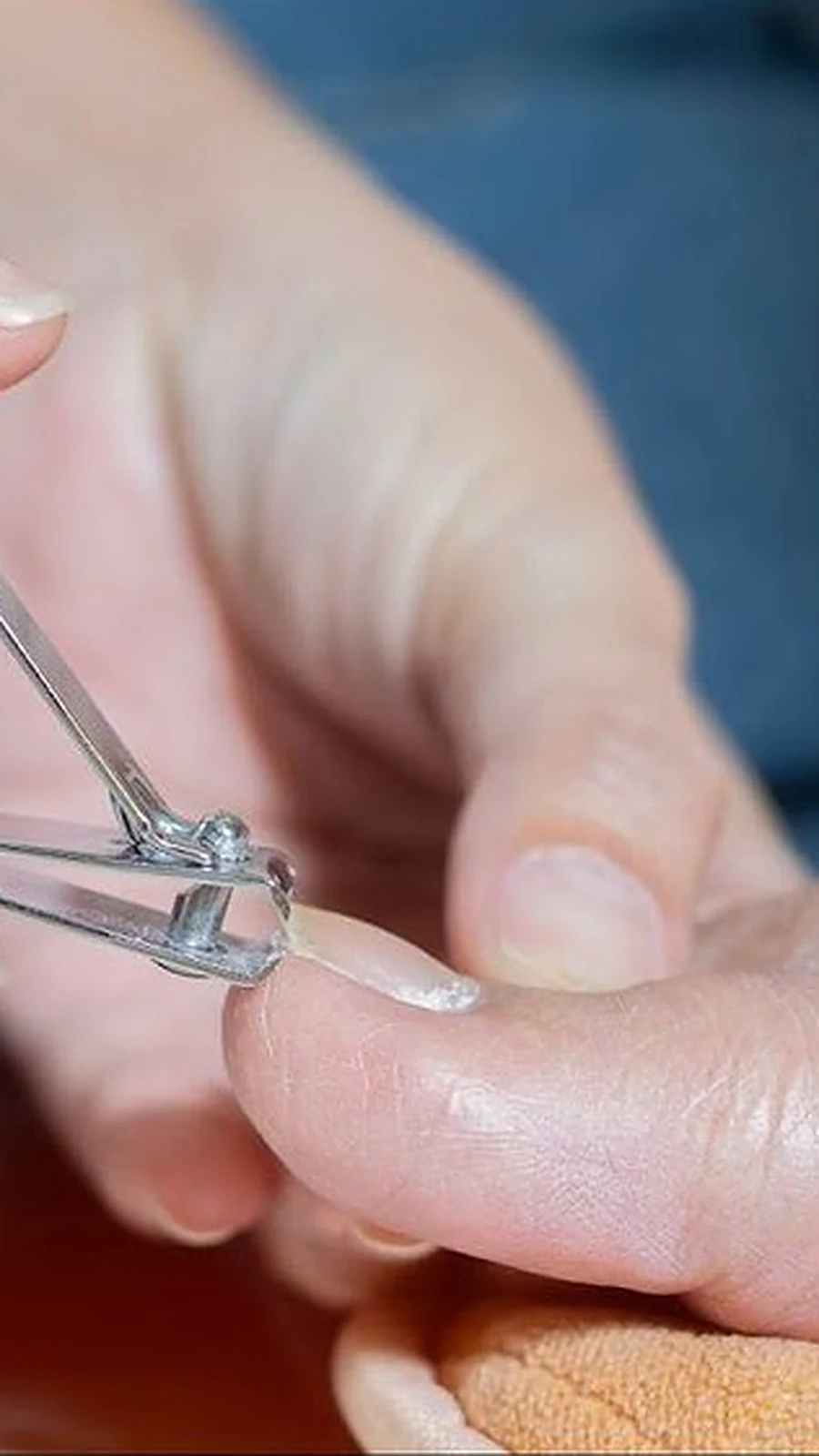
Here it is: cut the nail straight across, in a line parallel to the end of the toe. Not rounded, not curved down at the corners, not pointed. Straight. This is the single most important thing in this guide, and if you remember nothing else, remember this. A straight-across cut leaves the corners of the nail sitting at the same level as the rest of the edge, which means the skin fold has nothing to close over and the nail has a clear path to grow forward.
Position the clippers square to the nail, not at an angle, and make the cut in one or two clean bites across the width of the nail. Do not tilt the clippers to follow the curve of the toe — that tilt is how rounded corners happen by accident. If the nail is wide, take it in two or three overlapping cuts, keeping the line straight across. It will look a little severe at first, almost squared off. That is correct. The squared look is the nail doing its job.
Additional Information: The urge to round the corners is strong, because a straight-across toenail looks less finished than a rounded one. Resist it. You can soften the sharpness of the corners very slightly with a file afterwards — step nine covers how — but the corner itself must stay at the same height as the rest of the edge. The moment a corner sits lower than the edge, the skin fold closes over it, and you have built yourself an ingrown nail. If you take one habit from this guide, let it be the straight cut.
5. Leave the Corners Alone
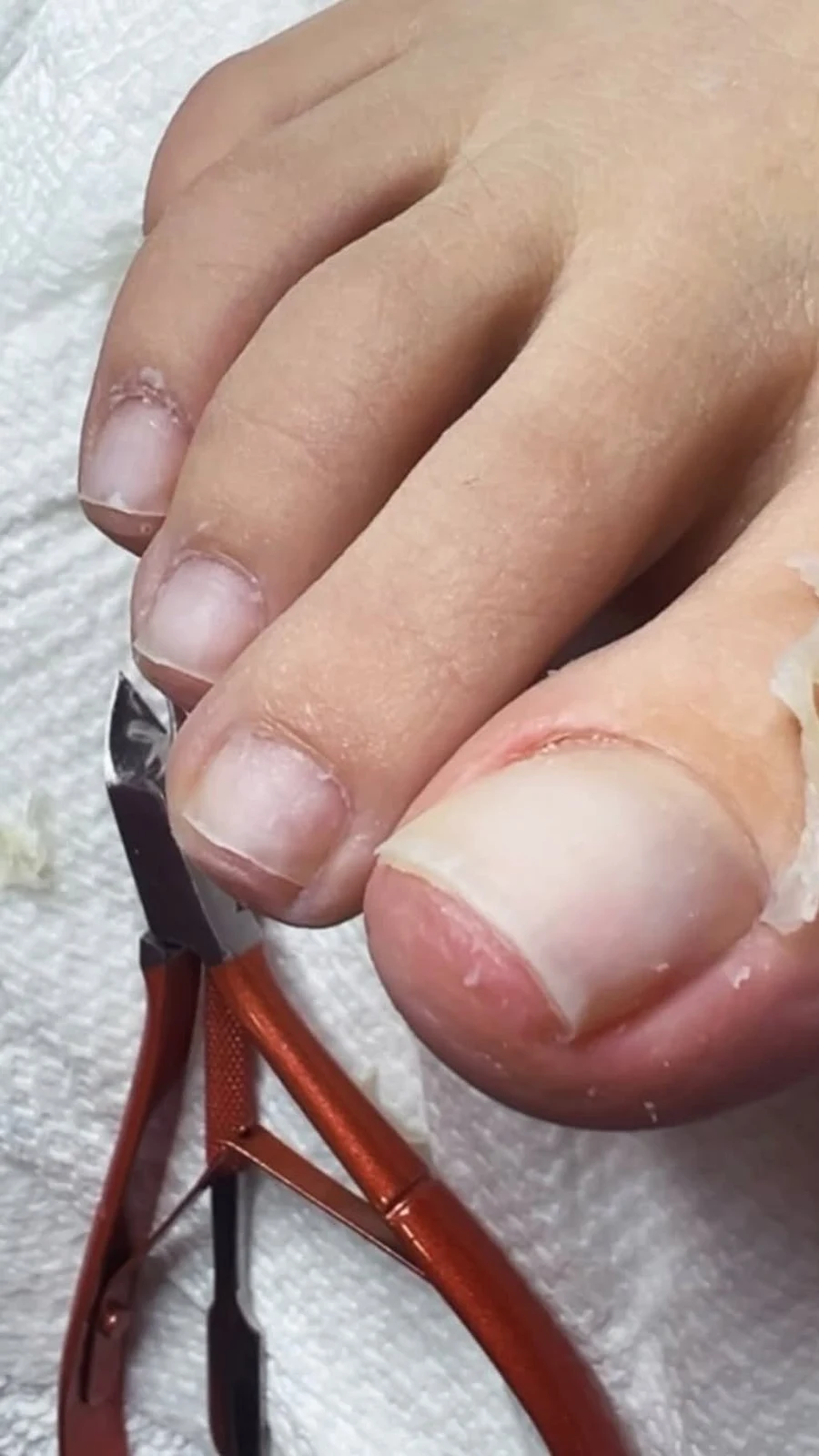
Do not dig the corners out. Do not trim them down. Do not slide the tip of a file or a pair of scissors down the side of the nail to “clean out” the corner. This is the second half of the straight-across rule, and it is where most ingrown nails are actually born. The corner of a toenail is not dirt to be removed — it is the part of the nail that holds the skin fold back. When you cut it away, the skin fold collapses into the gap, and the nail grows straight into it.
It is worth saying plainly what “digging out the corner” does: it creates a sharp spur of nail, hidden under the skin, that grows directly into soft tissue. That spur is the thing that hurts. It is also the thing that is hardest to fix, because once the spur is under the skin, you cannot reach it without cutting into the skin itself — which is how people end up with a small wound that gets infected. If you already have a habit of cleaning out your corners, stopping it is the single most effective change you can make.
Additional Information: If the corners collect a little debris, clean them gently with a soft brush or a damp cotton bud — never with a metal tool, and never by cutting. A wooden orange stick, used lightly, is the most you should ever put near a nail corner. And if a corner already feels sore or looks red, leave it entirely alone and read the warning-signs section at the end of this guide. A sore corner is a nail telling you it has already started growing in, and the worst response is to cut more of it away.
6. Do Not Cut Too Short — The White-Tip Rule
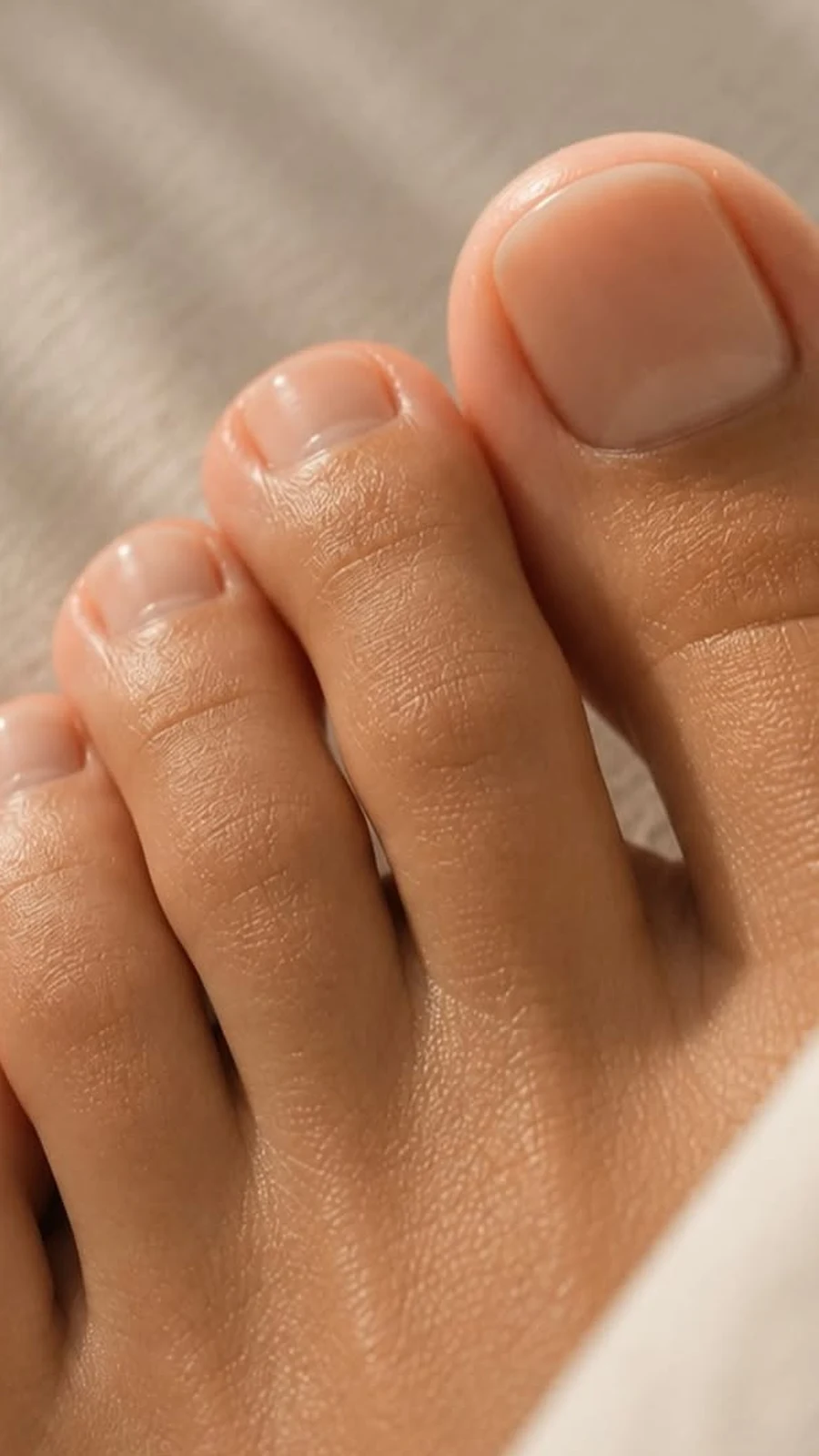
How short is too short? Here is the rule you can check with your eyes: after trimming, a thin sliver of the white free edge should still be visible, running the full width of the nail. Not a lot — a millimetre or two is enough. If you have cut down to the pink, you have gone too far. The white tip is the nail’s shield: it sits just past the end of the toe and stops the surrounding skin from folding over the nail’s edge as it grows.
Cutting too short is the mistake people make when they are trying to buy themselves time — cut them right down and you will not have to trim again for weeks, or so the thinking goes. It backfires twice. First, the short nail leaves the skin unprotected, so the fold closes over the edge. Second, a nail cut too short is far more likely to be cut unevenly, because you are working right against the skin with no margin for error. One slip, one nick in the skin, and you have a sore spot that can turn into an ingrown nail within days.
Additional Information: If you have already cut a nail too short, do not try to fix it by cutting more. Leave it alone, keep it clean, wear roomy shoes for a few days, and let it grow out past the skin before you trim it again. The nail will recover on its own in most cases, as long as you stop cutting into it. And if you are someone who likes very short nails for sport or work, trim more often instead of cutting shorter — frequency is the safe way to keep nails short, not depth.
7. Small Cuts, Not One Big Snip
A toenail — especially a big toenail — is wider and thicker than a fingernail, and trying to take it off in one heroic squeeze is how nails crack, split, and tear. Take it in small bites instead: two or three cuts across the width of the nail, each one overlapping the last slightly, keeping the line straight. Small cuts give you control, and control is what keeps the edge clean and even.
This matters most for thick nails, which are common on big toes and become more common with age. A thick nail resists the clippers, and the temptation is to squeeze harder. Do not. If the clippers are struggling, the nail is too hard or the clippers are too dull — soak longer, or switch to a heavier pair of toenail clippers, or trim a little at a time over two sessions. Forcing a thick nail is how you end up with a jagged edge and a split running down the nail, and a split is an open invitation for the nail to grow unevenly.
Additional Information: Long nails deserve the same patience. If you have let your nails grow long, do not chop them back to the quick in one session. Trim them gradually, taking a little off, filing smooth, and taking a little more a few days later. A sudden drastic cut shocks the nail bed and leaves a blunt, uneven edge that is more likely to snag. Gradual trimming also lets you check the shape as you go, which is how you keep the line straight instead of discovering a lopsided edge at the end.
8. File in One Direction Only
After the clippers comes the file, and the file has exactly one rule: one direction only, never sawing back and forth. Sawing frays the edge of the nail into microscopic layers, and those frayed layers catch on socks, peel back, and leave a rough edge that presses unevenly against the skin. One-direction filing — smooth strokes from the corner towards the centre, lifting the file between strokes — seals the edge instead of shredding it.
Use a fine-grit file, glass or emery, and be gentle. You are not reshaping the nail; you are taking the sharpness off the cut edge. Five or six light strokes per nail is usually enough. Hold the file flat against the edge, not at a steep angle, and work from the outside in. If you can feel a rough spot with your fingertip, file just that spot. The test is simple: run your finger along the edge when you think you are done. If it snags, it needs another stroke. If it glides, you are finished.
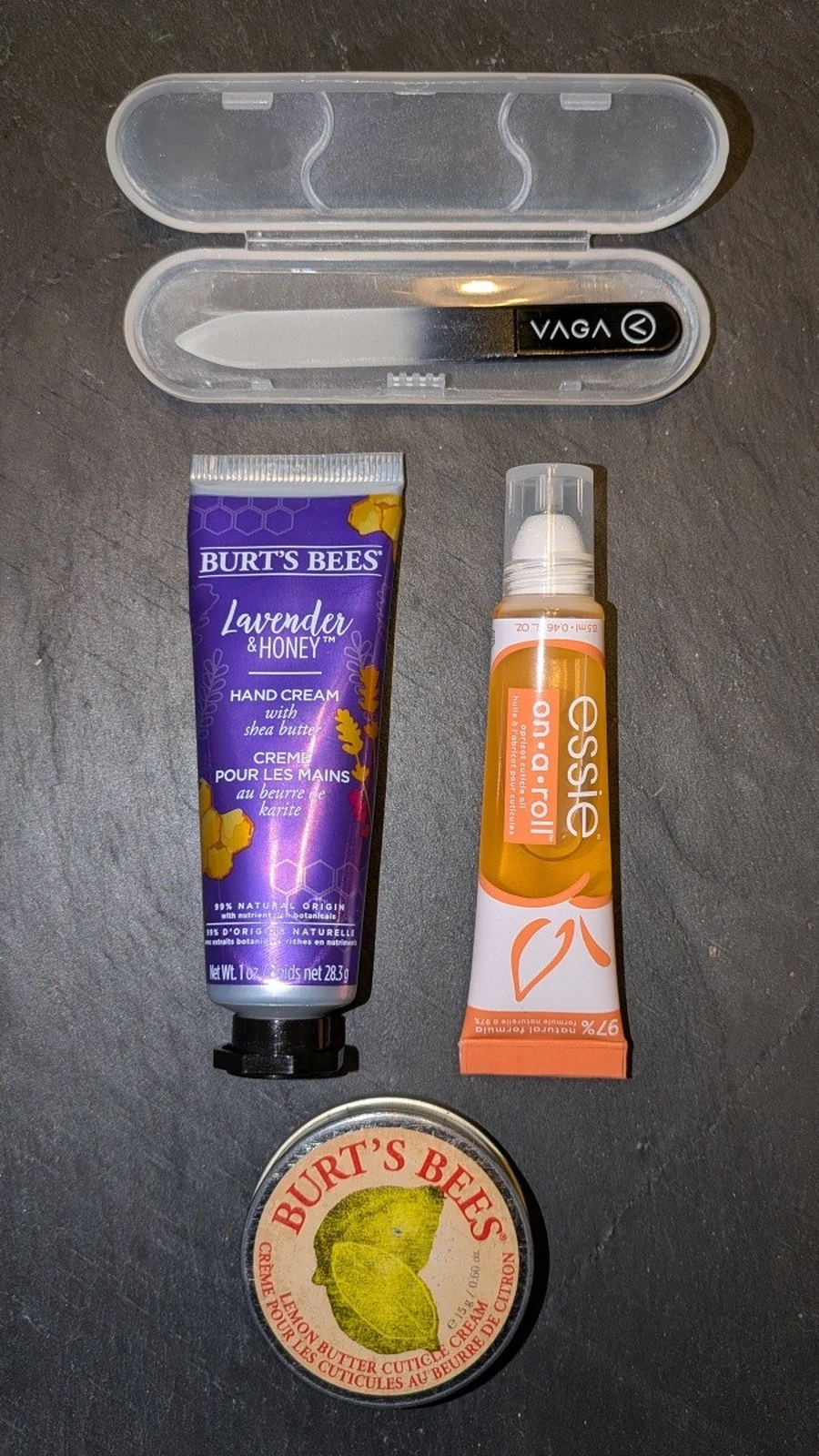
Additional Information: A glass file is the kindest option for this job, because it seals the keratin edge as it works, and it lasts for years if you keep it in its sleeve. Emery boards are fine too, but replace them when they go smooth — a worn-out board does nothing but polish the problem. And keep one file in your bag, because a snag filed the moment you feel it is a nail saved; a snag left for a week is a nail that splits.
9. Soften the Corners — Gently, and Only Just
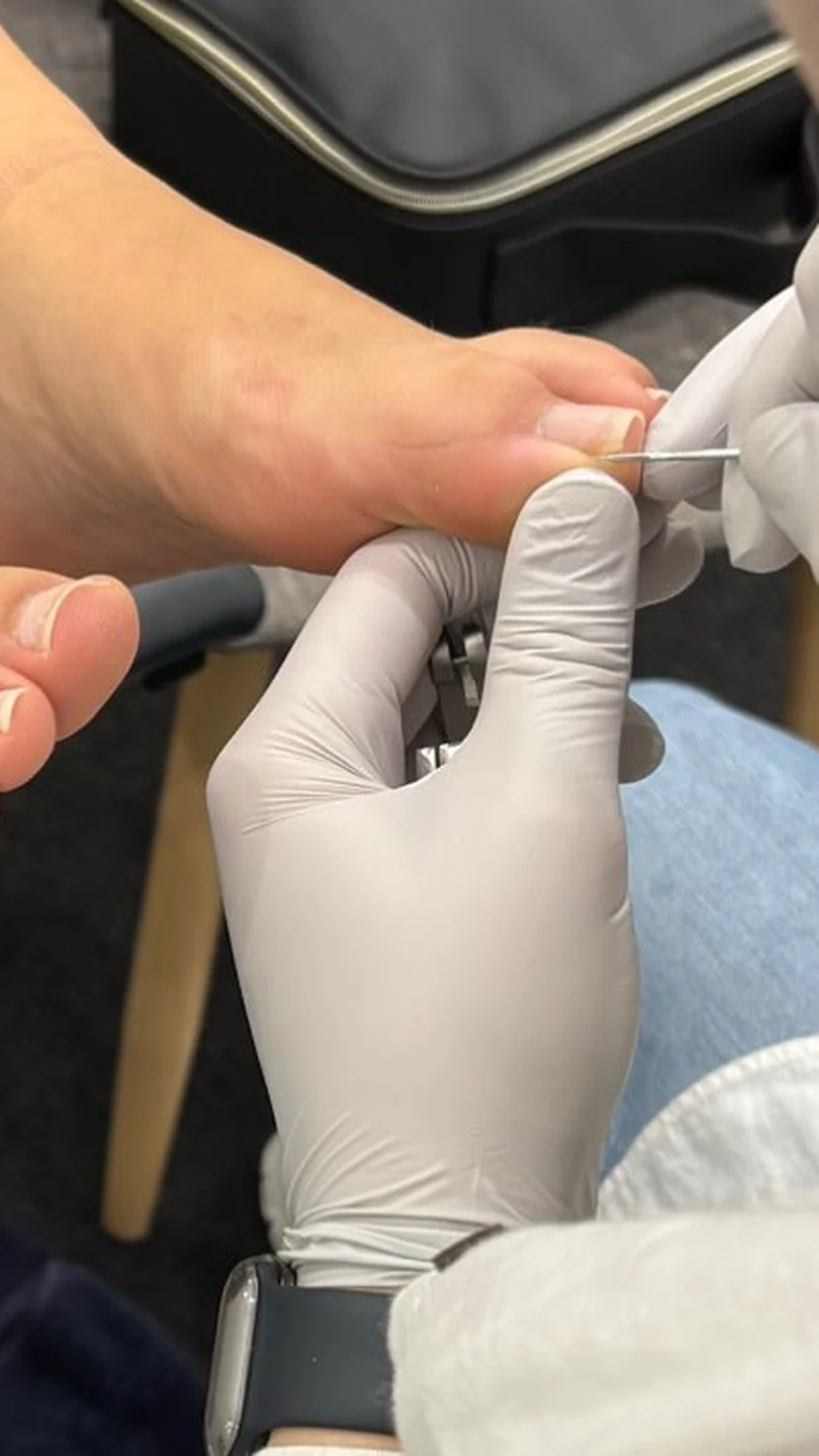
Here is the one place where you are allowed to touch the corners, and the allowance is small. After cutting straight across, the two corners of the nail will be slightly sharp — little squared points that can catch on socks. You may round those points very slightly with a file, taking the sharpness off without lowering the corner. The distinction matters: you are blunting a point, not reshaping the nail. Two or three light strokes on the very tip of the corner, and stop.
The moment the corner starts to look curved, you have gone too far. Check your work by looking at the nail from above: the edge should still read as a straight line, corner to corner. If it curves down at the sides, file no further, and next time, do even less. This is the fiddliest step in the guide and the easiest to overdo, so when in doubt, do less. A slightly sharp corner that catches a sock is a nuisance. A rounded corner that grows into skin is a medical problem. The trade is not close.
Additional Information: If you find yourself rounding the corners every time because the squared look bothers you, try filing the top edge of the corner — the upper surface — rather than the side. That takes the sharp point off while leaving the corner’s height exactly where it belongs. And if you wear pointed shoes, remember that the shoe is already pressing the skin fold towards the nail; a squared corner plus a tight shoe is a much worse combination than a squared corner plus a roomy one.
10. Oil and Moisturise After You Trim
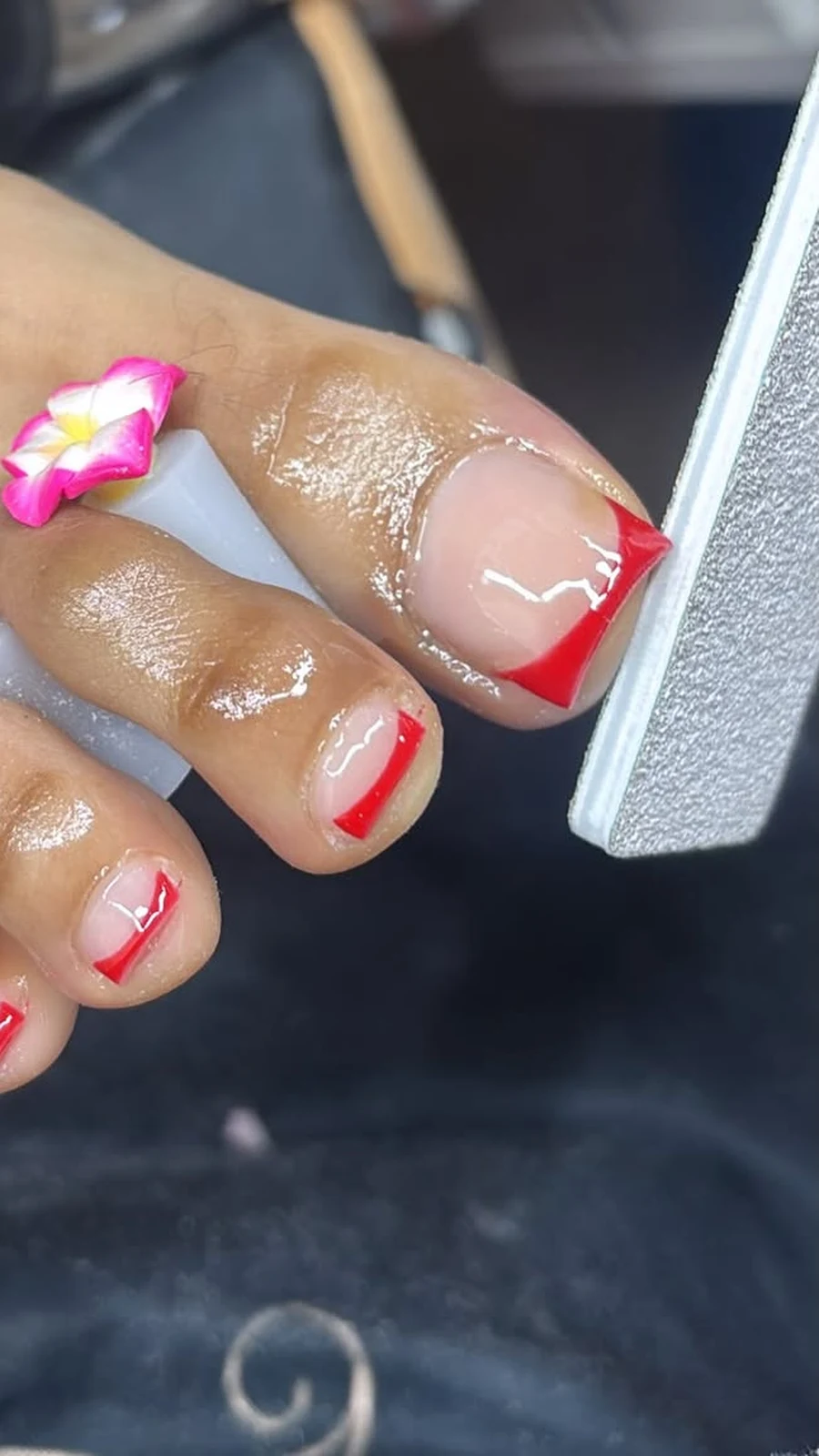
Trimming is not finished when the clippers go down. The skin around the nail has just been worked on, and a little care now makes the next two weeks easier. Massage a drop of cuticle oil — jojoba, vitamin E, or plain sweet almond oil — into each nail bed and the skin around it. Then moisturise the whole foot, or hand, with a plain cream. The oil keeps the nail flexible instead of brittle, and flexible nails are far less likely to crack, split, or grow unevenly.
This step also gives you a reason to look at each nail one more time before you put your shoes back on. Run a finger along every edge. Is it smooth? Is the line straight? Is there a corner you missed? Catching a rough edge now, while the file is still in your hand, takes ten seconds. Catching it in three days, when it has already snagged a sock and started to peel, takes a week of growing out. The post-trim check is the cheapest quality control in the whole routine.
Additional Information: If your cuticles are dry or ragged, the oil matters even more: a healthy cuticle is the seal that keeps moisture in the nail and germs out of the nail fold, and a damaged cuticle is an open door for infection around a freshly trimmed nail. Never cut your cuticles — push them back gently with a wooden stick after a shower or a soak, when they are soft. And if you wear polish, oil the cuticle and the skin around the nail rather than the polish itself; the nail underneath still benefits.
11. Toenails and Fingernails Play by Different Rules
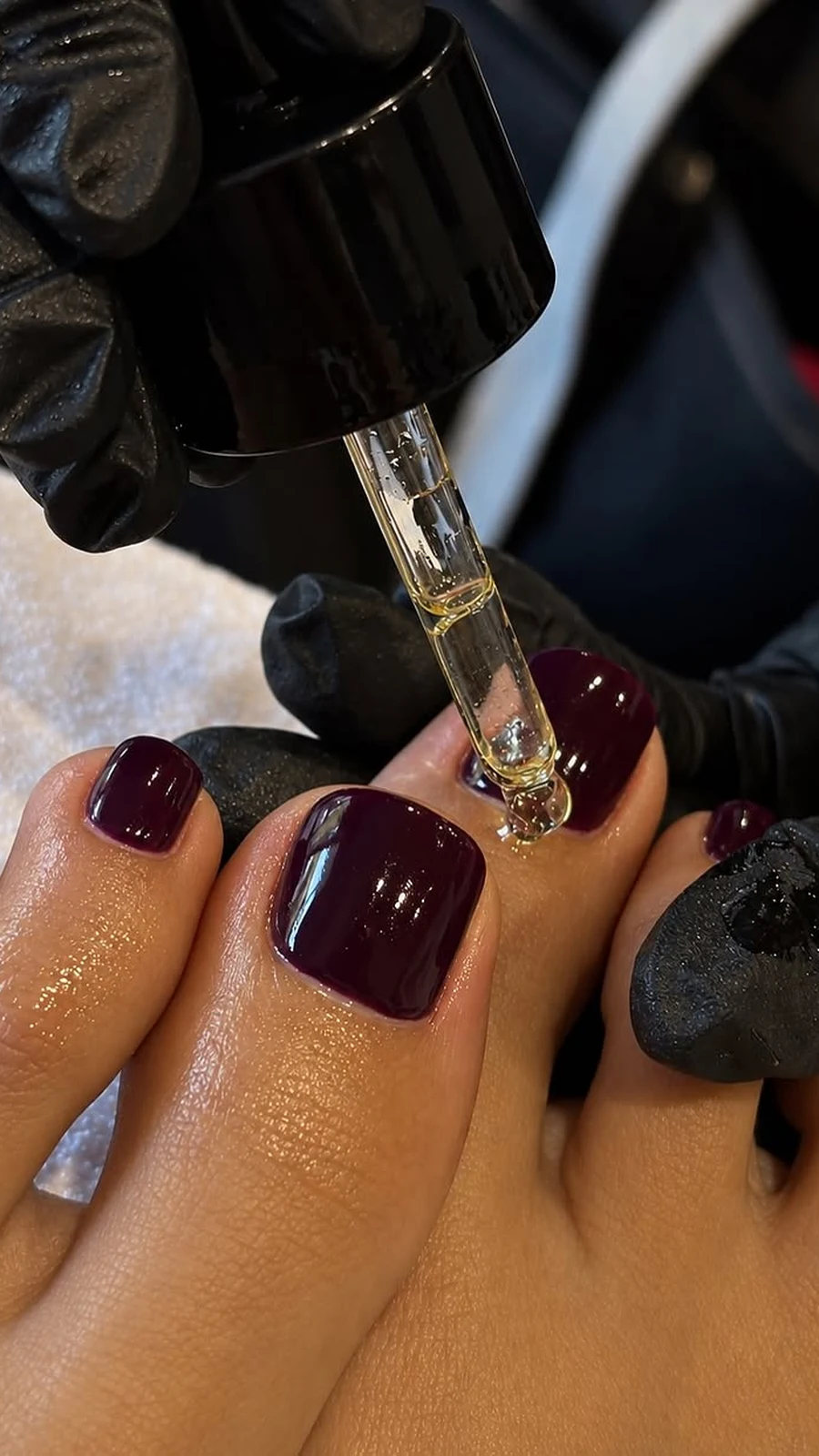
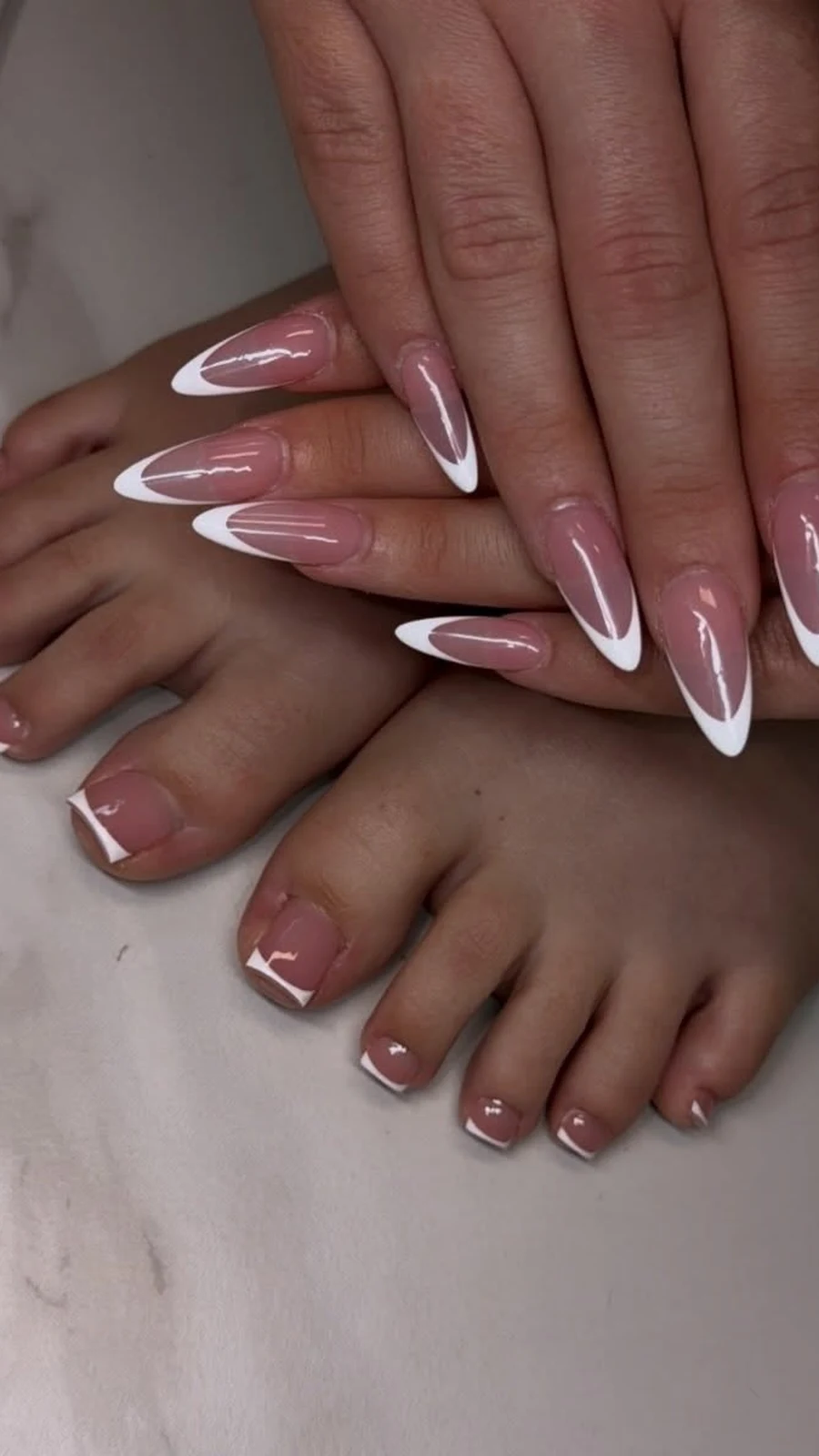
Everything in this guide leans towards toenails, because they are the ones that grow in. Fingernails are more forgiving, and they are allowed to be. They are thinner, they grow about twice as fast, they are not squeezed into shoes, and a rounded corner on a fingernail is a style choice, not a medical risk. You can shape fingernails — oval, almond, square, rounded — however you like, as long as you do not cut them so short that the skin is exposed.
Toenails are different, and it is worth being explicit about why. They grow slowly, about a millimetre a month on a big toe, which means a bad cut stays bad for a long time. They are thick, which means a ragged cut stays ragged. And they live inside shoes, where pressure pushes the skin fold against the nail edge all day. So the rules for toenails are stricter: straight across, corners left alone, white tip left visible, every time. Fingernails get the same hygiene and the same one-direction filing, but the shape is yours to choose.
Additional Information: One habit should be the same for both: trim them on a schedule, not when they start bothering you. Nails trimmed when they are already too long are nails trimmed in a rush, and rushed trimming is where the mistakes happen. Put it on the calendar — Sunday evening, or the first of the month, or whatever sticks — and trim before they need it, not after. Your future self, the one walking without wincing, will be grateful.
12. Set the Rhythm: Every One to Two Weeks
The last step is not a technique, it is a calendar. Trim your nails every one to two weeks, and the whole routine stays easy: the nails are never long enough to need a drastic cut, never short enough to tempt you into cutting too deep, and the edge never gets ragged enough to cause trouble. It is the difference between maintenance and repair, and maintenance is always the cheaper option.
How often exactly depends on how fast your nails grow, which varies from person to person and even from season to season — nails tend to grow faster in summer. Watch your own growth for a month and you will know your rhythm. Toenails, growing slowly, are usually fine at two weeks. Fingernails, growing faster, often need weekly attention. The point is regularity, not a specific number of days: a nail trimmed a little, often, is a nail that never has the chance to become a problem.
Additional Information: Tie the trim to something you already do, because a habit attached to an existing routine is a habit that survives. After your Sunday shower, for instance, when the nails are already soft and you are already barefoot. Keep the clippers and the file in the same place every time — a small pouch in the bathroom cabinet — so the whole routine takes five minutes instead of fifteen spent looking for tools. And if you notice a nail growing oddly between trims — curving down at the edge, thickening, changing colour — do not wait for trim day. Look at it, and if it worries you, ask a professional.
The Five Mistakes That Cause Most Ingrown Nails
If the twelve steps are the routine, this is the shortlist — the five mistakes that sit behind the overwhelming majority of ingrown nails, so you can recognise them in your own habits.
Cutting the corners round. The classic. It looks tidy on the day and grows into the skin within weeks. Keep the edge straight and the corners level.
Cutting too short. The nail needs its white tip as a shield. Cut to the pink and the skin fold closes over the edge.
Digging out the corners. Cleaning the corner with a metal tool or the tip of scissors creates a sharp spur under the skin. Clean with a brush or a cotton bud, never with metal.
Wearing shoes that squeeze. A tight toe box presses the skin fold into the nail edge all day. If a shoe hurts the side of your big toe, it is not the shoe breaking in — it is the shoe making an ingrown nail more likely.
Ignoring the early signs. A little tenderness at the side of the nail is the earliest warning, and it is also the easiest to fix: stop cutting that nail short, leave the corner alone, wear roomy shoes, and soak it in warm salty water. Most early ingrown nails settle down if you catch them at this stage. Almost none of them settle down if you ignore them for a month.
When to Stop Trimming and See a Professional
Home trimming prevents ingrown nails; it does not treat them once they have properly started. There is a line, and it is important to know where it is. If the toe is red, swollen, hot to the touch, or leaking any fluid, stop trimming that nail and see a doctor or a podiatrist. If you can see pus, or the pain is getting worse instead of better over two or three days, that is an infection, and it needs professional care — not another trim, not a home remedy, and definitely not an attempt to cut the ingrown part out yourself.
People with diabetes, poor circulation, or nerve damage in their feet should be especially careful, because a small cut or infection on a foot can become serious very quickly when healing is slow or pain is hard to feel. If that applies to you, the safest routine is to have your toenails trimmed professionally, and to check your feet daily for redness or sores you might not feel. It is not an overreaction; it is the standard advice, and it exists for a reason.
A podiatrist can also help with the structural causes that trimming cannot fix: a nail that is deeply curved, a nail that keeps growing in despite perfect technique, or a toe shape that puts constant pressure on the nail edge. There are simple, effective treatments — including a small procedure that narrows the nail permanently — and living with a recurring ingrown nail when treatment exists is a pain nobody needs to put up with.
FAQ
Can you prevent ingrown toenails just by trimming correctly?
In most cases, yes — or at least, correct trimming removes the most common trigger. Straight-across cuts, corners left alone, and a little length left on the nail keep the edge above the skin instead of under it, which is what an ingrown nail is. Shoes, foot shape, and nail curvature still matter, but technique is the factor you control completely, and it prevents the majority of cases.
Should I cut my toenails straight across or curved?
Straight across, always, for toenails. A curved or rounded cut shortens the corners, lets the skin fold close over them, and gives the nail a path into the skin instead of past it. You can soften the sharp points of the corners very slightly with a file, but the edge itself should stay straight.
How short should I cut my toenails?
Leave a thin sliver of white free edge visible — a millimetre or two past the end of the toe. If you have cut down to the pink, you have gone too short, and the skin has nothing protecting it from the nail edge as it grows.
Is it bad to cut the sides of my toenails?
Yes, for prevention purposes. Cutting down the sides or digging out the corners creates a sharp spur of nail under the skin, which is exactly what grows in and hurts. Clean the corners gently with a brush or a damp cotton bud instead.
How often should I trim my toenails?
Every one to two weeks is the general guideline. Toenails grow slowly, so two weeks suits most people; if your nails grow fast, weekly is better. The point is regularity — small, frequent trims beat rare, drastic ones.
What should I do if my toenail is already starting to grow in?
Stop trimming that nail, leave the corner completely alone, wear roomy shoes, and soak the foot in warm water a few times a day. If it is only mildly tender, that is often enough. If it is red, swollen, leaking, or getting more painful, see a doctor or podiatrist promptly — do not try to cut the ingrown part out yourself.
The Two Minutes That Save You Weeks of Pain
Here is the whole guide in one paragraph, for the person who skipped to the end. Wash and dry. Soak if the nails are hard. Use proper toenail clippers, sharp ones. Cut straight across. Leave the corners exactly where they are. Leave a sliver of white showing. Take small cuts. File in one direction. Blunt the sharp points of the corners, very slightly, and stop there. Oil and moisturise. Do it every one to two weeks. That is it. Two minutes of attention, once a fortnight, stands between you and one of the most needlessly painful small problems a person can have.
It is easy to think of nail trimming as too trivial to think about, and that is precisely why it causes so much trouble. The trivial things are the ones nobody teaches and nobody questions, so the wrong way of doing them gets passed along unexamined for years. Now you know the right way, and it is barely more effort than the wrong way. Straight across, corners left alone, a little length left on. Your toes will not send a thank-you note. They will simply stop hurting, which is better.

Leave a Reply