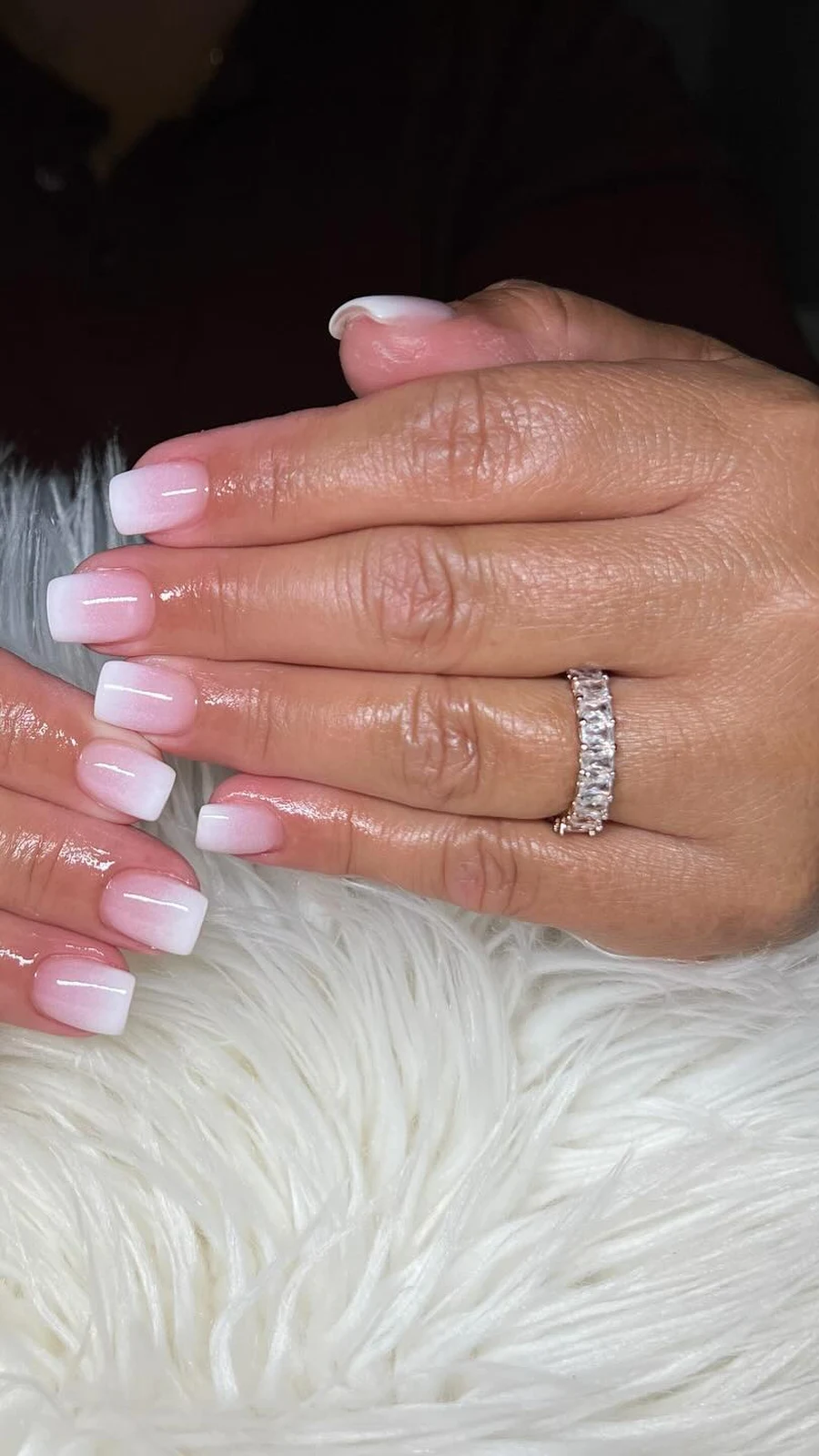
Intro
It is the question almost everyone asks while the technician is still brushing the last coat of activator onto their nails: how long is this actually going to last?
The salon answer is usually “three to four weeks,” said with a smile. The honest answer is messier. Some dip manicures genuinely do look perfect at week three. Others start lifting at the edges by day nine, and nobody in the salon can tell you which one you are going to get — because how long dip nails last has never been about the powder alone. It is about your nails, your hands, your week, and the person who applied them.
This article is the version of that answer you can actually use. Not a promise, but a timeline: what a dip manicure should look like in week one, week two, week three and week four, the seven things that quietly decide which end of the range you land on, the daily habits that buy you extra days, and the signs that mean it is time to stop stretching it and book the removal.
If you are choosing between dip and gel, or wondering whether the lifting you noticed on day six is normal, or trying to decide if you can squeeze one more week out of a set before a holiday — this is for you.
The Short Answer: Two to Four Weeks
Most dip powder manicures last between two and four weeks. That is the range dermatologists and nail professionals quote, and it holds up in real life — with one important footnote. Lasting and looking good are not the same thing.
A dip manicure can still be firmly attached at four weeks while looking tired: a visible band of bare nail at the cuticle, a slightly dull surface, maybe a hairline crack on the nail you use most. It has lasted, in the technical sense. But it is not the manicure you paid for anymore. So the better question is not “how long will it stay on?” but “how long will it look like it did on day one?” — and that answer is closer to two to three weeks for most people.
Here is a quick way to think about it:
- Two weeks is the point where almost every well-applied dip manicure still looks fresh, with only a faint line of growth at the cuticle.
- Three weeks is where the growth gap becomes obvious to anyone who looks, and where lifting or edge wear starts to show if it is going to.
- Four weeks is the maximum most professionals recommend wearing one set, even if it still looks acceptable — because what is happening underneath matters more than what you can see.
The American Academy of Dermatology notes that dip powder manicures can remain chip-free for up to four weeks. That is the ceiling, not the target. Your own result depends on what happens between the salon chair and your everyday life, which is where the rest of this article comes in.
Additional Information: Realistic expectation: 2–3 weeks of looking fresh, up to 4 weeks of wear. Judge by condition, not the calendar — lifting, cracking or pain mean it is time, whatever week you are in.
What Dip Powder Actually Is
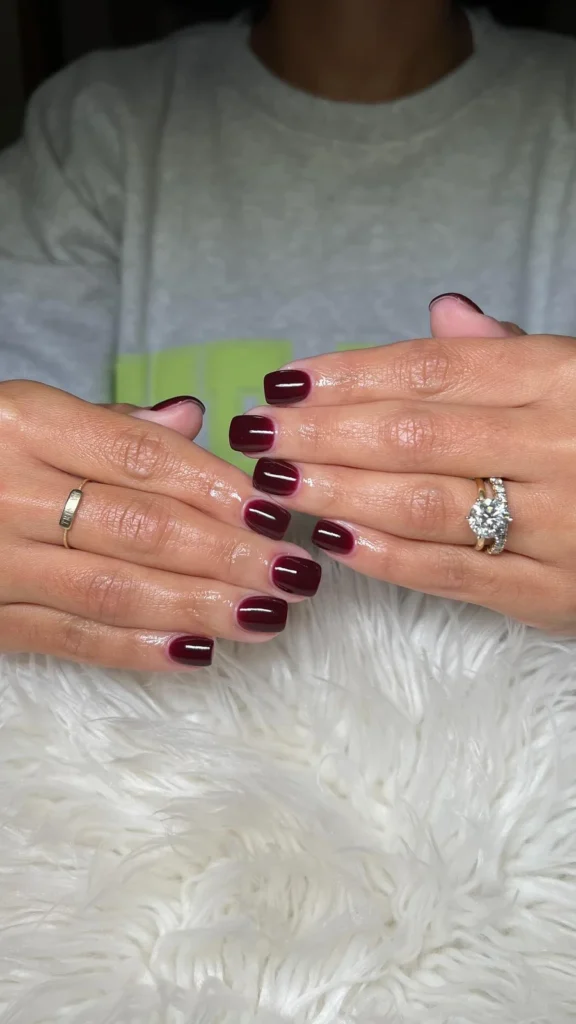
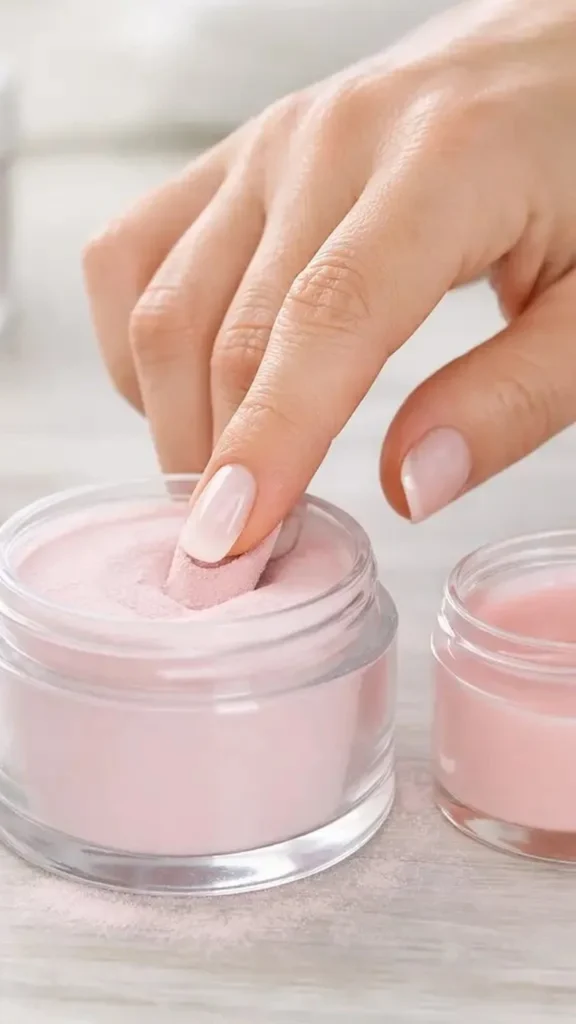
Before the timeline makes sense, it helps to know what is actually on your nails. Dip powder — sometimes called SNS, after one of the brands that made it popular — is not polish and it is not gel. It is a system of fine coloured powder and a liquid base and activator, built up in layers.
The process goes roughly like this: the technician preps the nail, brushes on a base liquid, dips or sprinkles the nail into coloured powder, repeats that for two or three layers, brushes off the excess, seals everything with an activator that hardens the layers, then shapes and finishes with a top coat. There is no UV or LED lamp involved, which is one of the reasons people choose it — and one of the reasons it feels different from gel.
That layered structure is also why dip nails last as long as they do. You are wearing several thin, hardened coats fused together, rather than a single film of polish. The coating is rigid and strong, which is a genuine advantage — and also the source of its most common problem. A rigid coating cannot flex the way a natural nail does, so when the nail underneath bends or grows, the coating has to give somewhere. Usually that somewhere is the edge, where it lifts.
Dip powder is also worth understanding because of what it is not. It will not strengthen a weak nail permanently — it protects the nail while it is on, but the nail underneath is the same nail when it comes off. It is not damage-free by definition, either. Safe application and safe removal matter more than the product name on the jar. A good technician who preps gently and removes properly will do more for your nails than any brand of powder.
Additional Information: Dip powder = coloured powder + base liquid + activator, layered and hardened without a UV lamp. The rigid, multi-layer coating is why it lasts 2–4 weeks — and why it lifts at the edges instead of flexing.
Your Dip Manicure, Week by Week
The best way to know whether your dip nails are lasting normally is to compare them against a timeline. Here is what each week usually looks like — and what should make you pay attention.
Week 1: The Honeymoon
Days one to seven are the easy part. The colour is glossy, the surface is smooth, the cuticles sit neatly against the coating, and the whole manicure looks exactly like it did when you left the salon. If anything is going to go wrong early — lifting at a corner, a crack on one nail, a rough edge — it usually shows up in this first week, and it is worth noticing.
Early lifting in week one is not normal wear. It usually points to something in the application: prep that was rushed, a layer that did not bond properly, or a product that was not compatible with the one underneath it. One nail lifting early does not mean the whole set is doomed, but it does mean you should call the salon rather than waiting to see if it gets worse. A small lift left alone tends to spread, and once it spreads it can trap moisture underneath — which is how problems start.
What to do in week one: almost nothing, honestly. Enjoy it. Keep cuticles moisturised, avoid using your nails as tools, and check the edges every couple of days when you moisturise. If everything is still smooth at day seven, you are on track for a good run.
Week 2: The Growth Line Appears
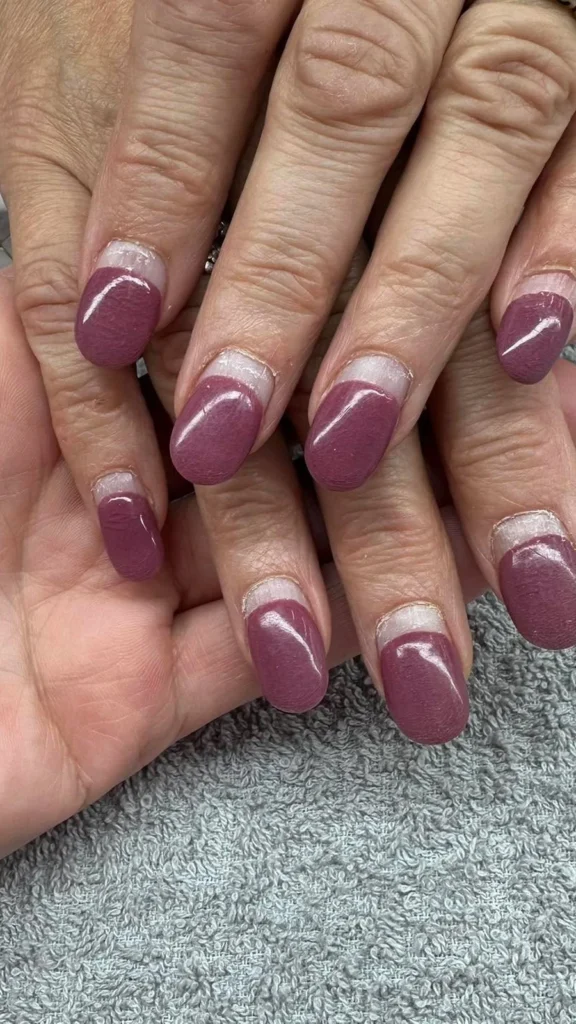
Somewhere around day ten to fourteen, you will notice it: a thin band of bare nail at the cuticle, where your nail has grown out from under the coating. This is completely normal. Your nails grow whether you are wearing dip powder or not — roughly 3 millimetres a month on average, faster for some people — and the coating cannot grow with them.
At two weeks the gap is usually subtle, a millimetre or two, and most people find the manicure still looks good. The surface should still be glossy and the edges should still be sealed. If the gap is already wide at two weeks, you are probably a fast grower, and your realistic lifespan is closer to the short end of the range. That is not a failure — it just means you will want your next appointment a few days sooner.
This is also the week where daily life starts to show. If you type all day, wash dishes without gloves, or work with your hands, you may notice the shine dulling slightly on the nails you use most, or a tiny bit of wear at the very tip. A thin layer of clear top coat, applied at home, can freshen the shine and seal the edges for a few more days. It is the simplest maintenance trick there is, and it takes two minutes.
Week 3: The Decision Point
Week three is where honest assessment matters. The growth gap is now obvious — anyone looking at your hands can see where the manicure ends and your natural nail begins. The coating may still be firmly attached and the colour may still be beautiful, but the manicure no longer looks fresh.
This is the point where many people ask the wrong question: “Can I get one more week out of these?” The right question is: “Is anything lifting, cracking, or uncomfortable?” If the answer is no, and you are happy with how the gap looks, another week is reasonable. If the answer is yes — even a small lift on one nail, a hairline crack, a nail that feels sore — it is time to book the removal, not to push through.
Three weeks is also when dermatologists’ advice starts to matter most. The guidance to give nails a break between dip manicures, and to have them checked rather than endlessly re-covered, exists because the longer a coating stays on, the harder it is to see what is happening underneath. A manicure that looks fine on top can be hiding lifting, and lifting can hide moisture and irritation.
Week 4: Time to Let Go
By week four, even a perfect dip manicure is past its best. The growth gap is wide, the surface has usually dulled, and the coating has been flexing against a growing nail for a month. Some sets do survive to four weeks looking acceptable, and if yours has, that is a sign of a good application and good care — but it is still time.
Four weeks is the ceiling for a reason. Beyond it, the risk is not that the manicure suddenly falls apart; it is that lifting you cannot see traps moisture, that a crack you have been ignoring deepens, and that removal becomes harder because the coating has bonded so firmly for so long. Book the removal appointment, enjoy the last few days, and let your nails breathe before the next set.
Additional Information: Week 1: should look perfect; early lifting means call the salon. Week 2: growth gap appears, still fresh. Week 3: gap is obvious; check for lifting before deciding to continue. Week 4: remove, even if it still looks acceptable.
Seven Things That Decide How Long Yours Last
Two people can walk out of the same salon on the same day with the same colour, and one person’s manicure lasts four weeks while the other’s lifts in ten days. It feels unfair until you know what actually varies. Here are the seven factors that decide it.
1. Nail Preparation
Preparation is the foundation everything else sits on. A technician who cleans the nail plate properly, pushes cuticles back gently, and removes shine lightly gives the base something to grip. A rushed prep — or a prep that skips the cleaning step — leaves oil and residue between the nail and the coating, and the coating lifts from underneath within days.
But there is a line. Preparation should never mean aggressive filing of the natural nail. Over-filing thins the nail, and a thinned nail flexes more, which makes the rigid coating lift faster — the opposite of what you want. Good prep is thorough and gentle, not heavy-handed.
2. Application Technique
Dip powder is a system: base, powder, activator, top coat, each layer depending on the one before it. If a layer is too thick, if the activator is not applied evenly, if products from different brands are mixed and do not bond properly, the manicure can look flawless on day one and start cracking by day five.
This is the factor you have the least control over, and the strongest reason to choose a technician who does dip powder often and follows the manufacturer’s instructions. Ask how they apply it. A good technician will not mind the question; a rushed one will.
3. Your Natural Nail Growth
Nail growth rate is personal. Some people’s nails grow visibly in a week; others barely show a gap at two. Faster growth does not mean the coating is failing — it means the manicure stops looking fresh sooner, because the gap appears earlier. If your nails grow fast, your dip manicure’s good-looking lifespan will be shorter than someone else’s, even if the coating itself is perfect. Plan your appointments around your own growth, not someone else’s.
4. Your Daily Activities
Your hands are the variable the salon cannot control. Typing is relatively gentle on nails. Opening packages with your fingertips, prying things open, gardening, cleaning, lifting heavy boxes — all of it puts leverage on the nail tips, and leverage is what cracks a rigid coating. The single most useful habit is the simplest: stop using your nails as tools. Use the pads of your fingers, or an actual tool. It sounds small, and it makes a bigger difference than any top coat.
5. Water and Cleaning Products
Water swells the nail plate, and when the nail dries it shrinks back. Dip powder does not stretch with that cycle, so repeated swelling and shrinking loosens the bond a little each time. This is not a reason to wash your hands less — hygiene always wins — but it is a reason to wear gloves for washing up, cleaning, and long soaks, and to keep your nails out of hot baths when you can. Harsh cleaning chemicals are harder on the coating than plain water, so gloves matter twice as much for those.
6. Nail Length and Shape
Longer nails act like longer levers: the same bump that a short nail shrugs off can crack a long one. Very long dip nails look dramatic, and they are also the first to chip at the tip. Shorter, practical lengths are simply easier to keep intact, especially if you use your hands a lot. Choose the length that fits your life, not just the length that photographs well.
7. Maintenance and Attention
A dip manicure is not a fit-and-forget product. It needs checking. A small lift caught on day twelve can be assessed and dealt with; the same lift ignored until day twenty can spread across the nail and trap moisture underneath. A quick look at your nails while you moisturise — edges sealed? Any cracks? Anything sore? — takes ten seconds and is the best early-warning system you have.
Additional Information: The seven factors: prep quality, application technique, your growth rate, daily activities, water and chemicals, length and shape, and whether you check your nails regularly. You control most of them.
The Daily Habits That Add a Whole Extra Week
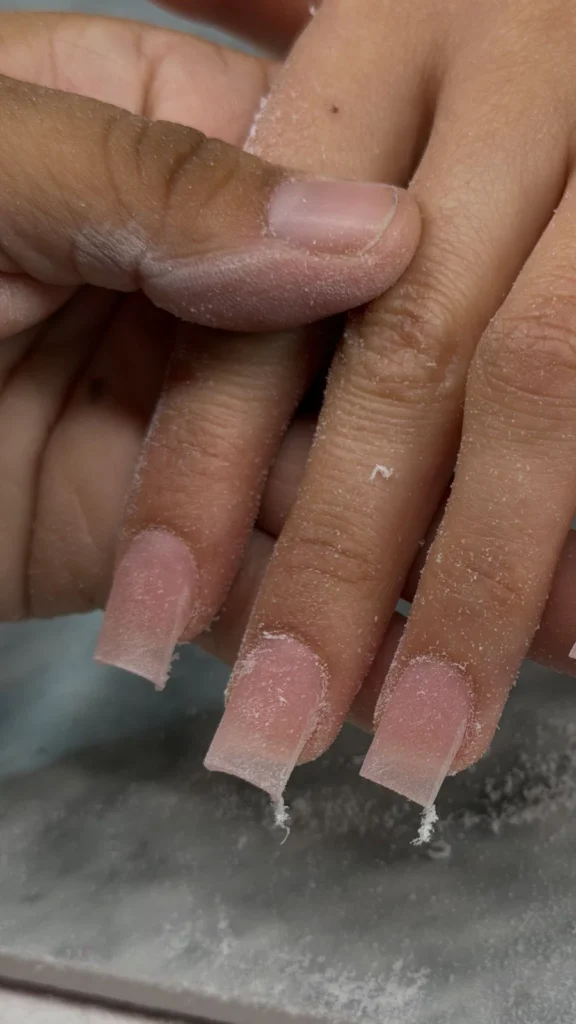
You cannot change your growth rate or redo your salon’s application. But the week between appointments is yours, and small habits there genuinely add days to a dip manicure. None of these is dramatic. Together, they are the difference between a set that lifts at two weeks and one that sails to three.
Moisturise your cuticles every day. Cuticle oil keeps the skin around the nail flexible, which stops the dry, ragged cuticles that catch on the coating’s edge and start a lift. It also keeps the nail itself from becoming brittle. Apply it after the polish is fully dry, once or twice a day, and massage it in. It takes thirty seconds.
Wear gloves for wet work. Washing up, mopping, cleaning the bathroom, long showers with your hands submerged — gloves for all of it. This is the single highest-impact habit for dip nails, because water is the thing that loosens the bond fastest. Keep a pair of rubber gloves by the sink so using them is easier than not using them.
Do not use your nails as tools. Opening a can, scraping a sticker, prying open a parcel, picking at a label — every one of those puts pressure on the tip of the coating. Use a coin, a key, scissors, your fingertips. Your nails will last longer and you will stop wondering why the same nail always chips first. It is always the nail you use as a tool.
Check the edges when you moisturise. Run a fingertip along the edge of each nail once a day. If an edge feels rough or a corner has lifted slightly, do not pick at it — that is how a small lift becomes a missing chunk and a damaged nail underneath. Note it, and if it is spreading, call the salon.
Refresh the top coat once a week. A thin layer of clear top coat, applied over the whole nail and across the free edge, restores shine and reseals the edges. It is the cheapest maintenance there is, and it is what keeps a three-week-old manicure looking like a two-week-old one.
Additional Information: The habits that add a week: daily cuticle oil, gloves for all wet work, never using nails as tools, checking edges daily, and a fresh top coat once a week.
Dip vs Gel vs Acrylic: Which Actually Lasts Longest?
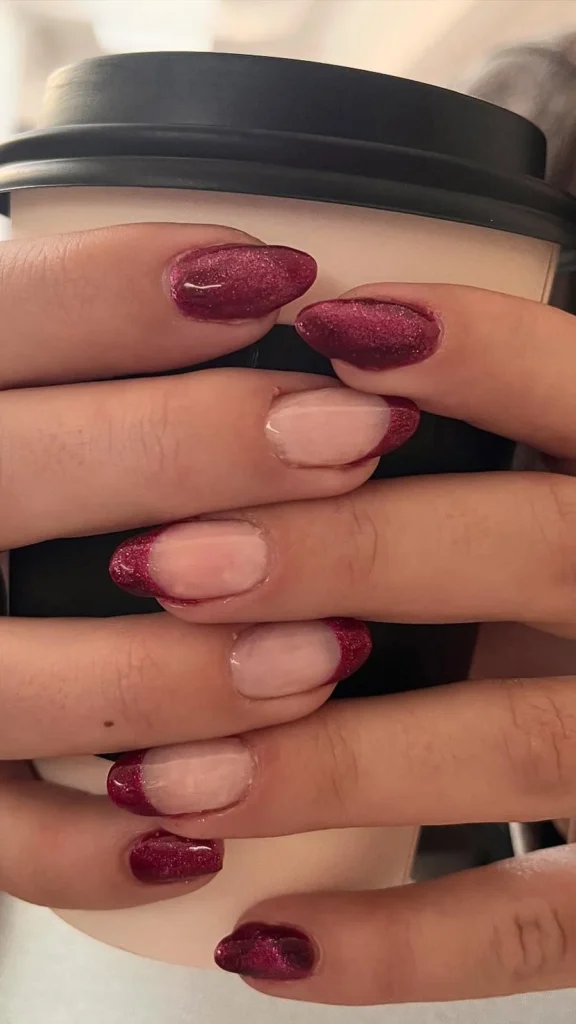
The question behind “how long do dip nails last” is often a comparison: should I have chosen gel instead? Here is how the three main systems actually compare on lifespan — and why longest is not the same as best.
Dip powder: 2–4 weeks. The longest-wearing of the three in everyday use, thanks to the rigid multi-layer coating. It is also the most prone to lifting at the edges if your nails flex, and it needs a proper soak-off removal. No lamp needed.
Gel polish: 2–3 weeks. A glossy, flexible finish that is cured under a lamp. Gel flexes more with the natural nail, so it can feel more comfortable and is less likely to crack from bending — but it tends to show wear a little sooner than dip, and it needs a lamp for application and removal.
Acrylic: 3–4 weeks, with fills. Acrylic is the strongest system and the only one routinely maintained with fills rather than full removal, which is why its lifespan looks longest on paper. But it is also the most involved: it needs a skilled technician, it can be the hardest on natural nails if applied or removed badly, and fills mean you are committing to regular salon visits.
So which should you choose? If your priority is the longest time between appointments and you like a strong, rigid finish, dip powder is a good fit. If you want flexibility and a high-gloss finish and do not mind a slightly shorter run, gel is the better choice. If you want length and structure that polish systems cannot give, acrylic is the one. Your nail condition, your sensitivities, and how often you are willing to sit in the salon matter more than chasing the maximum number of weeks.
Additional Information: Dip 2–4 weeks, gel 2–3 weeks, acrylic 3–4 weeks with fills. Longer does not mean better for your nails — choose by your nail condition and how you actually use your hands.
Five Signs It’s Time to Take Them Off
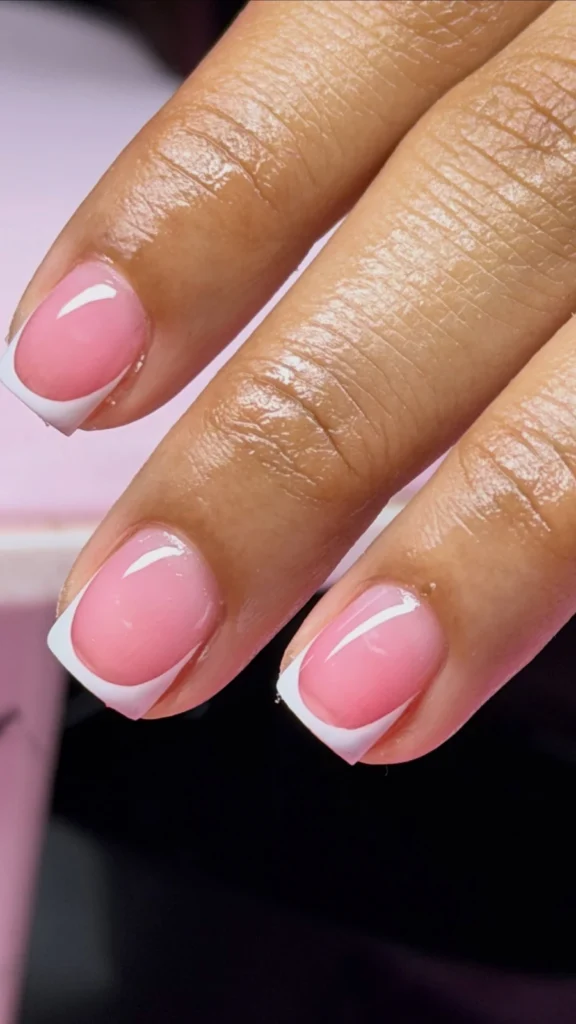
Knowing when to stop wearing a set is as important as knowing how long it should last. These five signs mean it is time — whatever week you are in, and however good the colour still looks.
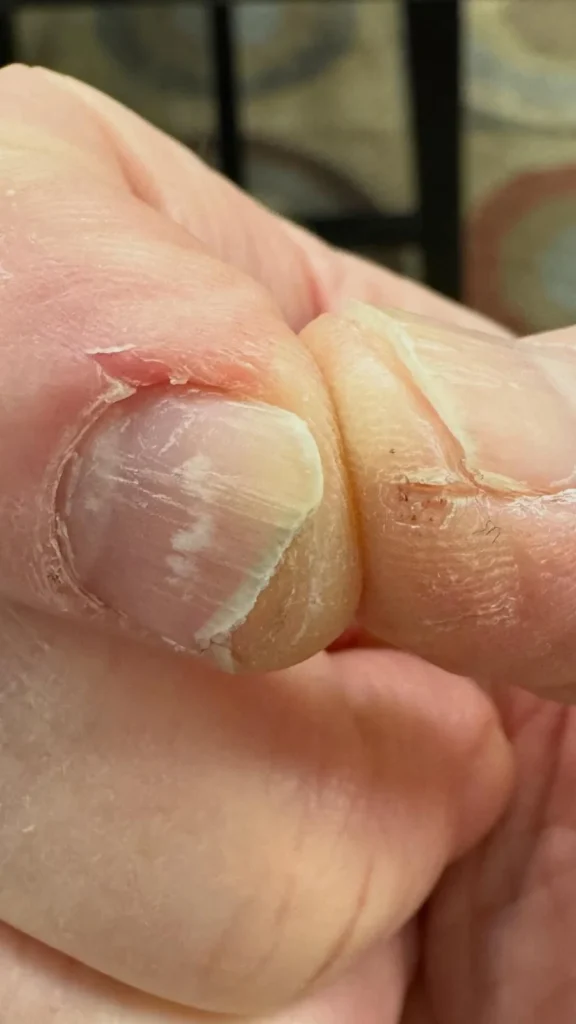
1. Lifting at the edges. The coating is separating from the nail, usually starting at the cuticle or a corner. Lifting traps moisture underneath, and moisture trapped under a coating is how irritation and infection start. Do not glue it down, do not cover it with another product, and do not ignore it.
2. Cracking. A hairline crack in the coating, especially one that runs across the nail, means the structure has failed. It will spread with normal use, and a cracked coating can catch and pull on the nail underneath.
3. Pain or soreness. A healthy manicure should never hurt. If a nail is sore, throbbing, or tender to touch, something is wrong — pressure, lifting, or damage underneath. Take it seriously and get it looked at rather than waiting for your next appointment.
4. Discoloration underneath. Any green, yellow or dark discoloration visible through or under the coating needs professional attention. Do not cover it with more product and hope it goes away.
5. The growth gap is wider than the manicure. When the band of bare nail is as wide as the coloured part, the manicure has had its run. It is not a failure — it is a manicure that did its job and is now finished.
Additional Information: Remove when you see: lifting, cracking, pain, discoloration, or a growth gap as wide as the manicure itself. Never wait out a warning sign to reach a calendar date.
How Dip Nails Should Come Off
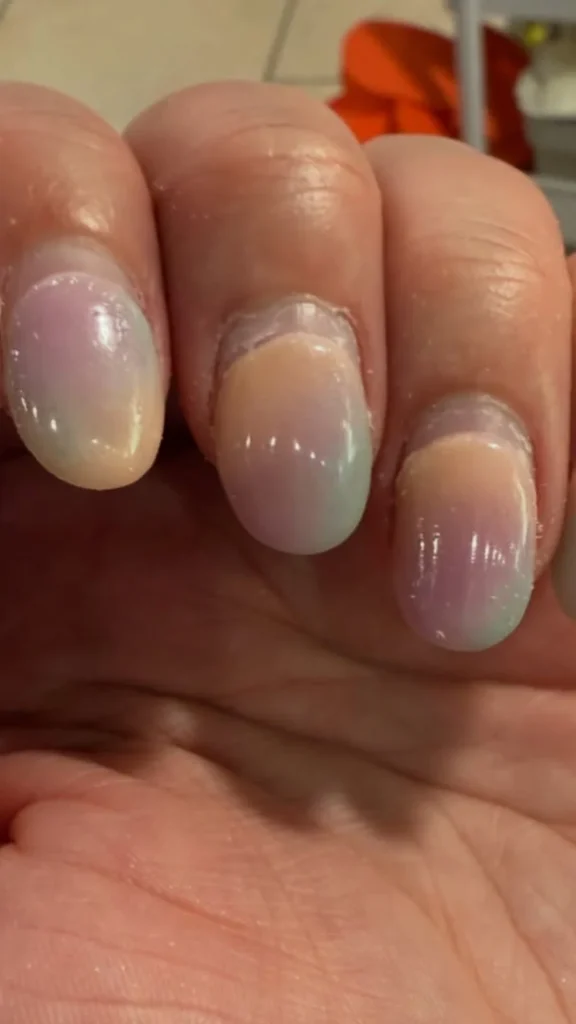
How a dip manicure ends matters as much as how long it lasted. Bad removal is the fastest way to damage natural nails, and it is the reason dip powder has a reputation for ruining nails that it does not entirely deserve. The damage usually comes from the removal, not the product.
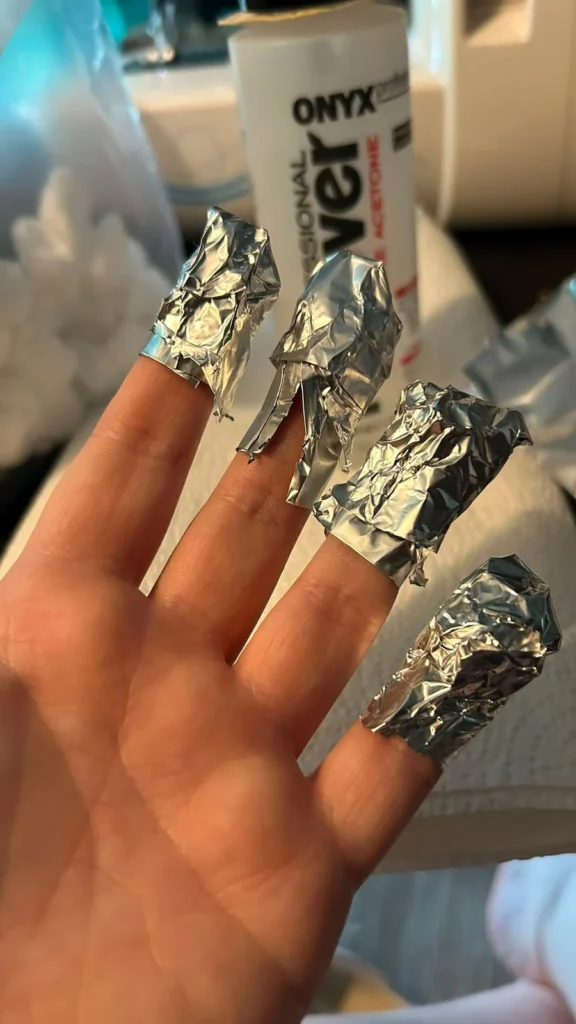
The right way: a salon removal. The technician files down the top layer, then wraps each nail in acetone-soaked cotton and foil, or soaks the nails, until the coating softens and can be pushed off gently. The whole process takes 20–30 minutes. It is slow, and that is the point — soaking is what does the work, not force.
The wrong way: picking, peeling, or prying the coating off. It feels satisfying, and it takes layers of your natural nail with it every single time. A peeled dip manicure leaves nails thin, flaky and sore, and they can take weeks to recover. It is the single most damaging thing you can do to your nails, and it is also the most common.
At home, if you must: file the shiny top coat off first, then soak cotton pads in pure acetone, place them on the nails, wrap in foil, and wait a full 15–20 minutes before gently pushing the softened product off with a wooden stick. If it does not come off easily, re-wrap and wait longer — never force it. Moisturise with cuticle oil afterwards, and give your nails a few days before the next set.
And the part professionals keep repeating: give your nails a break between sets, especially if you wear dip powder continuously. A week or two of bare nails with regular cuticle oil lets them recover, and the next manicure will last longer for it.
Additional Information: Safe removal = file the top layer, soak in acetone 15–20 minutes, push off gently. Never pick or peel dip powder off — it removes layers of your natural nail with it.
Seven Mistakes That Cut Your Manicure’s Life in Half
Most short-lived dip manicures are not bad luck. They are one of these seven mistakes, repeated until the coating gives up.
1. Picking at a lifted edge. The moment you start, the lift spreads and takes nail with it. Leave it alone and call the salon.
2. Using your nails as tools. Every pry, scrape and peel is leverage on a rigid coating. It is the number one cause of tip cracks.
3. Skipping gloves. Bare hands in dishwater and cleaning chemicals undo a manicure faster than anything else. Gloves are not optional for dip nails — they are the maintenance.
4. Ignoring early lifting. A lift the size of a pinhead is a warning. A lift the size of a fingernail is a problem. The difference is usually a week of ignoring it.
5. Choosing length your life cannot support. Very long nails and a hands-on job are a bad combination. The length that suits your routine lasts longer than the length that suits a photograph.
6. Trying to fix it yourself with household glue. Applying household adhesives or unfamiliar products over a lifted enhancement is not a repair. It hides the problem and can make removal harder and damage worse.
7. Keeping a damaged manicure because it has not reached three weeks. A wear range is not a reason to ignore discomfort, lifting or unusual changes. The calendar is a guide, not a contract. If it needs to come off at ten days, it needs to come off at ten days.
Additional Information: The seven mistakes: picking, using nails as tools, skipping gloves, ignoring lifting, too much length, DIY glue repairs, and wearing a damaged set to hit a date.
How Often Should You Get Dip Nails Redone?
There is no single right schedule, because there is no single nail. But there is a sensible rhythm that works for most people: plan on a professional appointment every two to three weeks, and let the condition of your nails — not the date on the calendar — make the final call.
If your nails grow fast, or you use your hands hard, two weeks may be your interval. If your growth is slow and your manicure is holding well, three weeks is comfortable. Four weeks is the outer limit, and it should be the exception, not the routine.
Between sets, a short break helps. Dermatologists recommend giving nails time to recover between dip powder manicures, because repeated application and removal — even done well — is hard on the natural nail. A few days of bare nails, cuticle oil, and a strengthening treatment between sets is a small price for nails that stay healthy enough to keep wearing dip powder for years.
And when you rebook, tell your technician how long the last set lasted and what went wrong first, if anything did. That is useful information for them — it tells them whether the prep, the product, or your routine needs adjusting, and it is how each set gets a little better than the last.
Additional Information: Most people rebook every 2–3 weeks; 4 weeks is the outer limit. A short break between sets with cuticle oil keeps nails healthy for the next one.
FAQ
How long do dip nails last on natural nails?
Most dip powder manicures on natural nails last 2–4 weeks. Two to three weeks is the realistic range for a manicure that still looks fresh; four weeks is the maximum professionals recommend, even if the coating is still attached.
Why did my dip nails lift after one week?
Early lifting usually points to the application — rushed prep, a layer that did not bond, or incompatible products — or to heavy use in the first days. It is not normal wear, so it is worth calling the salon rather than waiting to see if it spreads.
Do dip nails last longer than gel?
Usually, yes — dip powder typically lasts 2–4 weeks against gel’s 2–3 weeks, because the multi-layer coating is more rigid. But gel flexes more with the natural nail, so for some people it is more comfortable and less likely to crack.
Can I make my dip nails last longer?
Yes. The habits that help most are daily cuticle oil, gloves for all wet work and cleaning, never using your nails as tools, and a fresh thin layer of clear top coat once a week. Choosing a practical length helps too.
How often should I get dip nails redone?
Plan on every two to three weeks, and let the condition of your nails decide. Four weeks is the outer limit. Give your nails a short break with cuticle oil between sets when you can.
Is it bad to keep dip nails on for over a month?
Yes — beyond four weeks, lifting you cannot see can trap moisture underneath the coating, and removal becomes harder. Even if the manicure still looks acceptable, it is time to have it removed and your nails checked.
Why do dip nails chip at the tips first?
The free edge takes every knock your hands take, and a rigid coating cannot flex around it. Keeping nails at a practical length, avoiding using them as tools, and sealing the edge with top coat all help.
Conclusion
Dip nails last two to four weeks — but the number on its own tells you almost nothing. What matters is the week-by-week picture: a fresh, glossy first week, a small growth gap in week two, an honest decision in week three, and a removal at week four even if the colour still looks good.
The people whose dip manicures last the longest are not the ones with the best powder. They are the ones with a careful technician, a length that fits their life, gloves by the sink, cuticle oil on the bedside table, and the sense to take a set off when it starts lifting instead of waiting for a date on the calendar.
Book your next appointment for two to three weeks out. Wear gloves for the dishes. And when a corner lifts, leave it alone and call the salon — your nails will thank you for it.


Leave a Reply