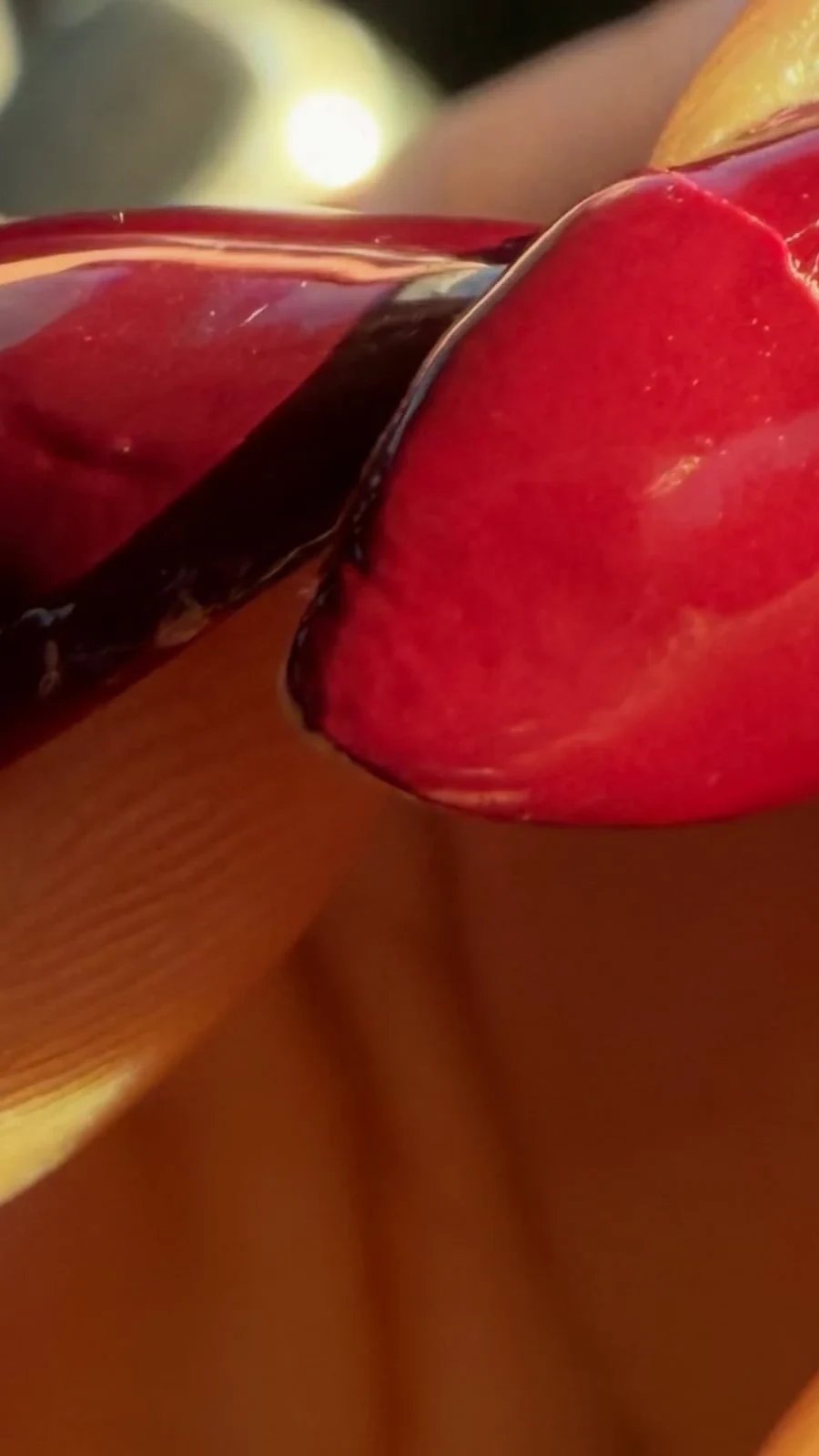
Intro
You paint your nails in the evening. By the next afternoon, the tips are chipped. By day three, it looks like you never bothered at all.
It is not bad luck, and it is probably not your polish. Chipping has causes, and most of them are fixable in about two minutes. The problem is that almost nobody is told what they actually are — so the same manicure keeps failing the same way, and the polish gets the blame.
This is the honest version: why it chips, in order of how often each reason is the culprit, and then the exact routine that makes a regular manicure last a week. No salon needed, no expensive products. Just the steps that matter, and the ones you can skip.
Why Your Polish Chips So Fast
Seven reasons, and the truth is that most chipped manicures have at least two of them going on at once. Find yours.
1. Your Nails Weren’t Clean
This is the number one reason, and the one almost everyone skips. Polish cannot stick to an oily surface. Your nails carry natural oils, hand cream, soap residue, and the invisible film from whatever you touched last. Paint over that, and the polish is sitting on oil, not on nail — so it lifts and peels, usually starting at the cuticle or the tip.
Washing your hands is not enough. Water does not remove oil. You need to wipe each nail with polish remover or rubbing alcohol right before you paint, even on bare nails, even if you just washed them.
Additional Information: Cause: oil and residue on the nail plate. Fix: wipe every nail with acetone remover or rubbing alcohol before painting. Time cost: 30 seconds. Effect: the single biggest improvement you can make.
2. You Skipped Base Coat
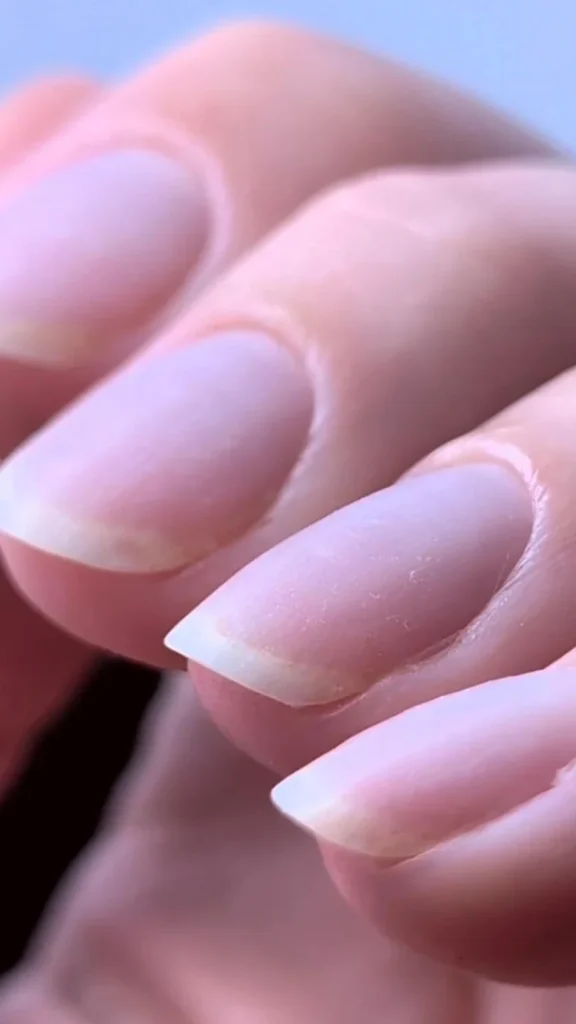
Base coat is not an optional extra. It does two jobs: it gives the colour something to grip, and it stops dark shades staining your nails. Without it, colour sits directly on a smooth nail plate with nothing bonding the two together — and it starts lifting at the edges within a day.
A ridge-filling base coat helps even more if your nails have ridges or peel. Think of it as primer for a wall: paint sticks to primer, not to bare plaster.
Additional Information: Cause: no bonding layer between nail and colour. Fix: one thin coat of base coat, and let it dry fully before colour. Best for: everyone, especially dark shades and ridged nails.
3. Your Coats Are Too Thick
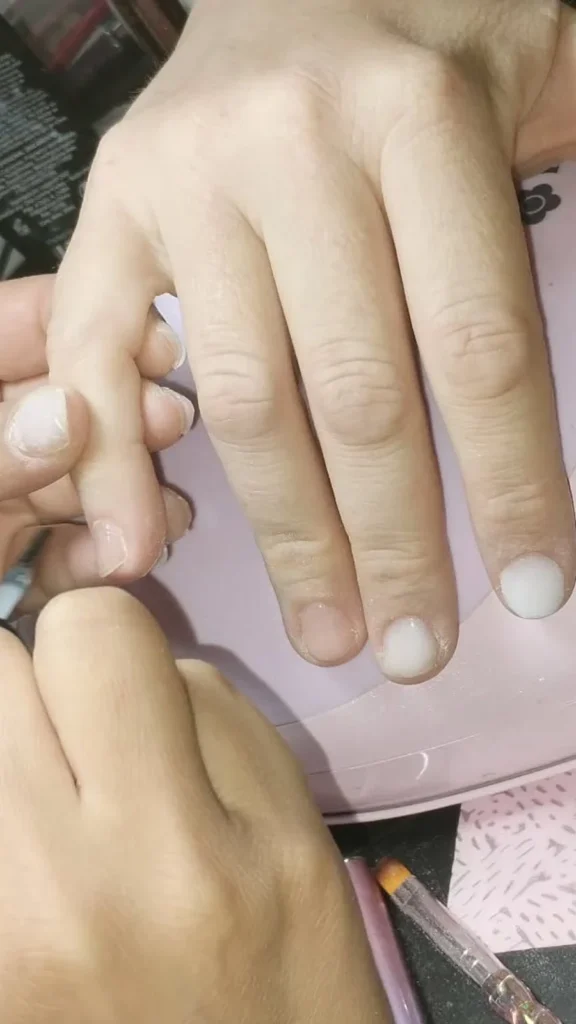
Thick coats look faster in the moment and chip faster for days. A thick layer of polish dries on the outside while the inside stays soft, so the whole coat flexes, dents and peels off in sheets. It also takes forever to dry, which means every accidental touch leaves a mark.
Two thin coats always beat one thick one. The brush should look almost empty when you start a stroke — you can always add more, but you cannot un-thicken a coat.
Additional Information: Cause: thick, under-dried polish layers. Fix: two thin coats, waiting 2 minutes between them. Test: if the brush leaves a visible ridge of polish, wipe it off and start thinner.
4. You Didn’t Cap the Free Edge
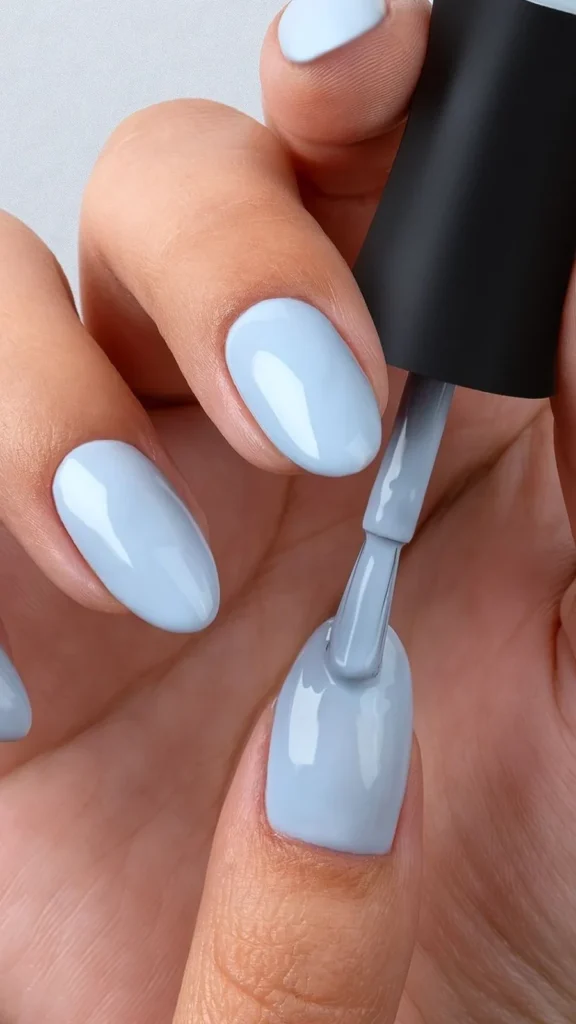
The free edge — the very tip of your nail — is where almost every chip starts. Every time you type, open a can, scratch an itch or tap a screen, the tip takes the hit. If the polish stops short of the edge, the exposed tip catches and the polish peels back from there.
Capping means running the brush along the very edge of the nail at the end of every coat — base, colour and top coat. It seals the edge like the end of a wrapped parcel. It takes five seconds and it is the difference between two days and a week.
Additional Information: Cause: exposed, unsealed nail tips. Fix: brush across the free edge at the end of every coat. Time cost: 5 seconds per coat. Effect: stops most tip chips before they start.
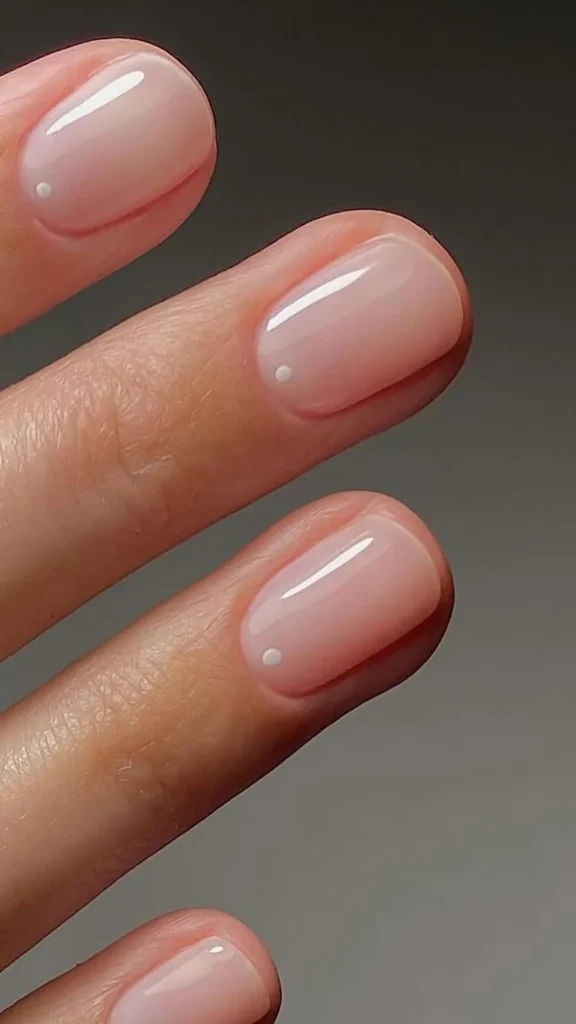
5. Your Top Coat Is Missing, Old, or Skipped
Top coat is the shield. Without it, your colour is unprotected against everything your hands touch. With an old, thickened top coat, the shield itself cracks and pulls the colour off with it.
If your top coat has gone gloopy, stringy, or smells different, throw it away — a bad top coat is worse than none. And a fresh top coat every two to three days is what keeps a manicure looking new past day four.
Additional Information: Cause: no protective layer, or a degraded one. Fix: one thin top coat after colour, then a fresh layer every 2–3 days. Replace top coat when it thickens or strings.
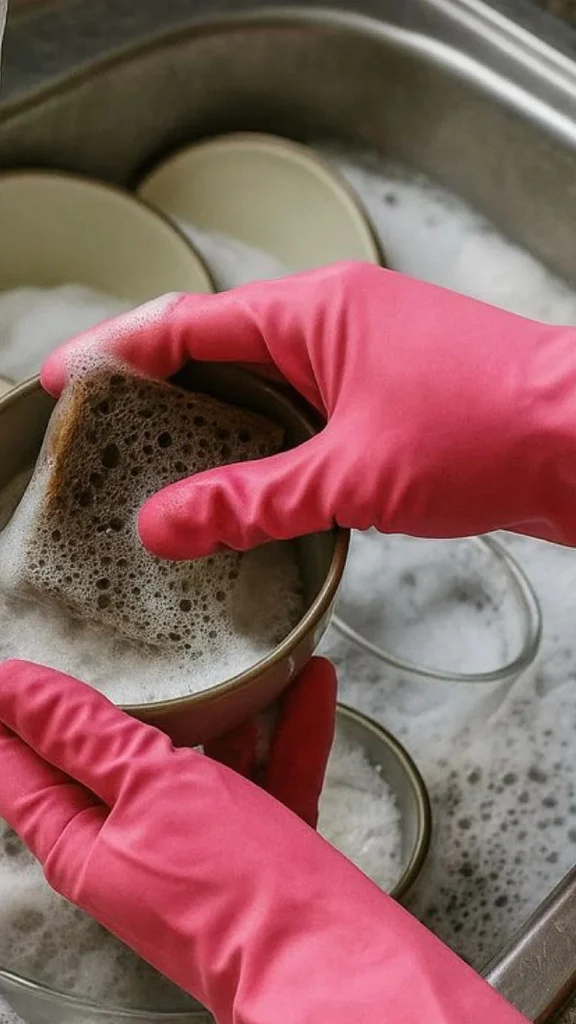
6. Water Is Your Manicure’s Enemy
Hot showers, washing dishes, swimming, long baths — water swells the nail plate, and when the nail dries it shrinks back. Polish does not stretch with it. Each swell-and-shrink cycle loosens the polish a little more, until it lifts at the edges and chips.
This is why manicures done before a holiday by the pool never last, and why the chips often appear after the first long shower. Gloves for dishes and keeping nails out of long soaks make a real difference.
Additional Information: Cause: nails swelling in water, then shrinking. Fix: wear gloves for washing up and cleaning, keep nails out of long baths. Worst offenders: hot water, dishwashing, swimming.
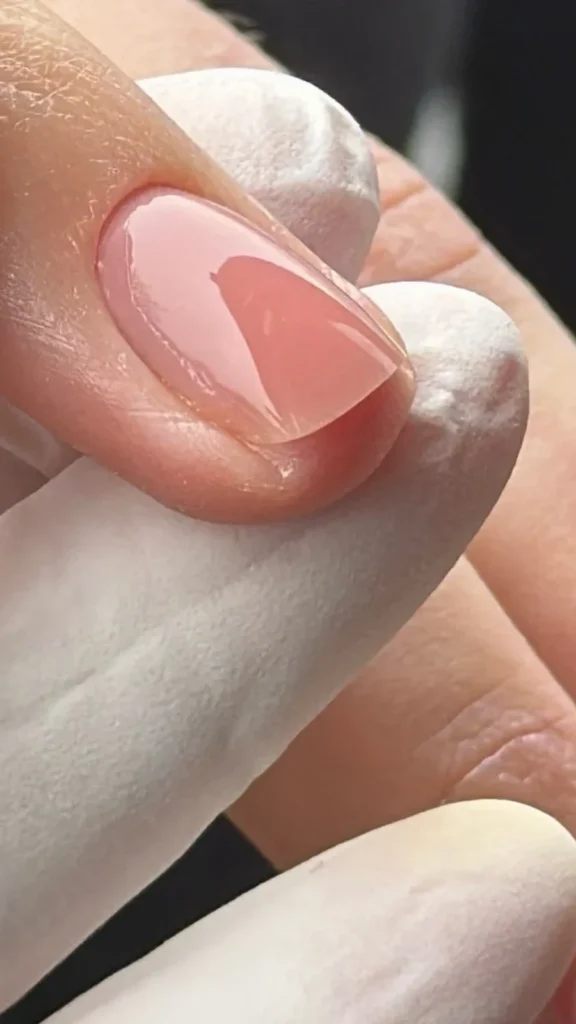
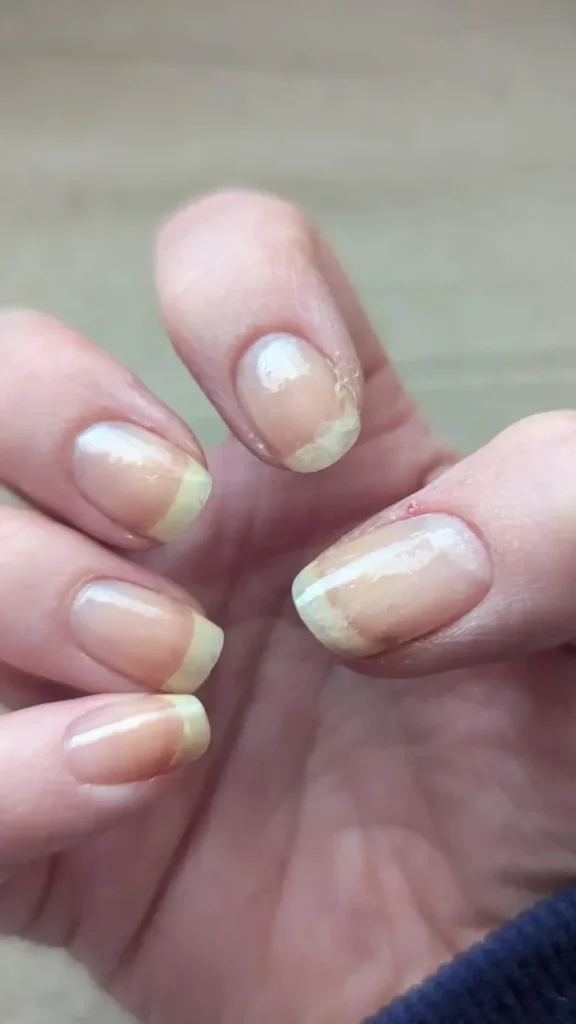
7. Your Nails Themselves Are the Problem
Sometimes the polish is fine and the nail is not. Thin, peeling, ridged or bendy nails flex under polish, and polish cannot flex with them — so it cracks and flakes off. Old polish that has thickened in the bottle does the same thing: it goes on unevenly and chips within a day.
If your nails peel in layers, the fix is nail care first: cuticle oil daily, no peeling polish off (it takes nail layers with it), and a strengthening base coat while they recover.
Additional Information: Cause: weak, peeling or flexible nails; old thickened polish. Fix: daily cuticle oil, never peel polish off, strengthening base coat, replace polish older than 2 years or gone thick.
The Routine That Makes Polish Last a Week
Knowing the reasons is half of it. Here is the routine that puts them all together — about fifteen minutes, once, and then two minutes of maintenance.
Step 1. Start With Bare, Dry Nails
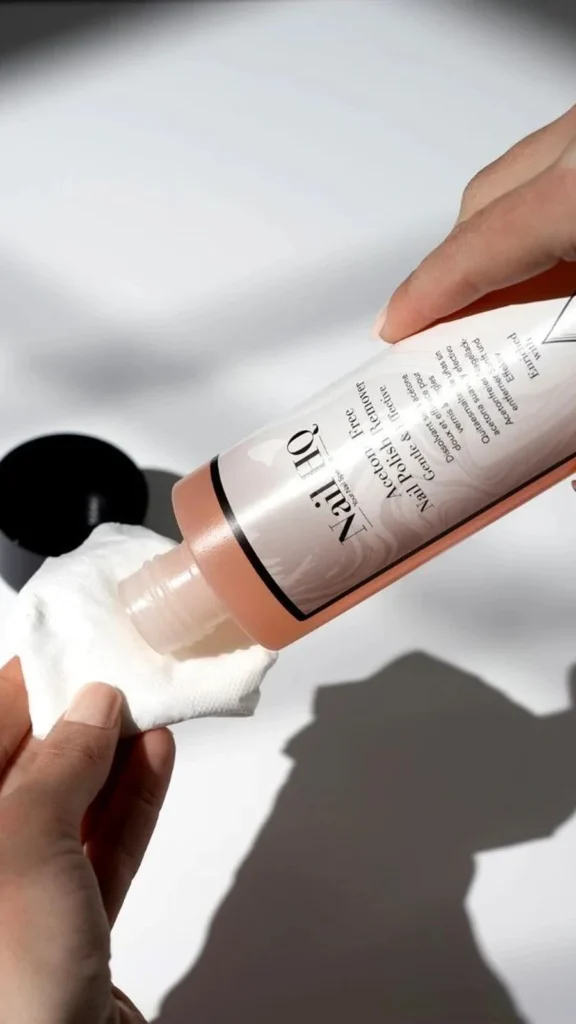
Remove every trace of old polish, then wipe each nail with acetone remover or rubbing alcohol on a lint-free pad. Do this even if your nails look clean. No hand cream, no cuticle oil, no lotion until the manicure is completely finished — oil under polish is the fastest way to make it peel.
Additional Information: Prep time: 2 minutes. Tools: remover, lint-free pads or cotton. Rule: nothing oily touches the nail before polish.
Step 2. Push Cuticles Back, Buff Lightly
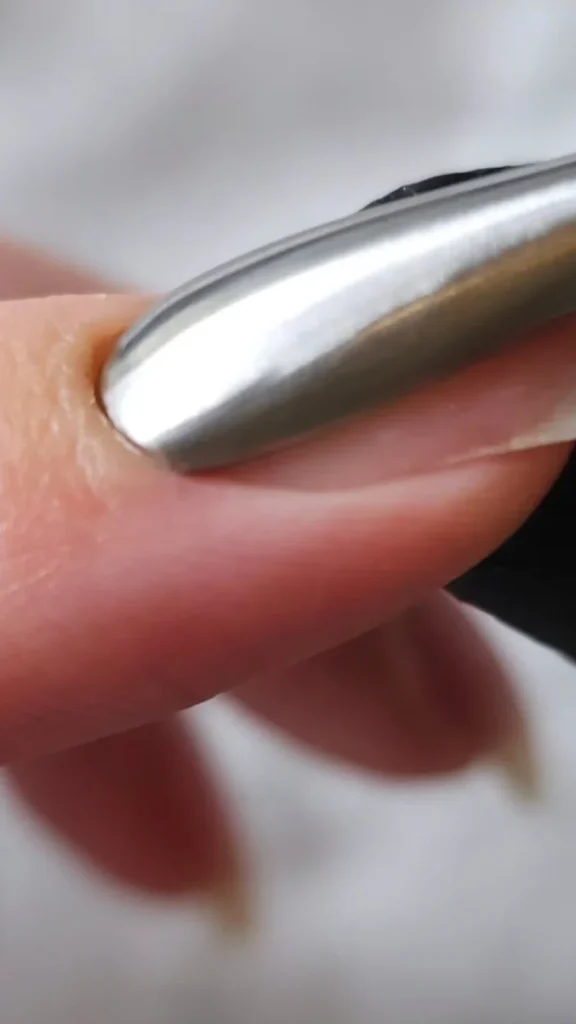
Push cuticles back gently with an orange stick or cuticle pusher — polish painted onto cuticle skin lifts within a day. Then give each nail one or two very light passes with a fine buffer to remove shine and give the polish something to grip. Do not over-buff; you are removing shine, not nail.
Additional Information: Prep time: 3 minutes. Tools: orange stick, fine buffer. Rule: polish on skin always lifts — keep it on the nail only.
Step 3. Base Coat — Thin, and Let It Dry
One thin coat of base coat over the whole nail, and cap the free edge. Then wait. Base coat that is still tacky when colour goes on top will slide, bubble and peel. Give it a full two minutes — this is the step people rush, and it shows on day two.
Additional Information: Drying time: 2 minutes minimum. Best base coats: ridge-filling for ridged nails, strengthening for weak nails. Cap the free edge.
Step 4. Two Thin Colour Coats
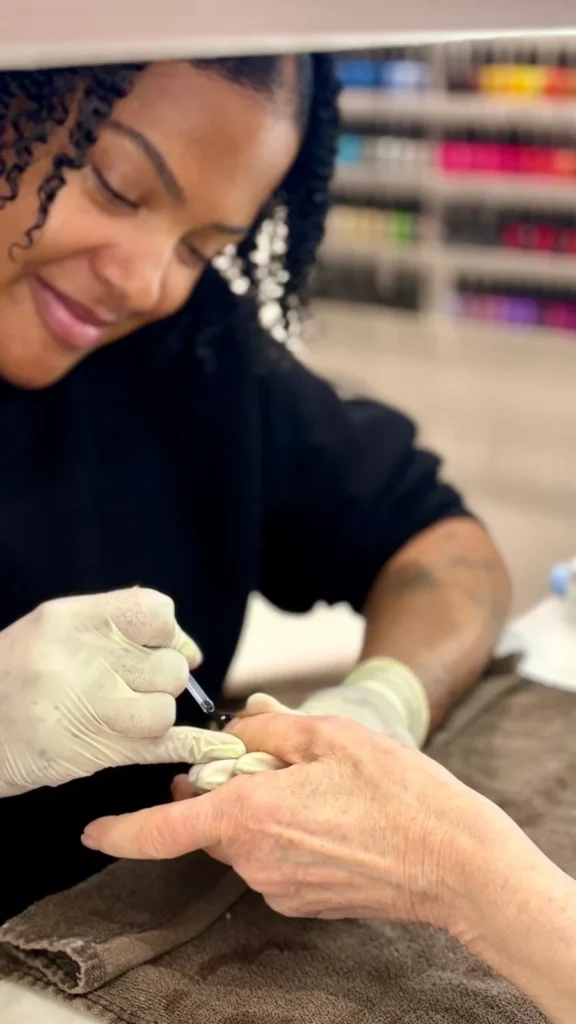
First coat: thin, even, covering the whole nail but not flooding the cuticles. Wait two minutes. Second coat: same again, slightly fuller. Cap the free edge on both coats. If the colour still looks streaky after two coats, a third thin coat is fine — but three thin coats beat two thick ones every time.
Additional Information: Drying time: 2 minutes between coats. Rule: the brush should look almost empty. Cap the free edge on every coat.
Step 5. Cap the Edge Every Single Coat
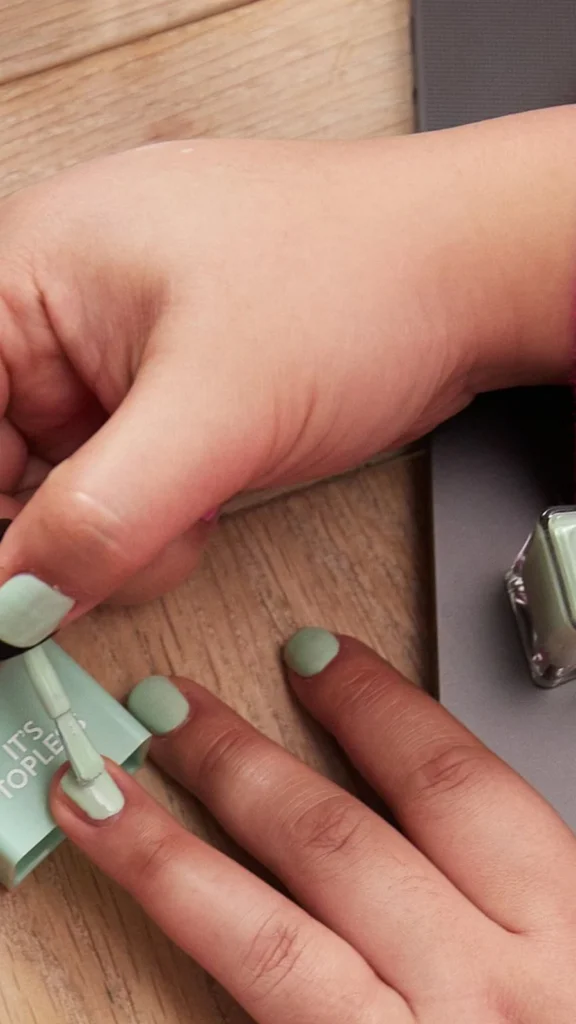
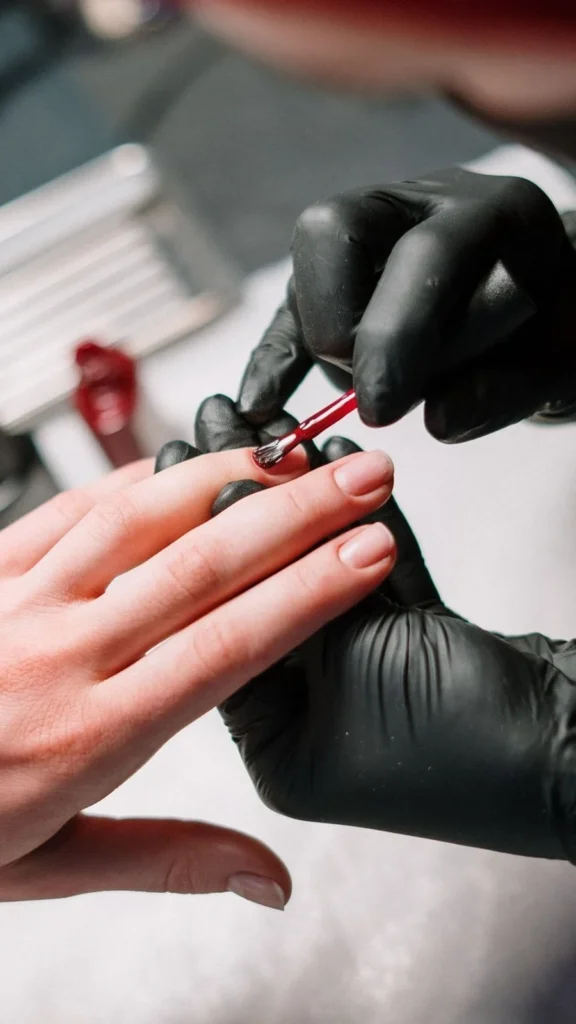
Worth repeating because it matters this much: after each coat — base, colour one, colour two, top coat — run the brush along the tip of the nail. Hold the brush horizontally and sweep it across the free edge. That sealed edge is what stops the tip chips that ruin a manicure first.
Additional Information: Time cost: 5 seconds per coat. Do it on: base coat, both colour coats, top coat. Skipping it on any one coat leaves the edge exposed.
Step 6. Top Coat — Then Again in Two Days
One thin top coat over everything, capped at the edge, and let it dry fully before you use your hands. Then — this is the part almost nobody does — add a fresh thin layer of top coat every two to three days. It reseals the edges, restores the shine, and adds days to the manicure. It takes two minutes and it is the closest thing to a cheat code this routine has.
Additional Information: First top coat: right after colour dries. Maintenance: fresh top coat every 2–3 days. Total extra time per week: about 5 minutes.
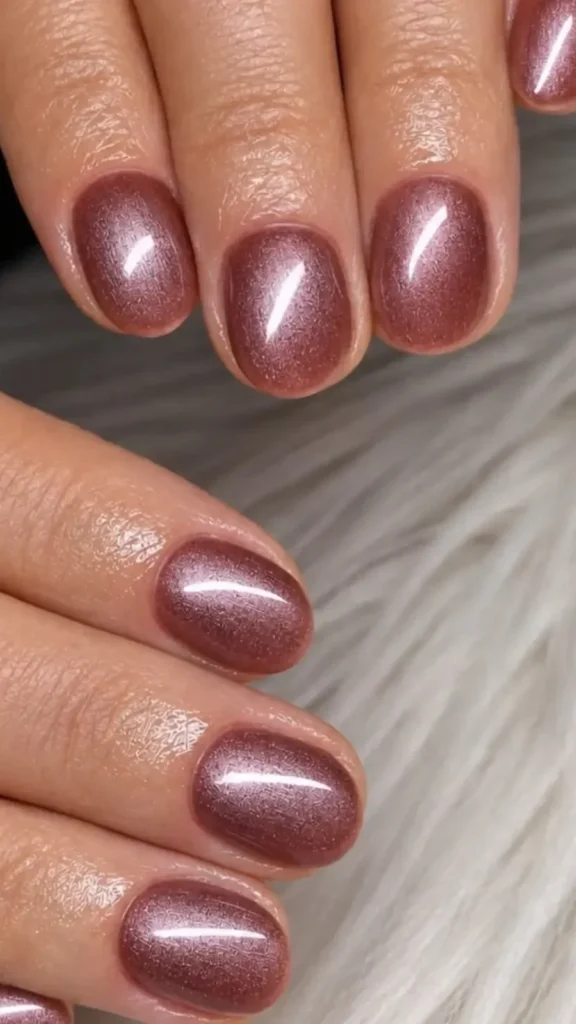
Step 7. Oil Daily, Gloves for Dishes
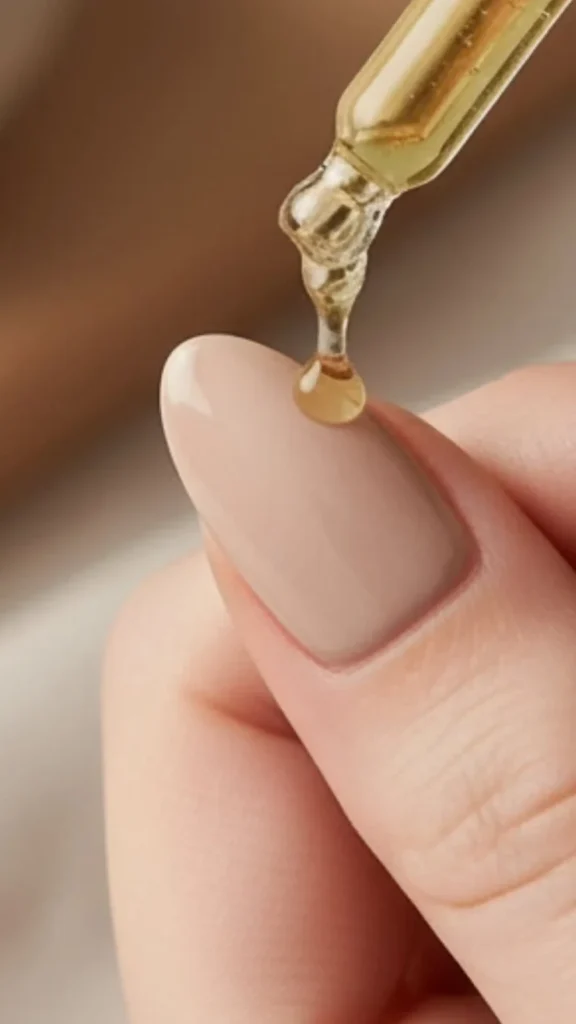
Once the polish is fully dry, cuticle oil becomes your best friend — it keeps nails flexible so they bend instead of cracking the polish, and it stops the dry, peeling cuticles that catch and lift polish at the edges. Use it daily. And for washing up, cleaning, or anything involving hot water and detergent: gloves. Every time.
Additional Information: Cuticle oil: daily, after polish is dry. Gloves: dishes, cleaning, hot water. Flexible nails chip less than dry, brittle ones.
It Chipped Anyway? Quick Fixes
Sometimes a chip happens anyway — you caught a nail on something, or day six finally got the better of it. You do not have to start over.
- Small tip chip: dab a little polish on the chipped spot with the corner of the brush, let it dry, then top coat over the whole nail. Invisible from a normal distance.
- Edge wear: file the tip very lightly with a fine file to smooth the rough edge, then one coat of top coat. It buys you two more days.
- One nail ruined, the rest fine: repaint just that nail — base, two thin coats, top coat — and nobody will know.
- Too far gone: a glitter top coat over the whole manicure hides a multitude of chips and adds another few days. It is the oldest rescue trick there is.
Additional Information: Rescue tools: the same polish, top coat, a fine file, glitter top coat. Rule: fix chips the day they appear — a small chip left alone always grows.
How Long Should Polish Actually Last?
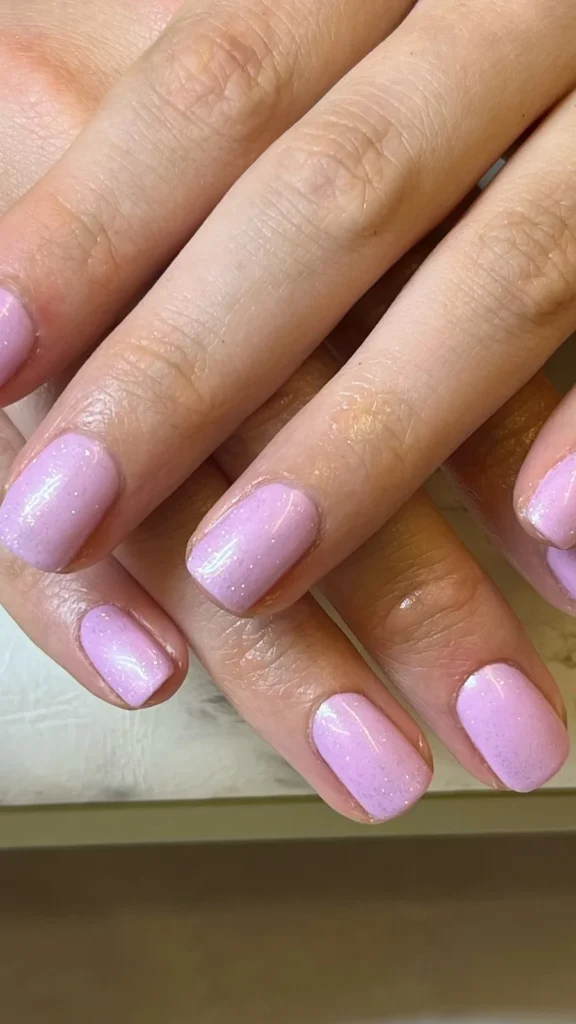
For honest expectations: regular polish, done well with this routine, should last 5–7 days with minimal wear. Gel polish lasts 2–3 weeks because it is cured hard. If your regular polish is chipping on day one or two, something in the routine is off — and it is almost always one of the seven reasons above, usually the prep or the thick coats.
The jump from two days to a week is not about buying better polish. It is about clean nails, thin coats, a sealed edge, and a top coat that gets refreshed. That is the whole secret.
Conclusion
Nail polish does not chip because your nails are bad or your polish is cheap. It chips because polish needs a clean, dry nail to grip, thin layers to dry properly, a sealed edge to survive your hands, and a top coat to protect it. Give it those four things and it stays put.
Try the routine once, properly, and count the days. Most people find the difference on the first attempt — and once you have had a manicure last a full week, going back to the two-day chip feels like a choice, not a fate.
FAQ
Why does my nail polish chip the same day I apply it?
Almost always oily or damp nails, skipped base coat, or coats that were too thick to dry through. Wipe nails with remover or alcohol first, use a base coat, and paint two thin coats instead of one thick one.
Why does nail polish chip at the tips first?
The free edge takes every knock your hands take, and unsealed polish peels back from the tip. Cap the free edge — brush across the tip — at the end of every coat, including top coat.
Does base coat really stop chipping?
Yes. It bonds colour to the nail and gives it grip, and it stops staining. Skipping it is one of the most common reasons polish lifts within a day.
How can I make regular nail polish last as long as gel?
You cannot match gel’s 2–3 weeks, but the routine in this article — clean prep, thin coats, sealed edges, top coat refreshed every 2–3 days — gets regular polish to 5–7 days, which is about as good as it gets without a lamp.
Why does my nail polish peel off in one piece?
Polish peeling off in a sheet means it never bonded to the nail — usually oil or lotion under the polish, no base coat, or polish applied over a damp nail. Clean, dry nails and a base coat fix it.

Leave a Reply